One of the more interesting things about the cult of celebrity is that everyone has their own personal idea of one. Sure, there are the undeniable A-listers – the Clooneys, Oprahs and Hankses of this world – but generally, the people capable of making our ears prick or heads swivel are unlikely to be the same as our neighbour's. This is why being in on the secret is half the fun, and why so many of us find ourselves trapped, embodying the same familiar cliché, claiming knowledge of something or someone with unique – or even overblown – talent long before anyone else.
Cocktail enthusiasts are no different. Dip a toe into the realm beyond your regular order and an entirely new constellation of famous names begins to emerge, blinking in the night sky. Bartenders who amass hundreds of thousands of social media followers, whose new bars inspire pilgrimages across continents and whose faces can elicit a thousand bleary-eyed selfies, all shaking and stirring with style.
But how is a cocktail star born? Last October, over the course of little more than a week, I had the opportunity to find out at two very different events designed to make, shape and showcase the very best talent in the bar world.
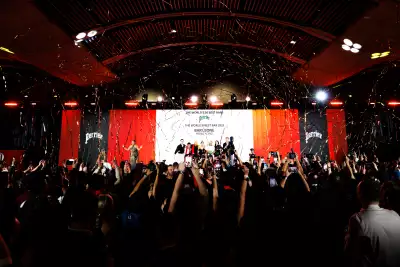
It all kicked off in sensationally camp fashion with a brass band rousing a crowd with the unmistakable rumble of Shania Twain's 'Man! I Feel Like A Woman!' in Toronto. Somewhere beneath the flicker of the Fairmont Hotel's neon signage, a grand, windowless room had been transformed into something akin to a nondescript nightclub. Light refracted off metallic accents throughout the space while drinks arrived at record speed from a long black complimentary bar heaving with thirsty cocktail enthusiasts. Gold orbs glinted overhead, reflecting swathes of smart-casual-clad guests swaying politely to the band below. Anywhere else, you might expect such a scene to quickly descend into chaos, but this was serious. This was a room humming with trepidation in anticipation of the World Class Global Final.
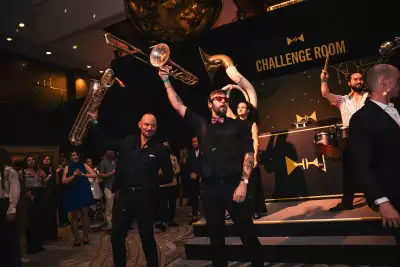
A brass band gets proceedings under way at the World Class Global Final in Toronto
Founded in 2009 by Diageo – the conglomerate that owns some of the world's most recognisable alcohol brands including Johnnie Walker, Tanqueray, Gordon's, Smirnoff, Don Julio and my personal favourite, Baileys – the event is part talent contest, part marketing exercise designed to identify which already exceptional bartenders have what it takes to become international names and brand ambassadors. Descending on a different city's bar scene every year, the final is the culmination of ten months of regional and national knock-outs, which see more than 55 countries whittle tens of thousands of hopefuls down to a single national champion per country.
In Britain, in 2025, entrants first submitted the recipe for an original cocktail before judges selected a top 100, who then battled it out in Glasgow, London, Bristol, Manchester and Birmingham. From there, just ten bartenders progressed to a three-day final in Edinburgh, where Emanuele 'LeLe' Mensah (then of The Connaught Bar, London) was crowned Britain's mixology champion. Only then did he earn his ticket to Toronto, joining 50 other winners from six continents for three more days of intense competition.
Once at the final, attendees spread out across the city soaking up what they can of more than 250 events hosted by bars and spirits brands, while competitors tuck themselves up into bed like well-trained athletes, gearing up for the seven challenges that lie ahead. "It's kind of like preparing for the World Cup," says Giacomo Giannotti, founder of Barcelona's Paradiso and a World Class judge, who would know all too well, having competed in 2014. "This year, no holidays," he remembers deciding. Every spare hour outside work went towards the competition. "If you want to do it well, if you're going for a win, you have to be prepared for everything." More than a decade later, one of his own bartenders, Gabriele Armani, entered the 2025 competition. Almost a year before the final, they created a calendar: one month was devoted to recipes, the next to speeches, and another to presentations, with every day devoted to practice. His mentee won the Spanish competition and qualified for the 2025 global final. "Celebrate tonight," he told him after his national victory. "But from tomorrow you have to be focused on the final challenges."
In Toronto, the Hop Scotch challenge was the inaugural baptism of fire, calling on five mixologists to take to the stage in rounds to reinvent three classic cocktails using Johnnie Walker Black Label scotch whisky in six minutes.
For bars, a place on the list can almost instantly translate into queues and bookings locally and international attention
At this level, skill is no issue. To be declared the best in a country, let alone the world, requires what Giannotti calls "the extra mile": a mix of charisma, storytelling ability and stage presence. Giorgio Bargiani, assistant director of mixology at the Connaught Bar and another former World Class judge, says that what's in the glass is only somewhat important. "You can have the most delicious cocktail in the world," he tells me, "but if you're not good as a storyteller, or at delivering the message of the drink, it can taste good but be flat in terms of emotion. There won't be a lot of excitement." World Class, he says, is "a blend of many different skills put together," including creativity, organisation and technique, as well as the ability to stand in front of a room and make people pay attention.
When Bargiani helped prepare former GB champion Danilo Frigulti for the competition in 2024, he barely discussed drinks at all. "I didn't speak at all about cocktails, liquid or ingredients," he says. Instead, they worked on body language, pace, tone of voice, and how to hold someone's attention. "You know your presentation. You know your cocktail. You know the storytelling related to each cocktail. How do you elevate that simply by adjusting the way you speak?"
Competitors rehearse their speeches, study their judges and, in Bargiani's case, are advised to film themselves presenting so they can watch the footage back and scrutinise everything from their posture to their delivery. Experienced judges, he says, can often spot the people who stand out before the competition has progressed very far, and it's usually those who are "confident without being arrogant".
Still, even the most prepared contenders can't help but feel the pressure – especially when performing before judges who founded multi-award-winning bars, such as Monica Berg of London's Tayer + Elementary, Lorenzo Antinori of Hong Kong's Bar Leone and Eric van Beek of Mexico City's Handshake Speakeasy. Back at the Hop Scotch challenge, there was a barely perceptible shake in almost every competitor's hand as they finally came to deliver the first of their performances. Damon Park of South Korea handed his judges Squid Game-themed jackets while he performed for his life; Anabela Krumova of Bulgaria transformed iridescent fuchsia highballs into jet-black potions in an effort to conjure success; and Enrico Bellucci of Italy whipped up his very own gelateria in the hope of scooping up a place in the final challenge.
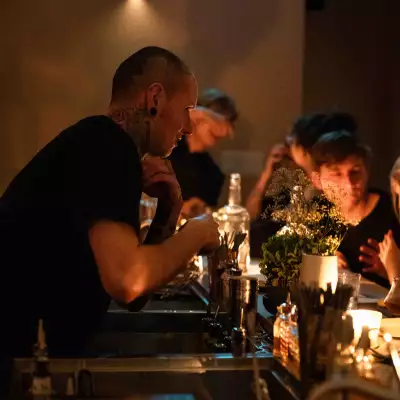
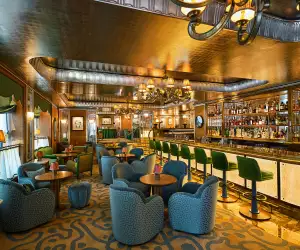
A bartender at Suite 115
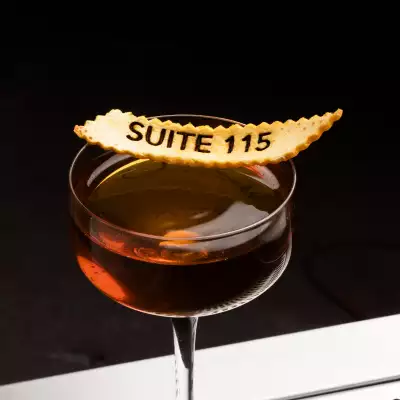
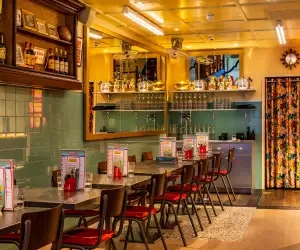
A cocktail from the Toronto bar
Beaming from ear to ear with warm, steady eye contact, Britain's Mensah produced three drinks inspired by Brazil and the butterfly effect that went on to follow his performance. A Clover Club transformed into a clarified raspberry milk punch, a Bramble reimagined with the flavour of melon, and a Banana Ramos Fizz made using a NitroPress were all produced with just seconds to spare before a burst of golden butterfly confetti was released onto the crowd, slowly fluttering through the air, echoing the descent of the crowd's heart rate as we all resumed breathing.
Six more challenges followed. The Modern Icon tasked contenders with crafting a new Tanqueray No. Ten serve inspired by a significant moment in history; Digital Galería asked them to translate a personalised AI-generated artwork into a Don Julio 1942 cocktail; The Sensory Sessions paired an original Singleton cocktail with music and a custom-designed record sleeve; and Farmhouse was a mystery-box-style challenge in which they were handed an ingredient such as carrot, coffee, grape or apple and given 30 minutes to devise a Ketel One serve. Their cumulative scores reduced the field to ten, who progressed to the Bartenders' Banquet, creating a three-drink menu to accompany a vegetarian lunch, before three were selected for the grand finale.
In the end, it was Mensah, Armani and Norway's Felice Capasso who found themselves facing The Six – one last challenge which required them to make six random classic cocktails from memory in six minutes, live on stage at Toronto's turreted Gothic Revival castle, Casa Loma. In a jam-packed glasshouse steaming with condensation on the lawn, several days of drinking cocktails had done little to dampen the crowd's collective enthusiasm. Bartenders, judges, journalists and brand ambassadors all jostled for a view, hooting for favourites with glasses in hand, phones hovering overhead. In the end, it was Capasso's cool, confident demeanour which won him the title and the black cut-glass obelisk he raised with triumph.
But success comes with considerably more than a shiny trophy. Giannotti, for instance, is living proof. When he took part in World Class in 2014, he had been working in Spain for two years. Ultimately, he harboured an ambition to open a bar of his own. "World Class basically opened the door for me," he says. The exposure helped him connect with investors, and the following year he opened his own place. More importantly, he adds, the months of preparation left him ready for whatever came next. "World Class can open you a lot of doors, give you visibility, prepare you a lot," he says. "After this experience, you are ready for the next chapter of your career."
For Giannotti, that next chapter would eventually become Paradiso and much more success. Hidden behind a pastrami shop in El Born, Barcelona, it climbed to number one on The World's 50 Best Bars list four years ago in 2022, an accolade that has become one of the most coveted in the international drinks industry.
Founded the same year as World Class, the World's 50 Best Bars – now rebranded as The 50 – is decided by around 800 anonymous bartenders, bar owners, drinks writers and cocktail experts around the world, each voting for the best places they have visited over the preceding 18 months. It's an institution shrouded in mystery and lore, and it was the second event I would arrive at, less than a week later and 8,000 miles from watching Capasso lift his trophy in Toronto. Only here, there were few hopefuls left to discover. At this stage, most of the stars had already been made.
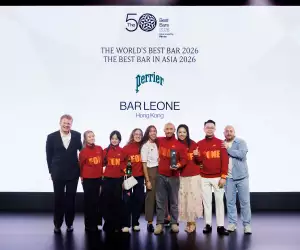
The Bar Leone team win the top prize at The World's 50 Best Bars 2025
Lightfoot Agency / Jack Cooper Media
A hive of densely packed skyscrapers, neon-lit streets and vertiginous hills tumbling towards Victoria Harbour, Hong Kong is a delightfully chaotic place at the best of times – and during the 50 Best shenanigans, it only became a whole lot more so. The official programme alone ran from 4 to 9 October and was apparently the largest in the awards' history.
A thriving hub of sought-after cocktail culture, Italian and Mexican speakeasies Bar Leone and Coa already represented two places on the main list, with The Savoury Project and Argo appearing on the extended list between 51 and 100. Meanwhile, throughout the week locals, visiting mixologists and star chasers clambered for standing space at acclaimed bars collaborating with native Hong Kong institutions. Denver's Yacht Club and Buenos Aires' Tres Monos took turns behind the bar at Honky Tonks; Double Chicken Please flew in from New York to take over The Opposites; Singapore's Atlas transplanted itself into Artifact; Parisian bars Danico, Bar Nouveau and The Cambridge Public House descended simultaneously on Jean-Pierre; Hope & Sesame arrived from Guangzhou to pour cocktails at Ho Lee Fook.
The morning of the awards ceremony, the founders of the then newly opened Cuban-inspired drinking den Montana – Lorenzo Antinori of nearby Bar Leone and Simone Caporale of 2023's World's Best Bar, Barcelona's Sips – welcomed passers-by behind the clandestine shutters with a dancing Tai Hang Fire dragon performance, frothy scotch, rum and banana Cafe Havana cocktails and roast duck. An hour later, a cluster of lauded Martini ambassadors, including Maura Milia of the Eagle Bar in London, and Stefano Catino of Maybe Sammy in Sydney, grouped behind a bar at the palatial Rosewood hotel, handing out more vermouth-laden cocktails and branded fans to fellow mixologists nursing heads hidden behind sunglasses despite the forgiving shade of being indoors.
How any committed professional makes it to the main event without a power nap is a mystery. And yet, on the evening of 8 October, more than 2,000 bartenders, bar owners, drinks writers and miscellaneous industry people gathered at the Kai Tak Cruise Terminal overlooking Victoria Harbour. Outside, Hong Kong glittered across the water; inside, the judges who appeared at World Class gathered in anticipation, waiting to see their own names and numbers flash up on the stage.
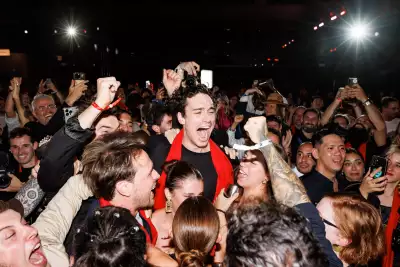
It's easy to spot those who have made the list – they're draped in red woollen scarves bearing the 50 Best logo, despite the room's rising humidity. Many proffer an air of cool, assured calm, or even nonchalance despite having travelled such a long way. Others visibly vibrate with excitement, itching for announcements to begin.
For the bars themselves, a place on the list can almost instantly translate into queues and bookings locally, as well as international attention. Giannotti remembers the effect when Paradiso climbed first to number three and then to number one. "It really changed everything. It's insane," he says. Customers began waiting up to two hours to get inside, while invitations to collaborate around the world multiplied. Paradiso has also since expanded to Dubai and Ibiza.
I don't feel like a celebrity bartender. I feel like someone who loves being behind the bar and tries to do his best every day
Bargiani, who was part of The Connaught team when it twice took the top spot, describes 50 Best as giving a venue "a big, big stage", one capable of illuminating everyone standing behind its counter. He has watched relatively junior bartenders from highly ranked venues use that association to secure senior positions, move countries and eventually open places of their own. "It's a big push," he says. Like World Class, however, he sees the accolade as a beginning rather than an end. "There's no endgame in our world."
On a personal level, after The Connaught's success, Bargiani began being recognised away from London, including by strangers in bars in Milan and Rome. Despite being crowned Europe's Best Bartender at Europe's 50 Best Bars awards, he brushes away the accusation that he might be a celebrity bartender. Having started at The Connaught polishing glasses, "Never in my wildest dreams would I expect to be what I am today," he continues. Likewise, Giannotti resists the idea. "I don't feel like a celebrity bartender," he tells me. "I feel like someone who loves being behind the bar and tries to do his best every day." For him, the job still revolves around other people: "At the end of the day, we're serving drinks, and we just want to make customers happy."
Back in the room, as the numbers fall, each announcement catapults another pocket of the room into a wave of celebration, teams disappearing in scrums of embrace. Paradiso lands at number four, Handshake Speakeasy takes number two, and finally, Bar Leone secures the top spot. Two and a half years after opening, Antinori's neighbourhood-inspired Roman cocktail bar is the reigning champion, becoming the first Asian bar to take the top spot, serving mortadella sandwiches and Italian classics, no less – a feat it recently repeated at this year's awards.
Before the crowds pile into taxis to hotel rooms and after-parties, I catch the winning mixologist. "Our motto is cocktail popolare, which means cocktails for the people," says Antinori. "What makes a good cocktail experience? It doesn't stop with the cocktails. It's about what makes a good bar experience at 360. It's about the food, the lighting, the music, the branding on the coasters, the napkins, and, of course, the quality of the service. Those are the boxes, and we try to tick them all."
The next day before I leave, I drag myself out of bed for one last drink; I want to catch a glimpse of the real Bar Leone, without anyone swinging their t-shirt above their head. At 5.05pm, five minutes after opening, the queue was already 80 people long. Dizzy with the sight of such a wait, and perhaps a smidge of hangover, I turn on my heel and resolve to order room service back at the hotel. That line, I suppose, is the power of celebrity.