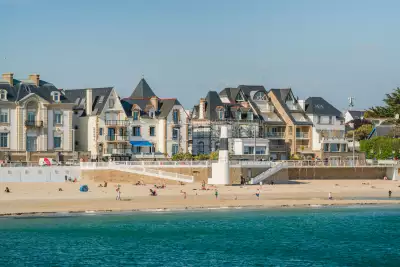
Brought to you by

Some road trips revolve around the scenery; this one is driven by appetite. Over a relatively compact stretch of western France, Nantes gives way to wetlands, farmland and historic towns before the Atlantic finally takes over, with the food changing along with the landscape. Brittany is best enjoyed outside July and August, at a slower pace, when visitors can experience the region away from the crowds.
Nantes is a natural starting point for a hollow-legged road trip. Historic capital of Brittany and around 30 minutes from the coast, it combines an increasingly ambitious food scene with the creative energy that runs through the city. Le Voyage à Nantes makes that connection visible via its famous green line, leading visitors between artworks and landmarks including the Château des Ducs de Bretagne, Jardin des Plantes and Machines de l’Île.
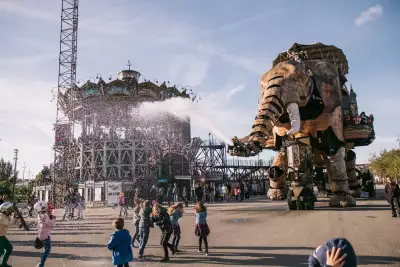
The Grand Éléphant at Les Machines de l’île
David Gallard
Seafood from the Loire estuary and Atlantic sits alongside vegetables grown in the surrounding market gardens, while local specialities range from Curé Nantais cheese and Gwell fermented dairy to gâteau Nantais, Rigolettes, Guérande sea salt and Muscadet.
Start at Talensac Market, Nantes’ oldest and largest market, where seafood counters share space with cheese, meat, vegetables and baked goods, before stopping at Delicatessaine for naturally made pâtisserie.
For lunch, Sain brings restaurant, wine cellar and delicatessen together under one roof. Brothers Josselin and Samuel Huitric run the show, with seasonal produce from their family’s market garden near Guérande feeding the kitchen.
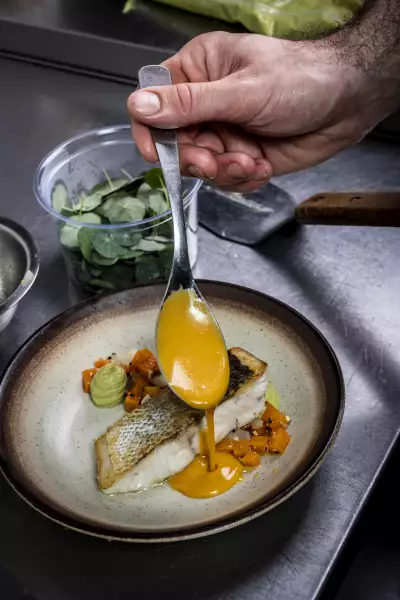
Beurre blanc at Sain
Kristo Lvan
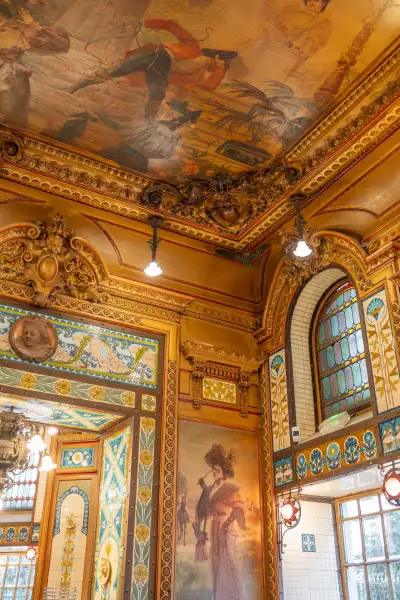
Restaurant La Cigale in Nantes
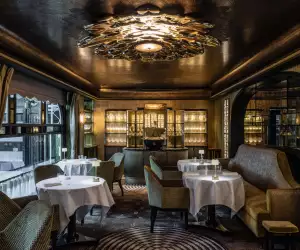
Afterwards, Muscadothèque, the first shop dedicated entirely to the Nantes wine region, offers an introduction to the breadth of Muscadet. Come evening, La Cigale, opened in 1895, combines dinner with one of Nantes’ most exuberant Art Nouveau interiors and ambience, while Hôtel La Pérouse makes a suitably design-conscious base for the night
Through inland Brittany
Leave Nantes the following morning and the change of pace is immediate. Around Redon, the Vilaine, Aff and Canut valleys meet, introducing a quieter Brittany where food remains closely tied to agriculture.
At La Ferme la Morinais, Pierre-Louis Guérin and Samia Gharet run their fifth-generation family farm organically. Its Écotable-certified restaurant serves a seasonal menu built around what is grown and raised on site, from lamb and poultry to freshly harvested vegetables.
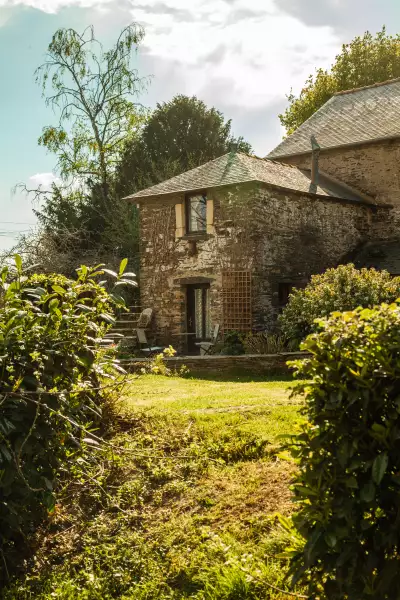
The historic stone buildings of La Morinais
Walissim
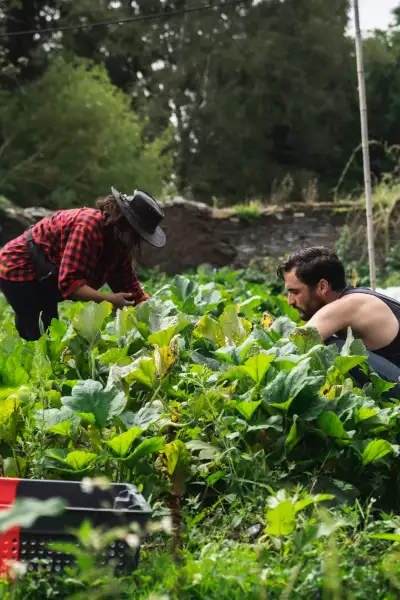
Pierre-Louis Guérin and Samia Gharet tend the organic kitchen garden at La Morinais
Anne-Claire Heraut
The route continues through Rochefort-en-Terre towards Auray, where Brittany’s relationship with its terroir takes a less expected turn. At the historic port of Saint-Goustan, agronomist and winemaker Aurélien Berthou is exploring the possibilities of Breton viticulture. His three-hectare organic Les Vignes de Saint-Goustan estate was planted with disease-resistant grape varieties between 2022 and 2025, producing its first vintage in 2024.
Nearby Frénésie has a similarly contemporary outlook, with a regularly changing menu built around vegetables from its own kitchen garden, local produce and organic, biodynamic and natural wines.
It is a poignant reminder that Brittany’s food culture isn’t preserved in aspic: traditional know-how remains central, but chefs and producers continue to find new ways of expressing it. Spend the night at La Belle Folie, an eco-retreat hidden among the trees, where playful designer cabins, Nordic baths and a greenhouse restaurant provide a novel take on rural Breton hospitality.
Quiberon, shaped by the sea
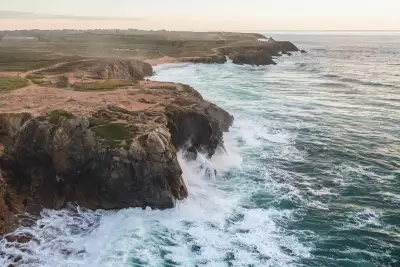
The Quiberon Peninsula pushes out into the Atlantic
Thibault Poriel
By the time the road reaches the Quiberon Peninsula, the Atlantic dominates the view and the plate. Port Maria was once one of France’s major sardine ports and remains an active fishing community, while seafood preservation and artisan food production define the region.
Start on a sweet note at Maison d’Armorine, founded in 1946 and producing Quiberon’s famous niniches and salted butter caramel using traditional techniques, before lunch turns towards the sea at Tempête, where chef Lucas Iung puts seafood from the local fish auction at the centre of a contemporary menu.
The peninsula’s artisan streak extends beyond seafood at Chocolaterie Glaz, while dinner at Le Vivier centres on oysters, langoustines, crustaceans and line-caught fish served against panoramic sea views.
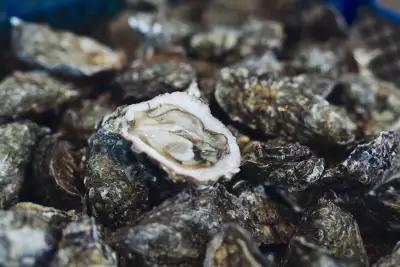
The following morning, La Criée de Quiberon, France’s only council-run fish auction, offers the chance to trace that seafood back to its source, handling more than 1,000 tonnes of fish from artisanal boats each year.
Seeing the morning catch arrive in Port Maria makes the connection between dock and plate unusually tangible, and gives the road trip a fitting endpoint. From Nantes’ markets and Muscadet to inland farms, vineyards and finally the Atlantic, Quiberon feels like the point where the journey’s landscapes, producers and flavours come together.
Plan your own Breton food road trip at brittanytourism.com