There is a moment driving west into Pembrokeshire, when the land seems to loosen its grip. The motorways turn into narrow, winding roads, hedgerows thicken, and the air shifts saltier and wetter. You begin to understand Wales through its twists, turns and edges. The coast here is restless, with its coves and sheer cliffs, long beaches, soft sand falling away underfoot, and fishing boats still working with the tide. It is a place shaped by weather and water.
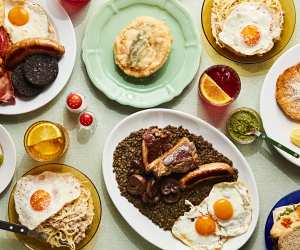
Growing up in the South Wales valleys, Welsh food was never really anything to shout about. School lunches were beige, mostly potato or cheese and going to friends’ houses after school brought more of the same. Welsh cooking was flattened into a few familiar, dependable and filling dishes such as cawl, rarebit, faggots (minced offal meatballs), oggies (savoury pies typically with lamb and leek) and Welsh cakes that provided vital nourishment for long days down the mines or out in the fields, which slowly became shorthand for heavy and old-fashioned.
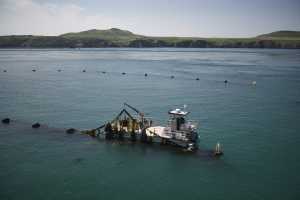
Car y Mor
Spend time in Pembrokeshire, and that idea starts to fall apart. This is one of the UK’s most fertile regions, where sea and pasture sit side by side. Lamb, beef, dairy, shellfish, seafood, seaweed, and vegetables have always been here, but what’s changed is a growing culinary movement in which Welsh cooks, farmers, fishers, and producers are looking inwards, cooking with native ingredients and traditional techniques. By championing local produce, they’re building a self-sustaining, circular food system that’s proudly and unmistakably Welsh. What makes something unmistakably Welsh, you ask? It’s resourcefulness, high quality, and hyper locality, with a sustainable conscience.
Over the past decade, Wales has been rethinking how it welcomes visitors. Food, language, culture and care for the land now shape that story. That change can be felt across the country. In the southern Welsh valleys and Monmouthshire, former mining and market towns are being reshaped by bakeries, cafés and small food businesses that prioritise affordability and local supply. Ty Melin Bakery in Cardiff, Bakestones in Merthyr and Angel Bakery in Abergavenny have become everyday neighbourhood hubs, using British flour, Welsh dairy and seasonal produce to feed locals while introducing visitors to what Welsh food looks like today.
In Cardiff, Gorse, the city’s first Michelin-starred restaurant, and Home in Penarth are moving Welsh food beyond pub staples, cooking local dairy, lamb, vegetables and seafood in a lighter, more considered and refined fine-dining way. Further north, along the coast and on Anglesey, producers like Halen Môn and restaurants such as Y Marram are building menus around salt, seaweed and shellfish, reflecting the shoreline and pasture.
View on Instagram
Wales is clearly embracing a gastro-tourism route, with Pembrokeshire often held up as the flagship example of the shift. Towns like Tenby, Cardigan, Saundersfoot, Fishguard, and Milford Haven have shifted from fishing and farming to tourism. Working harbours now sit alongside cafés, shops and places to eat. Visitors come for the beaches, coastal paths and national parks. Tourism brings £604 million a year to Pembrokeshire, attracting more than 6 million visitors annually and supporting nearly a quarter of local jobs, but that popularity comes at a cost. Rural communities are starting to feel the strain, particularly in honeypot areas not built to cope with the influx or the erosion of well-worn coastal paths.
Even so, for many who live and work here, daily life still turns to the weather, the tides and the land. That’s true for Matt Powell, chef-owner of Annwn. The Michelin Green Star and Good Food Guide-listed restaurant serves a 10-course tasting menu that traces the Welsh landscape, from coast to forest and field.
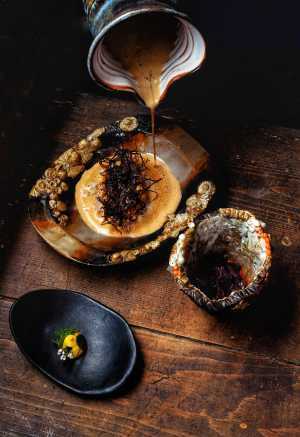
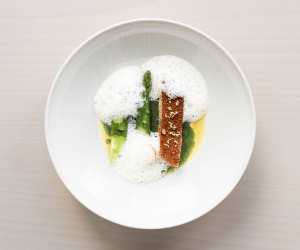
Brown crab with sea buckthorn and Cleddau shoreline plants at Annwn
Powell runs Annwn with his partner Naomi, and their cooking strips things back to a hunter-gatherer mindset that’s centred on wild ingredients. Annwn, meaning ‘otherworld’, speaks to abundance and renewal, and reflects Powell’s passion for the history, mythology and folklore of Wales, especially Pembrokeshire and its rugged landscape. As a result, their approach is meticulous and sustainable. They spend hours foraging, baking bread on a planc (a traditional Welsh cast-iron cooking plate), curing and air-drying meats, and work with a strong ecological ethos. Almost everything is made from scratch, from butter to vinegar and even cider.
“Sustainability might be trendy right now, but it’s something that goes back to my childhood,” Powell says. “I grew up fishing and shooting. Going back to roots is so important, and I don’t know many people championing local produce like us.”
Pembrokeshire’s microclimate makes the weather unpredictable, often cloudy, wet and blustery, but parts of the southwest-facing coast hold onto heat. Sheltered pockets in villages such as Dale, Cwm-yr-Eglwys, and Solva stay warmer and protected from the worst of the wind, perfect conditions for seasonal, locally foraged produce. From acorns and gorse flowers to mountain lamb, the woods and shores are lined with wild mushrooms and ancient herbs. The waters of St Brides Bay are rich with pot-caught crab, lobster and oysters. Nestled between sea and mountains, Pembrokeshire has access to some of the freshest produce in Wales.
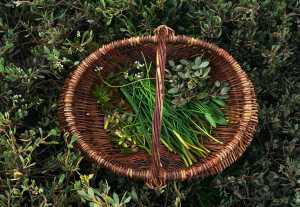
Foraging at Annwn
Powell works with what’s on his doorstep, highlighting Welsh terroir while exploring and championing Wales’s mythical past, teaching people about the natural environment that’s full of surprising beauty and bounty. He forages and preserves to carry ingredients through the lean months and runs dining and foraging experiences that help diners understand where their food comes from and connect with the landscape. His network includes family-run Cardigan Bay Fish, where owners Mandy and Len still fish Welsh shellfish the traditional way, by coracle, selling straight from their boats and keeping more of the catch in Wales.
“We do a dish called Kilapaison using local seaweeds like pepper dulse and sea purslane,” Powell explains. “We turn the oysters into a purée because not everyone likes them whole, but we still want that taste of the sea. Oysters were once a huge part of the Welsh economy. Now Atlantic Edge Oysters is the only oyster farm left.”
Further north, along the St Davids peninsula, Câr y Môr, Wales’s first regenerative seaweed farm, has been making waves in the hospitality industry. They harvest laver and shellfish by hand, working with the ebbs and flows of the tides. Cockles and seaweed have long been a part of Welsh cooking, with laverbread appearing on the English breakfast. The work of Câr y Môr helps restore the sea and soil while putting nutrient-rich Welsh produce on the table. It ends up in broths, breads and butters at top London kitchens, including Brat, Ikoyi, Kol and Anglothai.
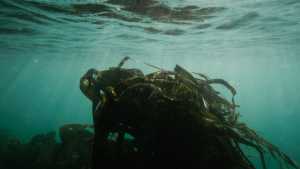
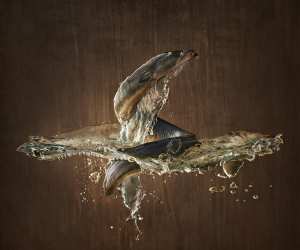
Seaweed at Car y Mor
Arthur Neumeier
Then there’s Fforest Farm, a low-impact back-to-nature retreat spread across 200 acres of woodland and fields by the river Teifi gorge. Stays range from simple campsites to garden rooms and domes with Japanese onsen baths, all built with ethically sourced materials and local craftsmanship. Co-founders James Lynch and Sian Tucker left Shoreditch in 2005, trading city life for the countryside.
“I’d say we’ve changed Cardigan,” Lynch says. Today, they run Fforest Farm with their family, hosting long-table feasts that celebrate fresh, foraged and cured local produce from growers and makers cooked over fire. Past guest chefs have included Brat’s executive chef Tomos Parry and chef Elliot Hashtroudi of Camille, alongside resident head chef Tom Hudson, who draws on old Welsh cookery books to keep the kitchen rooted in traditional methods.
“We try not to exclude and make it affordable for local people and keep tickets back for them for events and feasts,” Lynch says. “It’s important to care for the community rather than extract from it.”
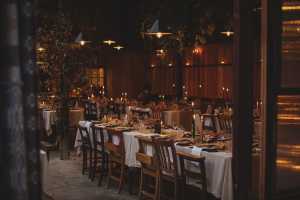
Fforest Farm dining
Heather Birnie
Meanwhile, in Narberth, a small market town full of Georgian and Edwardian buildings, sits in the shadows of a ruined castle. Grove of Narberth, set in the Narberth Hills, has become one of Wales’s most respected hotels. Its restaurant, the Fernery, holds one of the country’s Michelin Keys, and sustainability plays a huge part in every element – using solar panels, a biomass boiler, growing and composting vegetables in the garden. For the culinary director of the Fernery, executive chef Douglas Balish builds his menus and creates dishes around the people behind the produce.
“What’s interesting about Pembrokeshire is that it has farmland, rugged hills, forests and coastline, giving a diverse group of suppliers from oyster farmers, honey and seaweed producers to foragers and dairy farms,” Balish explains. “We work with Tim, a botanist who has grown wasabi less than a mile from the hotel. As far as we know, this is the first of the Welsh wasabi, and we are lucky to have the whole lot!”
With food comes drink. Grove of Narberth works closely with family-run Welsh vineyards such as Velfrey Wines, Hebron Vineyard and Ancre Hill. Just six miles from the small luxury hotel, Velfrey Wines is home to more than 4,000 vines planted on gentle, south-facing slopes across three acres. Its still and sparkling wines are elegant and reflect the character of the land. Together, they run vineyard tours, and while Welsh wine may still surprise people, the landscape is changing. Warmer summers and careful site choices are helping vineyards thrive, producing bottles that make sense when tasted with the fields stretching beyond the window.
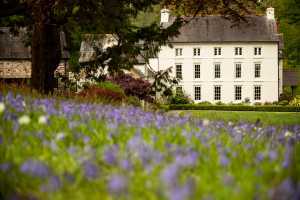
Grove of Narbeth
Pembrokeshire’s rise as a food and drink destination may be centred around restaurants, wine bars, vineyards, producers or growers. It’s about the educators, teachers and charities shaping a county where food is valued, understood and preserved for future generations. One of these is Cegin Y Bobl, a Welsh food education charity based in Carmarthenshire. They give people of all ages the skills and confidence to cook nutritious, affordable meals through hands-on workshops, school cookery sessions and community programmes. Chefs, educators and teachers involved include Scott Davies, Polly Baldwin and Barny Haughton, alongside others like Ffion Roberts, Simon Wright and Maryann Wright, all bringing decades of hospitality expertise into the classroom and community kitchen.
“Food education is everything,” says Jen Goss, director and chef lead at Cegin Y Bobl. “Whether in schools, with community groups or through food banks, teaching people to cook delicious, nutritious meals is at the heart of what we do.”
It’s this collective effort that defines the Welsh food story. What happens behind the scenes shifts mindsets, changing how we think about what’s on the plate and the journey ingredients take before they get there. That knowledge is shared, skills are passed on, and people are encouraged to cook, eat and care a little more thoughtfully. At the heart of what Cegin Y Bobl does are hands-on, practical workshops that show why food matters and how it shapes us, our communities, and the world around us. For chefs like Powell and Balish, it’s about using only what’s needed, following the seasons, and reflecting the land on the plate. “It’d be easy to buy things in, but I’m trying to emulate my country,” Powell says. “From birch trees to crabs and cockles, I’m always thinking about what’s around me.”
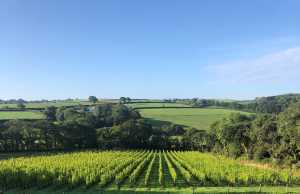
Velfrey Vineyard in Pembrokeshire
Last year, Visit Wales launched a campaign around the “Year of Croeso,” inviting visitors to experience the unique beauty only found in Wales, and Pembrokeshire feels like a fitting centrepiece. This is a county defined by fertile land, bountiful sea, mountains, and a hospitality scene that honours tradition while pushing boundaries. Farmers, producers and chefs work in harmony, championing local ingredients, seasonality and sustainability, while education ensures knowledge of the land, its heritage, culture and ingredients is passed to the next generation. People drawn here often stay, bringing fresh skills, ideas and energy to the county. It’s really no wonder Wales is often called God’s Country, and Pembrokeshire shows exactly why.