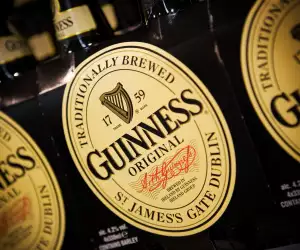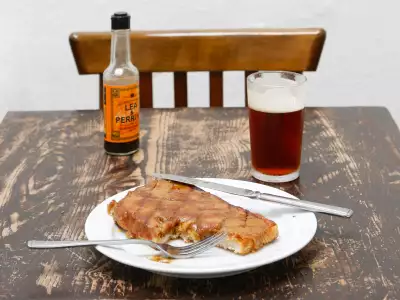
When Father’s Day rolls around, you can be almost certain every B&M store will be stocked with some kind of sign that says, ‘I like to cook with beer, sometimes I even put it in the food’. And while that belongs in a black liner along with crushed velvet cushions and Yankee Candles, it does stress the point that food and beer are inextricably linked.
The connection predates your last barbecue by around five millennia. In Mesopotamia (what is now southern Iraq), home to the Sumerians, an ancient recipe etched into clay and addressed to Ninkasi, goddess of beer, describes a brew made not from grain and yeast but from bread. Thousands of years on, not many of us are drinking beer made from bread (Toast Brewing notwithstanding), but a great many more of us are eating food made from it.

A selection of cakes and biscuits at Fink’s including the chocolate Guinness and cream cheese cake
What beer brings to a dish is threefold: bitterness from the hops, sweetness from the malted grain, and an umami depth from the yeast. The effervescence aerates batters – producing a crust lighter than you’d achieve with water or milk (see: beer-battered fish and chips) – and the natural acidity activates bicarbonate of soda, which is why beer-leavened bread and cakes work as well as they do. More flavourful than water and with a savoury acidity not unlike wine or stock, it substitutes credibly in almost any recipe that calls for either.
Historically, it helped that beer was everywhere in grain-growing cultures. In medieval Britain, ale was a daily staple – not only because unboiled water was somewhat lethal, but because brewing was reliable, local and calorific. Which is how it found its way from the tankard into the pot. The most enduring beer-spiked dish is probably Welsh rarebit (originally called Welsh rabbit, renamed to sand down some of the anti-Welsh sentiment), which has been consumed for centuries and remains firmly on the menu at St John and in your own hungover repertoire: toast slathered in an ale-infused cheddar sauce and doused in Worcestershire sauce. Across the water in Ireland, stout was a staple in many historic dishes that endure today – added to an Irish stew, its malty sweetness and coffee notes bring body and roasted depth, melding beautifully with hogget or lamb.
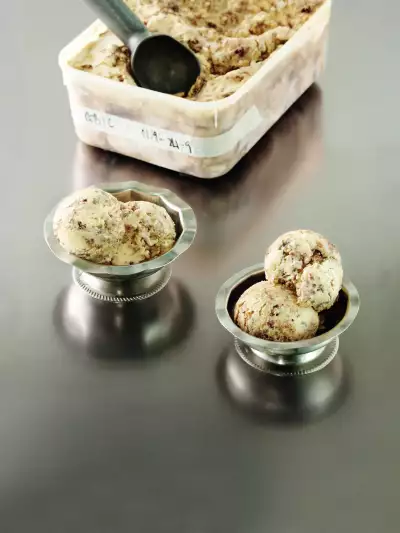
Guinness bread ice cream at Café Cecilia
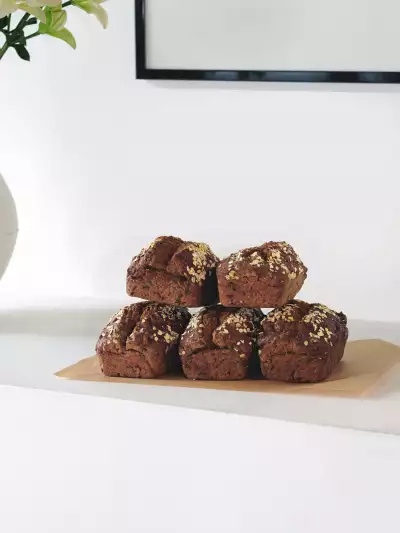
Guinness Bread at Café Cecilia
That same stock-substitution logic explains why beer turns up in some less expected corners, including, yes, beer soup, consumed everywhere from Alsace to Russia. In the Czech Republic, pivní polévka – which roughly translates to ‘brewing soup’ – is made with pilsner or dark lager, spices, and sour cream or egg yolk for thickening. German immigrants carried their own version of beer soup to Wisconsin, where it merged with the state’s dairy industry into a thick, sharp soup of cheddar, lager and bacon: perfect insulation for a harsh Midwestern winter.
Further south, the expressions of beer cookery become more recognisably American. Beer can chicken burst onto the southern barbecue competition circuit in the 1990s, its first brush with fame reportedly coming at a Memphis cooking competition. Shoving an opened can of beer up a chicken’s backside might feel a little violating, but the beer contributes steam and keeps the bird deliciously moist, while cooking it upright lets the Maillard reaction work its magic – browning evenly as the fat renders away.
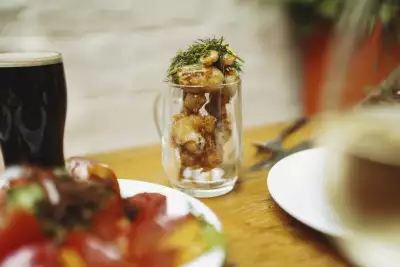
Beer-battered cockles at Rake
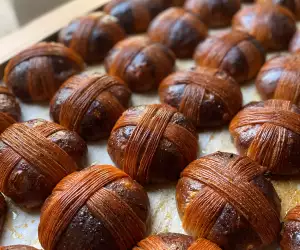
How do I like to eat my pints? For me, it has to be the stout bread recipe from The British Cookbook by Ben Mervis – a whole can of Guinness baked into a soft, cake-like bread loaf, sweet with treacle, made for toasting thickly and serving buttered with a bowl of pea and ham soup. Is that drool on your chin? You can get a quick fix at Café Cecilia in Hackney, where Max Rocha serves his feted Guinness bread, which is also churned into ice cream for pudding, or at Fink’s bakery for a wedge of their chocolate Guinness cake. Sláinte!