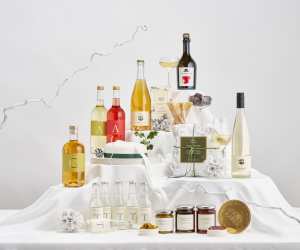
When you’ve spent a lifetime importing the world’s best wines (Beth Pearce, Master of Wine) or opening them at top tables in the capital cities of London and Paris (Gearoid Devaney, Master Sommelier), you come to appreciate why they’re so celebrated. But sometimes the real thrill isn’t in the most expensive or rare wines, but in unearthing the lesser-known bottles that quietly rival those great names and prove just as satisfying to drink, at a fraction of the price.
Rather than being imitations, these wines are often made with just as much care, but for whatever reason, they’re not as celebrated. Sometimes this is economic, with land prices varying drastically from region to region. At other times it’s historic, with another region garnering praise over centuries and becoming an established household name. It can be hard to put one’s finger on why a wine is unfairly overlooked, but regardless, we’re often torn between wanting to share it with the world and wanting to keep it all to ourselves.
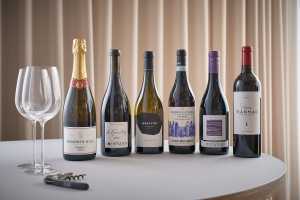
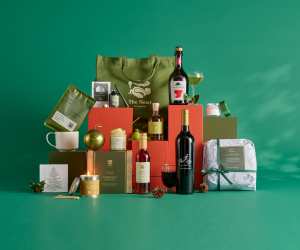
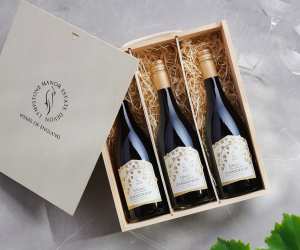
A selection of wines from Flint
Here are a few we owe it to the world to disclose that will impress you and enlighten your wine-loving friends in equal measure.
Alternative wines for the Christmas table
Ventoux, in the silky shadow of Châteauneuf-du-Pape
As the weather in Europe becomes increasingly volatile each year, many winemakers are seeking cooler vineyard sites to retain freshness in their wines. Ventoux, home to the eponymous mountain tackled by brave walkers and cyclists, benefits from its altitude and cooler conditions, and producers like Château Pesquié use the same grapes as in Châteauneuf-du-Pape to make refreshing, mineral whites and powerful, complex reds.
The ‘satellite’ appellations of Bordeaux’s right bank for elegance outside of Pomerol
Terroir is king in Bordeaux, and the deep clay of Pomerol is the reason why this patch of land is so celebrated. Nearby, the satellite appellations of Côtes de Bordeaux offer great value, but rarely are the wines as good as those of the more acclaimed Pomerol. However, you can find pockets of the same soil, which, combined with other natural conditions, create profound wines that are more pocket-friendly. Château Marsau is a biodynamic vineyard planted with 100% merlot on deep clay soils – the same as nearby Pomerol – but in the less sexy Côtes de Francs, where cheaper land prices mean this wine is a fraction of the price.
When Mercurey goes toe-to-toe with the famous vineyards of Burgundy
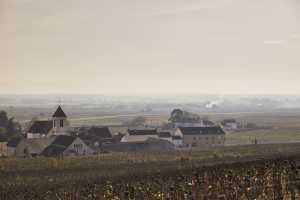
Morey-Saint-Denis in Burgundy
Climate change means sub-regions of Burgundy previously considered second-rate are now ideal for ripening. One great example is Mercurey, where ambitious producers can now access more affordable land and use the same exacting standards to create delicious wines. Bruno Lorenzon is one such producer, and we successfully put this to the test recently at a blind tasting with some of the top sommeliers and merchant buyers at Cabotte restaurant.
English sparkling wine
We love stashing a bottle of English sparkling in our luggage when we go to visit French winemakers, and even years on from the first interest in English fizz over here, we get surprised looks when they realise that the nuanced, crystalline wine in their glass isn’t champagne. Hundred Hills is England’s answer to grower champagne, with as much attention to detail in the vineyard as in the winery.
Steely swaps for Burgundy’s Chablis

Gearoid Devaney
Truli Photo
Any sommelier worth their salt will have a great assyrtiko on their wine list, but this Greek grape, most famously grown in basket-trained vines that look like bird nests on Santorini, is yet to hit the mainstream properly. The steely, marine-tinged style here is a dead ringer for great Chablis, with an extra smoky edge.
Nebbiolo d’Alba Superiore
Barolo is celebrated worldwide for its haunting, ethereal aromas and powerful structure. The Nebbiolo d’Alba appellation sits just outside and was previously considered too cold to ripen nebbiolo, and was excluded from the illustrious ‘Barolo zone’. Fast forward a few decades of global warming, and its cooler position is more of a blessing than a curse, making for beautiful, long-lasting wines that are still a fraction of the price.