A group of young Bavarians clamber onto a large flat spinning wheel. They brace themselves as pop music blares out and the wheel, shaped like a cymbal and smooth as marble, starts to turn. It speeds up gradually, then suddenly, as various implements are introduced to dislodge the contestants. Eventually, hanging on for dear life, one girl remains – until she too is dislodged when a massive soft ball bonks her on the head.
It sounds like a fever dream, but this is the Teufelsrad (Devil’s Wheel), a key element of Oktoberfest. Back in 2024, I spent a delightful hour watching various contestants – Bavarians, Australians, adults and children, almost all dressed in fetching lederhosen and frilly dirndls – trying valiantly and ultimately failing to stay on the wheel. It’s one of the things that makes Oktoberfest so joyous, and you have to go to Munich to experience it.
The same, of course, could once have been said of Oktoberfest itself, but nowadays thousands of mini-Oktoberfests take place in pubs, clubs and bigger venues up and down Britain.
A handful of British pubs have been allowed to serve Augustiner, provided they ensure the beer is in peak condition
In London, for example, there’s the London Oktoberfest at Finsbury Park, where you can hire lederhosen for £30 a session (and then hose them down, presumably). Oktoberfest on the Common takes place on Clapham Common, where more than 10,000 Londoners assembled last year. There’s a very good chance your local will be doing something, too. (In late September and early October, oompah bands are in very high demand.)
The authenticity of these events is open to question, but one thing is clear: Bavarian culture has rarely been more fashionable in Britain than it is now. Bavaria’s uncomplicated approach to lager-based fun really resonates with British punters, perhaps for obvious reasons.
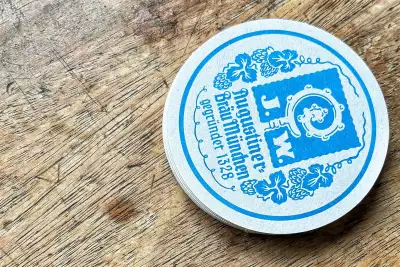
Unsurprisingly, the beer is increasingly easy to find here, too. Paulaner and Hacker-Pschorr have been here for years, but other arguably better options – from Tegernseer to Ayinger – are popping up all over. Bottles of Augustiner, Munich’s iconic beer, have become almost as popular at home (albeit not at €1 a pop).
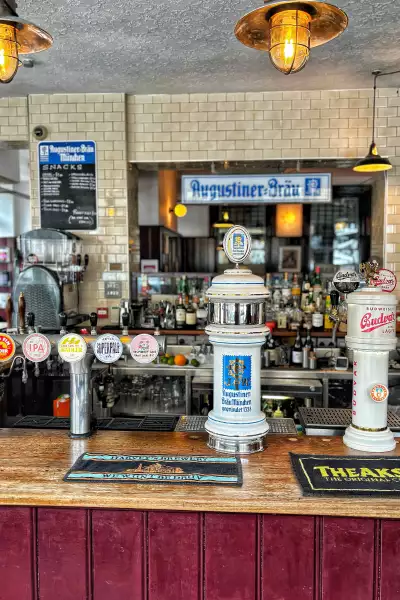
A distinctive ceramic Augustiner bar tower at the King's Arms in Bethnal Green
Will Hawkes
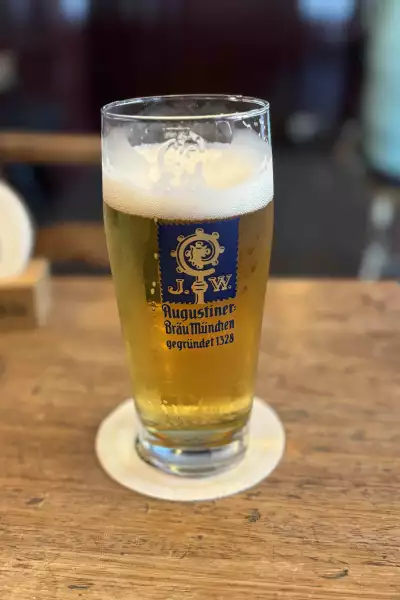
A cold pint of Augustiner served on draught
Will Hawkes
Now, delightfully, draught Augustiner has arrived in the UK. A handful of pubs around the country have been allowed to serve it, provided they abide by various rules that ensure the beer is served in peak condition: a cellar temperature of 4°C, for example, or a direct-draw system too esoteric to get into here.
This is how Augustiner does things; indeed, this attention to detail and our-way-or-the-highway approach is the very essence of Munich. It’s a city of rules and expectations, some of which don’t coincide with how things are done in the English-speaking world. I once tried to get an interview with someone from Augustiner for a national broadsheet, but it was quickly made clear to me – in the politest possible way – that that wasn’t really the sort of thing that Augustiner did.
Annoying, but it wasn’t enough to put me off the beer. Recently, I had a superb pint at the King’s Arms up in Bethnal Green, where a distinctive ceramic bar tower appeared in April when it became one of the first British pubs to serve the beer on draught.
“The first few days were chaotic,” pub owner Jack Duignan tells me. “Some were coming in for it especially, but others didn’t know: ‘Oh, you’ve got Augustiner on tap, that’s incredible!’”
It’s currently the King’s Arms’ best-seller, even at £7.40 a pint. Presumably Londoners’ willingness to pay well for beer is why draught Augustiner is finally here. Might similar financial incentives tempt Augustiner to put on a London Oktoberfest event one day in the future? I doubt it, somehow – although if they brought the Teufelsrad, Londoners would be queuing from Finsbury Park to Clapham.