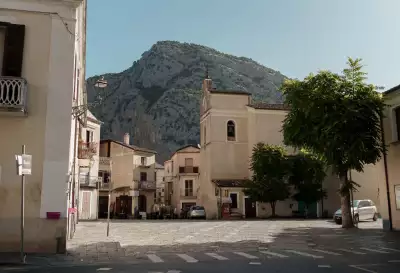
I grew up in what I still believe is one of the most beautiful places in the world: Calabria, the rugged southern Italian region where mountains fall dramatically into two seas and life revolves around food, family and respecting what’s in season.
From the slopes above my hometown, you can look out and see both the Ionian and the Tyrrhenian. Food was simply a natural part of everyday life where I grew up. In Calabria, families press olive oil, cure salumi, make cheese and preserve tomatoes for winter. Bringing an ingredient home out of season would have drawn disapproval at my grandmother’s table.
The kitchen was the heart of our home. Cooking was a collective ritual: my father brought vegetables, my grandmother orchestrated everything, my mother followed her lead, and the children hovered around kneading pasta dough and misbehaving. That shared purpose still underpins my cooking today.
My relationship with cooking began when I was young, working in my uncle’s ice cream shop at nine years old. Summers meant long hours in the shop while friends played outside. That experience taught me discipline and led me to the mentor who sparked my passion for hospitality. It also taught me something essential about Calabrian cooking: respect the ingredient, keep it simple, let the quality do the talking.
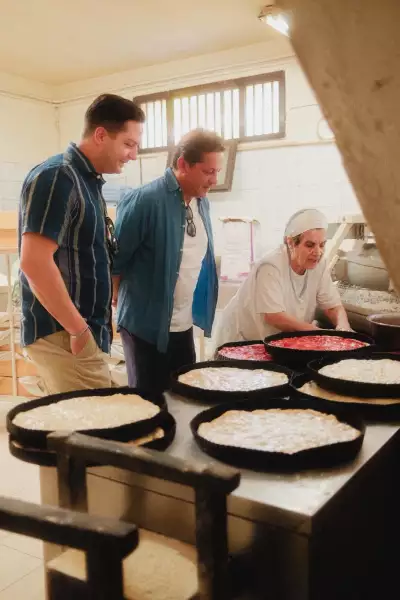
Mazzei checks out pitta Calabrese, a traditional Calabrian pizza
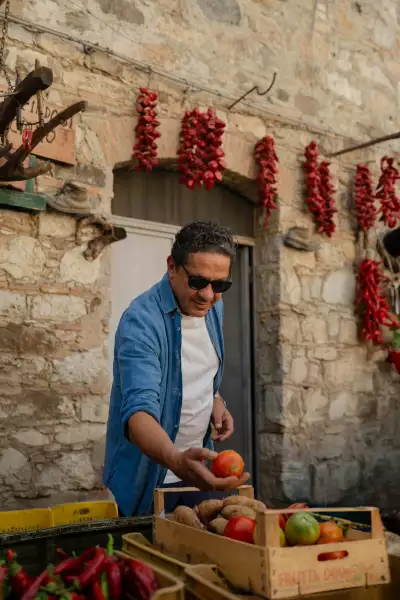
Francesco Mazzei at a food market in Calabria
Corinthia London
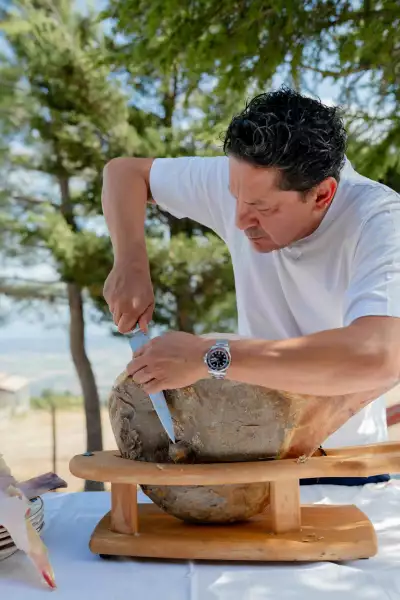
Francesco Mazzei slicing a ham
Corinthia London
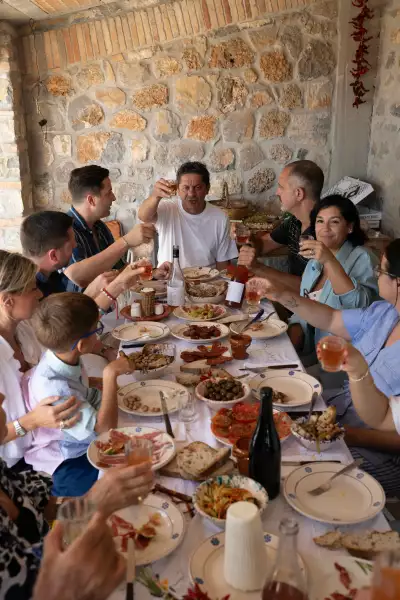
Francesco and a family sitting around the table tucking into a Calabrian spread
Corinthia London
That simplicity, that respect for ingredients, is what makes Calabria’s cuisine so distinctive, even if it remains relatively unknown internationally. It is a region of contrasts: mountains rising to more than 2,000 metres sit minutes from the coast, creating a culinary identity that blends land and sea. We call it mare e monti – sea and mountains – and you see it in dishes like swordfish grilled over mountain wood and served with earthy wild mushrooms or coastal seafood. It’s a philosophy that continues to inspire my menus.
Historically, Calabria was a poorer region, and its cucina povera made the most of inexpensive local ingredients. Butter, cream and expensive cuts of meat rarely feature; instead, there are vegetables, olive oil and pulses, rabbit, goat, poultry and plenty of seafood. It is the essence of the Mediterranean diet, but with a fiercer, spicier edge that reflects Calabria’s layered history of Ottoman, Arab and Mediterranean influences.
Bergamot grows almost exclusively along our coastline thanks to the gentle sirocco winds. Liquorice production here is among the most important in the world. Citrus thrives in the Sybaris Plain, while Tropea’s sweet red onions and Calabria’s fiery chillies have become emblematic. And then there is ’nduja – the spreadable, spicy salume that has travelled far beyond Calabria’s borders.
I spend my time moving between mountain and sea, walking, finding ingredients and absorbing inspiration. A typical day might begin with a swim along the coast, followed by a drive into the hills to cook fresh fish over charcoal while overlooking the water. Among friends, we joke about reversing expectations: fish in the mountains, meat by the sea.
Fragrant bergamot grows almost exclusively along our coastline thanks to the gentle sirocco winds
Despite its beauty, Calabria remains largely undiscovered. Across the region, hundreds of small villages safeguard distinctive traditions, including Arbëreshë communities established centuries ago by Albanian settlers, where food, culture and language continue to thrive. The result is a rare glimpse into an Italy that feels less touched by modern tourism.
Travellers seeking Calabria should hire a car and embrace spontaneity. Drive the coastline, venture into the Sila Mountains or explore the Pollino National Park. Agriturismi and local markets offer the best way into Calabria’s food culture. Calabria is defined by warmth, generosity and a slower pace of life. Unlike Londoners, people aren’t rushing around – Calabrians prioritise connection, family and time together, values that contribute to the region’s reputation for remarkable longevity.
If I could show someone the essence of Calabria, I would take them to my family home. There, surrounded by relatives, sharing simple food and conversation, they would understand what makes this region extraordinary. It’s about authenticity, gentleness and respect for land and tradition. Having once left in pursuit of opportunity, I now feel an undeniable pull back home. Calabria’s simplicity, climate and people remind me of what truly matters. It is a place to return to again and again, not just for its food, but for the way it teaches you to live.