Jeremy Chan: my career in Five Dishes
From fried chicken to jellyfish-topped ice cream, Ikoyi’s Jeremy Chan talks Christy Spring through the dishes behind his restless, rule-breaking cooking – and why a little mystery still matters
Jeremy Chan: my career in Five Dishes
Published: Tuesday 23rd June 2026
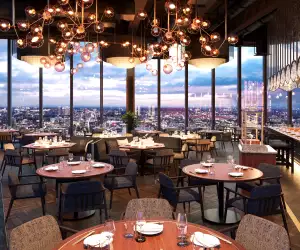
“I was an incapable, terrible cook,” laughs Jeremy Chan from across the table at Ikoyi 2.0, having relocated from St James’s Market to 180 The Strand in 2022. The open kitchen and dining room have a temple-like hush, with chefs working in silent synchrony, save for the drum of cutlery on pans and the thud of knives on wood.
Not the opener you’d expect from a chef with two Michelin stars, but it gets to the root of what’s made Ikoyi so successful. Chan arrived in kitchens better read than he was skilled – equipped with a near-photographic memory of what other chefs were doing, “a visual reference map of cuisines and chefs and styles,” absorbed from cookbooks long before he knew how to deglaze a pan. After reading philosophy and theory of languages at Princeton University and an 18-month stint in finance, Chan went into kitchens. The pull was less vocational than physiological – an inability to sit still. “I had a lot of repressed energy, and I couldn’t stand a ‘normal’ working environment. I find authority and rules difficult to follow unless I really believe in the laws of the thing.” His self-education came from cookbooks: Pascal Barbot’s L’Astrance, Noma, Fäviken and Christian Puglisi’s Relæ. “It was before Instagram, and there was more romance and mystery to cooking. Long hours, low pay – but there was something appealing about that hustle when you’re young.”
After spells at Claude Bosi’s Hibiscus and Dinner by Heston, and a stage at Noma, he skipped the usual head-chef and sous-chef rungs entirely and went straight to writing the menu for what would become Ikoyi. The restaurant exists, in the end, because his childhood friend Iré Hassan-Odukale asked him for one. Chan said yes, drafted it on the train home.
“You don’t need cooking experience to write a great menu,” he says now. “You need it to make a great restaurant. I don’t think Ikoyi was a great restaurant for a long time. It was a place with great ideas.” Early Ikoyi, by his own account, was “a teenager trying to find itself. Some of the expressions were exciting. Some were tragic.” The current version he describes as “ageing” – settled into itself, no longer revising its identity every six months or getting risky haircuts.
London’s compulsion to define a restaurant in a single line bores him. Ikoyi spent its first years pigeonholed as West African – a label he no longer corrects so much as ignores. In the beginning, he says, you don’t get to refuse the shorthand: “We had no reputation, no track record. It’s quite hard to open a restaurant and tell people to come. They have to trust you.” A cuisine label gave them something to trust. The restaurant has since outgrown it. “We’ve managed to get an identity just by being a black sheep.” Describing the place too precisely now, he reckons, is the quickest way to lose people. “The more you articulate it, the more alienating it becomes.” For the Ikoyi experience, his preferred analogy is seeing a new Paul Thomas Anderson film. “If you know something great is going to come, you don’t really mind how it goes.”
What’s more unusual than the cooking is the way he runs the kitchen behind it. Ikoyi closes at weekends; service finishes by 10.15pm. Chan won’t dress this up as ethics – he says it’s simply the most sustainable version of a restaurant he wants to run. “I don’t even think it’s a philosophy. It’s just maturity. If I want to deliver a mind-blowing menu but I don’t want to work a hundred hours a week, I can’t expect others to do those hours if I’m not.”
Equally unusual: he won’t eat at Ikoyi, or eat any dish there in its entirety. “I still want it to be a mystery. It keeps it romantic.” There’s also, he admits, the risk that he wouldn’t like it. “Flavour is so subjective. I might taste a dish and objectively think it’s agreeable, but have no feeling towards it. The most important thing is that the idea behind it is real. That gives me blind faith to send anything.” It’s perhaps the reason why Ikoyi feels so magnetic, Chan is comfortable where other chefs may not be, in leaving a little mystery on the plate.
Squid toast
Ikoyi
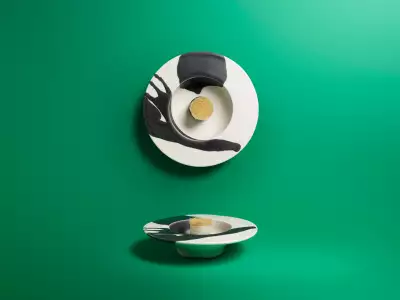
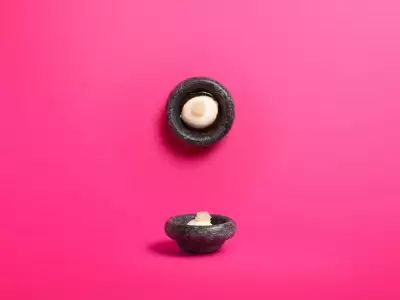
“We take a wild Cornish squid and confit it slowly in olive oil, then chop and blend it with vin jaune that we’ve infused with dried mushrooms and spices – you get this sweet, oxidised, sherry-like flavour. Then we fold raw squid into the paste. The toast itself is made from rice and squid ink. We roast the toast in butter that’s been blended with squid tentacles – we roast the tentacles in the oven overnight and grind them into the butter, so you get this barbecued, caramelised squid flavour. The mouthful is roasted squid, marinated squid, and raw squid, all at once. I love to serve this to guests because it’s unexpected.”
Saffron and mussel crème caramel
Ikoyi
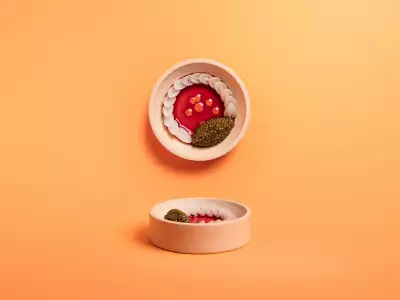
“This is a signature dish for the new space at Ikoyi. When we wrote the menu here, I wanted to move away from the way people had been describing the restaurant and make a clear statement about what Ikoyi is. Bouillabaisse is one of my favourite dishes of all time – saffron, shellfish, a little tomato, a little chilli, the rouille with the garlic and the saffron texture. I started thinking about how to turn that into a caviar serving, and somehow my brain went to a Spanish flan. So: a bouillabaisse flan. The dish is really about mussels – British mussels are some of the sweetest you can eat, and I wanted to focus on locality and seasonality. We make the crème caramel base with mussels and saffron, steam it, and serve it with two huge razor clams confited in mushroom oil and sliced, caviar, a beetroot reduction with mushrooms and spices, and a finish of saffron oil. It’s a crème caramel, but a lot is going on. It tells you how we think about produce – about what ‘the best’ actually means. For me, it’s the British ingredient with the most potential for deliciousness, for luxury, for something extraordinary.”
Magma fried chicken
Ikoyi
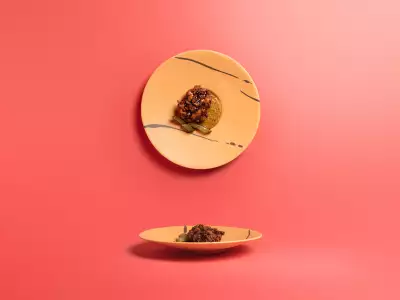
“This is an old recipe – we’ve been doing versions of it since the original site, and it has evolved a lot. I’ve eaten so many kinds of fried chicken growing up. I personally like a bone-in, but not everyone does. I wanted a recipe that has the juiciness of chicken thigh with the ease of eating of breast. So we debone and de-skin the thigh, marinate it in buttermilk, hot sauce, and a lot of spices, and then we did a lot of work with the flour: matzo, tapioca, rice, a little plain flour, cornstarch, and bicarbonate of soda. After the buttermilk, we dredge it dry, then through an egg-white wash – the egg white gives it that fluffy, aerated texture – and back into the dry. Then we fry it hot, but only for three to three-and-a-half minutes. A lot of fried chicken recipes cook for seven or eight minutes, and I think you break the meat down too much. The bicarbonate helps the batter caramelise, so it’s done before the chicken is overcooked. I’m not a big believer in the super-crunchy, heavy-batter school. The batter should adhere, with a little extra crunch, but not be the main event. We glaze it with a chicken wing reduction, the wet-fried chicken idea, and serve it with dill pickles. It’s a user-friendly dish – it can sit on a tasting menu or go in a sandwich.”
Prawn rice
Home
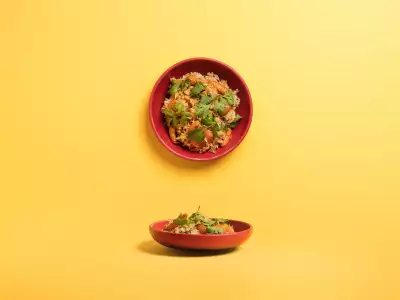
“This is the dish I always make for my parents and my sister. We don’t see each other often, and they always ask for it. Prawns are sweet and crunchy; I marinate them with ginger, a little honey, soy, chilli, and sesame oil. The rice is cooked al dente in coconut milk – very bouncy, with a particular mouthfeel. The textures of that dish are part of who I am. It defines what I like to eat: things that are light but powerful, textured, nourishing. It’s a home dish, but it has definitely influenced the menu here.”
Osmanthus ice cream with marinated jellyfish
Noma
“This was the first dish I ever created. I was an intern at Noma, and I was considering starting my own thing. I made an ice cream of osmanthus – a Chinese tea, very floral, almost peachy – and served it with jellyfish. Jellyfish sounds like a weird choice in a dessert, but it has no taste; it only has texture. So I marinate it in a syrup of rose and caramel. Imagine eating crunchy jelly and then the fragrant osmanthus ice cream on top of it. What got my imagination going was the moment of combination – putting two things together and not really knowing what would happen. That’s what’s so romantic about cooking.”