It begins to dawn on me, over lunch with Mermaid Gin co-founder Xavier Baker at The Smoking Lobster in Ventnor, that things are done differently on the Isle of Wight. We are sitting opposite a world map when he gestures at the Atlantic and mentions, with the equanimity of a man describing a parkrun, that in 2024 he rowed 3,000 nautical miles from the Canary Islands to Antigua in a Rannoch 45 with two others. Almost choking on a lobster tail, I ask where he slept.
“The floor,” he laughs. “You wouldn’t want to know the state of that sleeping bag by the end of it.”
While the Mermaid Atlantic team had satellite navigation to steer them across the ocean, sailors centuries ago made do with less sophisticated reassurance. Rock samphire – the 'mermaid's kiss' of local folklore – is an aromatic succulent that grows in the cracks and ledges of the island's cliffs, close to the sea but always above the mean high-water mark. For anyone shipwrecked, smuggling, or otherwise experiencing an unscheduled maritime disaster, the sight of it meant land, and not drowning. It is also, neatly, the leading coastal botanical in Mermaid Gin. After lunch, Baker walks me to a stretch of rocks where it grows. We pinch a little from a crack and chew it. It is unexpectedly moreish – a saline snap with a vegetal note, not dissimilar to eating carrot tops.
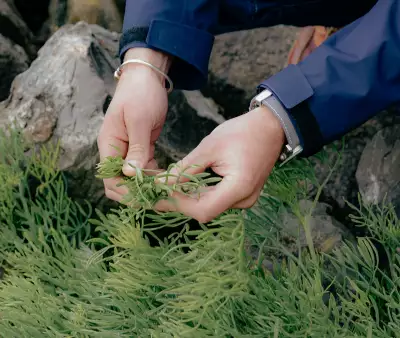
Rock samphire foraged by Baker
Christy Spring
Gin, of course, has its own long relationship with drowning. Historically more in sorrows than seas. Mermaid could not have existed before the late-2000s thaw in Britain's small-still rules. For years, small-scale distilling was throttled by legislation – a hangover from gin's less decorous London period, when cheap spirit and the general Hogarthian conviction that the capital was one dram from selling its breeches made lawmakers extremely twitchy. When Sipsmith prised the rules open in 2008, a generation of small-batch distillers poured through.
What followed was, inevitably, christened the ginaissance: bulbous goblets held like tridents over sashed hen dos, tonic menus, tasting flights, and garnishes that crept from lime wedge towards full-blown terrarium. Gin was promoted from something your granny smuggled through duty-free to an entire hobby. Mercifully, the Wetherspoons gin menus have since calmed down. One useful thing endured, though – small independent producers using local botanicals to make gin feel like an expression of the place it comes from. With juniper the only legal non-negotiable, gin offers distillers a permissive stage.
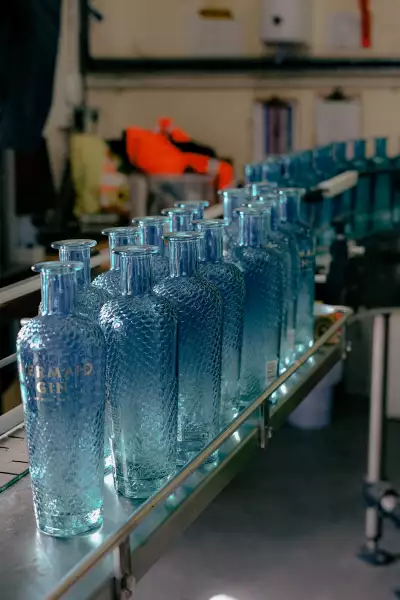
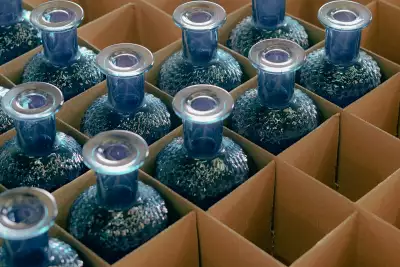
Mermaid Gin bottling at HQ
Christy Spring
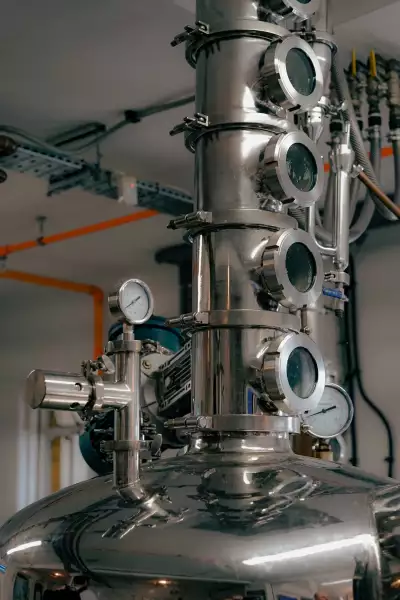
Copper stills for distilling gin
Christy Spring
Founded by Baker and Conrad Gauntlett in 2014, the Isle of Wight Distillery was the island's first, built on sustainably sourced botanicals that taste of its coastline. To understand this abundance, I spend the day in the passenger seat of Baker's immaculately clean camper van, trundling between shores, glasshouses, fields and stately homes to see how the Isle of Wight is distilled into something that behaves extremely well with ice and a slug of tonic.
The Isle of Wight is dinky: 60 miles in circumference, home to around 140,000 people and a 30-minute ferry from Portsmouth. Aside from being Queen Victoria’s favourite place – thanks to Osborne House, her Italianate seaside retreat above the Solent – it has its own microclimate, which may explain why she was so fond of processing the empire beside a palm tree. These mild conditions allow the island to sustain produce with more obviously Mediterranean affinities. Osborne House’s walled garden holds one of the UK’s only citrus groves, whose lemons and bergamot find their way into Mermaid Zest Gin, released in 2022, with the lemon’s fragrant outer rind lending a more insistent citrus character to the pour.
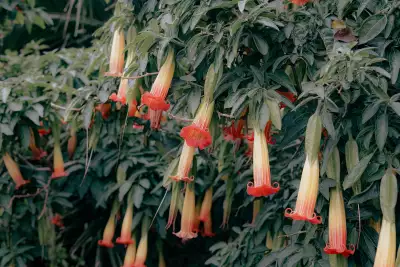
Red Angel's Trumpet at Ventnor Botanic Garden
Christy Spring
We take the van to Ventnor Botanic Garden, set on the site of a former sanatorium, where we meet head gardener Wayne Williams, who explains a pioneering project underway on the island. Wild juniper was once native here, but with just seven bushes remaining, the garden took cuttings from the last wild male plants and propagated them with female junipers to produce berries, with plans to re-establish the population. Eventually, the hope is that Isle of Wight juniper will make its way into Mermaid Gin itself, once the species is re-established on the island.
That is not the only garden ingredient destined for the bottle. We walk through olive groves to a clifftop field, officially Britain's closest hop garden to the sea. Hops – taxonomically, cannabis's more law-abiding cousin – are another Mermaid botanical, a nod to Baker's previous 15 years as a brewer, prized for centuries as a preservative and, in teas and ales, a soporific. This boadicea hops variety is not intended to tuck you in, though that rather depends on how many gins you sink. Here, it contributes a spicy, earthy note.
On the way out, we pass fig trees, among them a contorted, druidic specimen that turns out to be the country's oldest. Botanic Garden fig leaves went into Mermaid's 10th-anniversary gin, lending a soft, green, almost coconutty warmth. It says something about the island's scale that its only distillery is supplied by its botanic garden and a former royal residence. Kew and Buckingham Palace don’t, to my knowledge, grow for Gordon's.
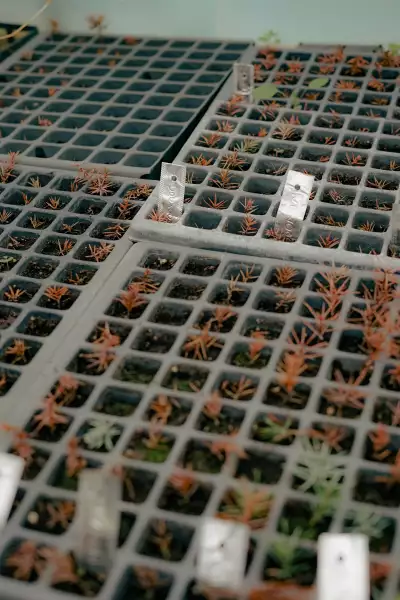
Juniper seeds at Ventnor Botanic Garden
Christy Spring
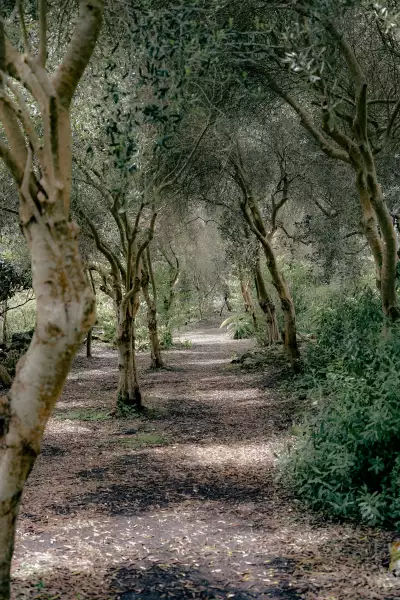
Olive trees at Ventnor Botanic Garden
Christy Spring
The island’s natural prowess goes beyond picturesque coastlines and pretty greenhouses. The Isle of Wight is one of the UK’s seven Unesco biosphere reserves, an internationally recognised region designated to demonstrate a balanced relationship between humanity and nature. This is explained to me by Barnes – better known as Barnaby – Edwards, managing director and co-owner of The Garlic Farm in the Arreton Valley, the UK’s largest specialist garlic grower and a place pioneering sustainable agriculture systems.
Much like the farm’s interest in regenerative agriculture, the Isle of Wight Distillery works with sustainability at the fore. A registered B Corp, it sources botanicals carefully and has put particular effort into its packaging. The Mermaid bottle, with its scale-patterned glass, natural cork stopper, compostable seal and biodegradable paper, is completely plastic-free. The distillery could have patented its packaging innovations, but instead made it freely available so others could follow suit.
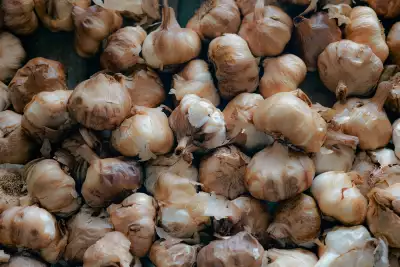
Garlic grown by Barnaby Edwards at The Garlic Farm
Christy Spring
Where, then, does the magic happen? Despite listings in serious hotels and classic, pink and zest gins now shipping to the US, Mermaid HQ is surprisingly humble. It remains in the Old Wishing Well, a formerly derelict pub everyone on the island seems to have a story about, mostly from its folk-club days. There are offices, a bar for tastings, and out back the operation itself – copper stills and ABV-measuring apparatus that wouldn’t look out of place in a chemistry classroom. The stills are named rather than numbered – Stevie Nicks, Jimi Hendrix, and, cooperating at long last, Liam and Noel Gallagher.
It all began when Baker and Gauntlett – the latter originally from viticulture – took distilling courses in Scotland and America, respectively. Gauntlett even flew the first copper still home in his suitcase from the US, which must have made for a bracing customs declaration. That wasn’t the only hurdle – Baker explains that the Portsmouth and Isle of Wight licences took a year to secure because nobody had ever issued one on the island. According to Baker, due to several centuries of sailors and smugglers, there had never been much incentive to make booze legally.
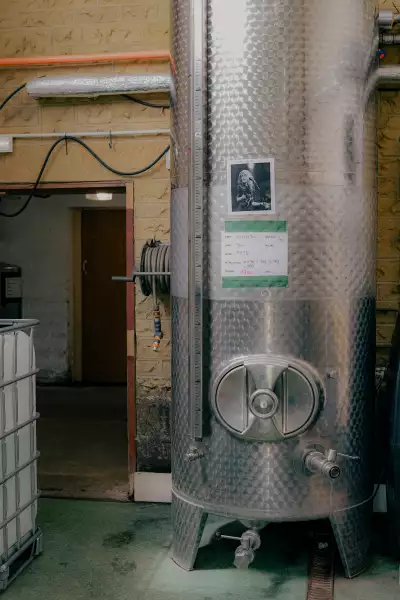
Stevie Nicks copper still
Christy Spring
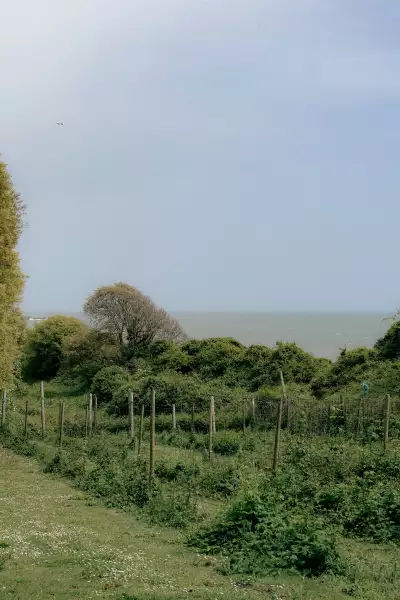
Hops grown at Ventor Botanic Garden
Christy Spring
Today, in Mermaid Gin, ten botanicals macerate for 24 hours in neutral grain spirit before distillation, and the liquid rests for a week afterwards to breathe and soften. There is also a pink gin made from wonky local strawberries, Mermaid Vodka, infused with sea salt harvested, according to Baker, by a man known as Salty Simon, and a spiced rum blended from sugar cane and molasses rum from Trinidad and the Dominican Republic, infused with rock samphire, cherry, apricot, honey from their hives and black salt from the flood tides. During Covid, the team turned out hand sanitiser for hospitals too. Commercially, the pandemic was boom time. People were at home, drinking, and mixology had become a domestic coping mechanism alongside sourdough, banana bread and filing for divorce. At one point, Baker laughs, they were selling so much gin that they mistook the order numbers for duplication errors.
I board the ferry to the mainland with a tote bag suffering its own duplication glitch – handles moments from snapping under the weight of Isle of Wight tomatoes, homemade ketchup, garlic bulbs, tins of gin and tonic, Mermaid Gin, Vodka and Rum. It is a rare thing to visit an island 60 miles around and leave equipped to make an entire dinner, and the drinks to accompany it, from its land and shore alone. If the mermaid's kiss once guided sailors towards land, Mermaid Gin runs the current in reverse – the island, distilled and delivered to you, wherever you are sipping.