Four recipes from Jad Youssef's Lebnani

The best Lebanese recipes rarely leave the family kitchen. In his debut cookbook, chef Jad Youssef opens his own – sharing over 80 dishes

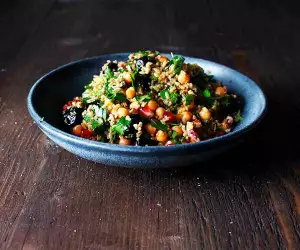
Lebnani Loubieh

Lebanese cuisine is among the oldest in the world, its roots tracing back to Phoenician traders who carried olive oil, wine and bread across the Mediterranean. In the intervening years, Ottoman and French empires and Arab traders have each left their own mark on the table, incorporating spices and techniques. But today, it also remains an intensely personal food culture, deeply embedded in daily family life.

Recipes belong to households, passed down through families, and many of their best are rarely shared outside the home. As Jad Youssef, owner of Reigate restaurant Lebnani, says: “Life in Beirut was complicated, but even in the shadow of war, something stronger always pulled us together: family and food. Despite falling bombs and regular power cuts, the question in our home every morning remained the same: ‘What shall we eat today?’”

Born in Beirut during the civil war, Youssef learned to cook from his mother, Khadija, with the daily ritual of family meals offering respite from the surrounding conflict. After opening Yalla Yalla in London in 2009, he moved to Surrey to open Lebnani in 2020. His new cookbook, also titled Lebnani, features over 80 recipes alongside personal stories and photographs from a country that expresses its spirit, tradition and resilience through its cooking, delving into the context and history of many of Lebanon’s most famous dishes.
Khadija’s tabbouleh

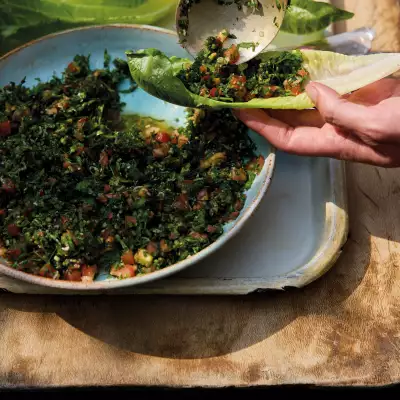
Tabbouleh cuts through the richness of grilled meats with piles of fresh parsley and mint tossed with tomatoes, lemon, baharat and olive oil

Khadija’s tabbouleh

Serves 4-5

Preparation time 20 minutes

Few salads can seriously claim to be the star of most tables, but tabbouleh is one of them. Balancing the proportions of ingredients is crucial, and while Western versions often lean more heavily on the bulgur, in Lebanon, the first thing you should taste is the parsley.

“Tabbouleh is the soul of our mezze. You can have ten dishes on the table – grilled meats, kibbeh, fatteh – but if the tabbouleh is missing, something feels wrong,” says Youssef. “It’s not a side dish – it’s the dish that brings brightness, freshness, life. Every family, every region, has its own take on the dish: more lemon, more mint, more tomatoes. But the core remains the same – green, sharp, alive. This version is just like Khadija would make.”

Ingredients

  • 2 large bunches of fresh flat-leaf parsley leaves
  • 1 small bunch of fresh mint leaves
  • 3-4 ripe medium vine tomatoes, finely chopped
  • 3-4 spring onions, very finely chopped
  • 1 tbsp fine brown bulgur
  • 5-6 tbsp freshly squeezed lemon juice
  • 4-5 tbsp extra virgin olive oil
  • 1 tbsp fine sea salt, or to taste
  • 1 tsp baharat
  • 4-5 romaine lettuce leaves

Method

1. Always start by washing the parsley and mint thoroughly. Soak them in cold water with a splash of vinegar, rinse 2-3 times, and drain well.

2. Spread the herbs on a clean cloth or place them in a salad spinner to dry fully. Once dry, chop the herbs finely. The chopping must be by hand with a sharp knife, never a processor. The herbs should be fine, fluffy, and full of aroma.

3. The tomatoes must be ripe but firm, juicy but not watery, and always chopped into very small pieces (around 5-7mm). If they’re too juicy, let them sit in a sieve briefly.

4. In a large bowl, combine the chopped parsley, mint, tomatoes, spring onion, and bulgur.

5. Add the lemon juice, olive oil, salt, and baharat. Mix gently but thoroughly; the tabbouleh should be well combined, tangy, and fresh – not oily or watery. Taste and adjust the salt or lemon to your liking.

6. Serve fresh and slightly chilled, ideally within 1-2 hours of making, with the lettuce leaves.

Maghmour

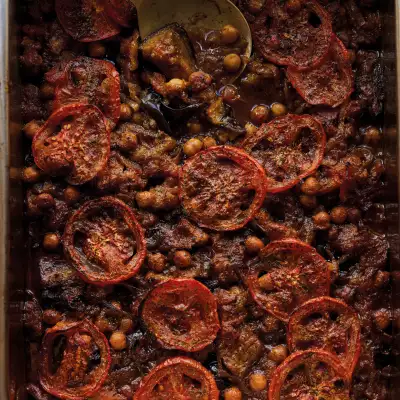
This Levantine staple is made with just-ripened aubergines cooked until jammy with tomatoes, chickpeas, olive oil and dried mint

Serves 4-5

Preparation time 45 minutes

Cooking time 1h 30m

Lebanon’s version of moussaka is actually the dish in its original form, existing long before a French-trained Greek chef added béchamel in the 1920s and made it famous.

“Maghmour takes me straight back to the small southern villages where neighbours shared what they grew. Aubergines from the garden, chickpeas from last season, tomatoes ripened under the sun,” says Youssef. “The women salted the aubergines early, frying them while chatting in the courtyard. By afternoon, every house smelled of garlic, mint, and cumin as the trays baked, ready to join a simple table of khobez and good company.”

Ingredients

  • 3 medium aubergines, cut into 4-5cm cubes
  • 60-80ml extra virgin olive oil, plus extra for frying
  • 2 medium brown onions, finely sliced
  • 6 garlic cloves, finely grated
  • 2 tbsp tomato paste 
  • 500g ripe tomatoes, peeled and chopped, or 400g best quality tinned chopped tomatoes
  • 1 tbsp dried mint, plus extra for sprinkling
  • 1 tsp ground cumin
  • 1 ½ tsp fine sea salt, or to taste
  • 1 tsp freshly ground black pepper
  • 400ml water or light vegetable stock
  • 200g dried chickpeas, soaked overnight, or 1 x 400g jar of cooked chickpeas
  • 2 medium tomatoes, sliced (for layering on top)

To serve 

  • Warm khobez
  • Chilli pickles
  • Lemon wedges

Method

1. Lightly salt the aubergine cubes and place in a colander for 30 minutes to release any bitterness and excess water. Rinse and pat completely dry with kitchen paper. 

2. Heat some olive oil in a wide pan and shallow fry the aubergines in batches until golden. Drain on kitchen paper and set aside. 

3. In a wide saucepan, heat the extra virgin olive oil over medium heat. Add the onions and sauté for 8 -10 minutes until soft and translucent. 

4. Stir in the garlic and cook for another minute. Now add the tomato paste and stir for 1-2 minutes to release its aroma, then add the chopped tomatoes, dried mint, cumin, fine sea salt, and black pepper. 

5. Stir the tomato mixture well and then pour in the water or stock. Bring to a simmer. If you are using dried and soaked chickpeas, drain them and add to the sauce at this stage. 

6. Simmer gently for 35-40 minutes until tender. Taste and adjust the seasoning. 

7. If you are using jarred chickpeas, let the sauce simmer for 15 minutes, then add the chickpeas and cook for an additional 15-20 minutes to allow the flavours to absorb. 

8. Preheat your oven to 180°C (160°C fan). Take a large baking tray (about 30 x 22cm) and layer the fried aubergine evenly across the base. Pour the rich tomato and chickpea sauce evenly on top. Arrange the sliced tomatoes over the surface, then drizzle with a little extra virgin olive oil and sprinkle with dried mint. 

9. Cover the tray loosely with foil and bake in the oven for 30 minutes. Remove the foil and bake uncovered for 15-20 minutes until the top slightly caramelises and the sauce thickens beautifully. 

10. Let it rest at room temperature for 15 minutes, then serve warm or at room temperature with fresh khobez, pickles, and lemon wedges.

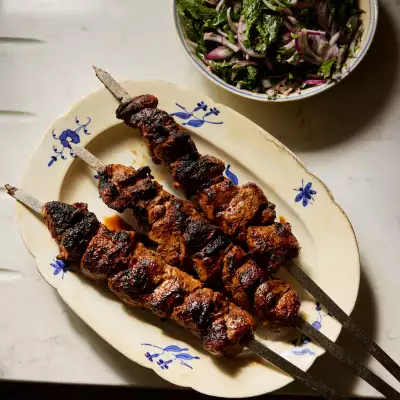
Lahmé meshwiyé

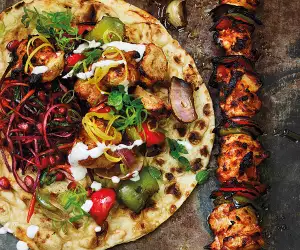
As the warmer months roll in, these lamb or beef skewers perfumed with sumac and baharat make the perfect barbecue centrepiece

Serves 4-5

Preparation time 30 minutes

Cooking time 25 mintes

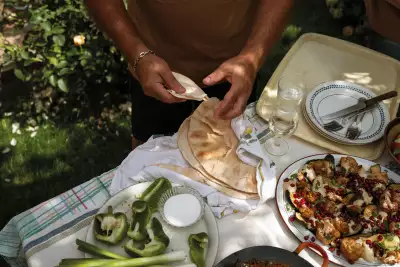
Mashawi is barbecuing done the Lebanese way. Typically whole-day affairs, with marinated meats over charcoal, the centrepiece surrounded by breads, hummus and onion salad. Come Sunday, these aromas enliven wherever there is space to set up a mangal and some coal – from rooftops in Beirut and the beaches of Tyre to parks of Tripoli and on the street outside butchers. The combination of fatty lamb, citrussy sumac, and that all-important Maillard reaction from cooking over a hot grill, quelled by cooling yoghurt, is a Lebanese staple on the dinner table.

“Lahmé meshwiyé is a beloved dish that captures the spirit of Lebanese street food and home cooking alike. In the bustling streets of Beirut, it’s common to find traditional butchery shops grilling tender, marinated meat skewers right outside their doors,” says Youssef. “These freshly grilled meats are often served wrapped in warm khobez as simple yet irresistible sandwiches, enjoyed by locals and visitors on the go. For me, it recalls childhood memories of street vendors and family gatherings, where the thrill of smoky, juicy meat fresh from the grill was always a cause for celebration.”

Ingredients

For the lahmé meshwiyé

  • 1kg lamb or beef rump
  • 4 tbsp olive oil
  • 1 tbsp apple cider vinegar
  • 1 tbsp plain full-fat yoghurt
  • ½ tbsp pepper paste or tomato paste
  • 1 tbsp baharat
  • 1 tbsp sumac
  • 1 tsp fine sea salt, or to taste
  • ½ tsp freshly ground black pepper

For the téblé salad

  • 2 large red onions, finely sliced
  • 1 large bunch fresh flat-leaf parsley, finely chopped
  • ¼ bunch fresh mint, leaves picked
  • 2 tsp sumac
  • ½ tsp fine sea salt, or to taste
  • 1 tbsp extra virgin olive oil
  • Juice of 1 lemon

Method

1. Start by trimming the meat of any excess fat, leaving a thin layer to add flavour and juiciness. Cut into even cubes of about 40-45g each and then place the meat in a large, clean bowl.

2. In a separate bowl, combine all the remaining ingredients and whisk thoroughly until well blended. Pour this marinade over the meat and fold gently to coat every piece completely. Cover the bowl tightly and refrigerate for at least 6 hours, preferably overnight, allowing the spices to penetrate and tenderise the meat.

3. When ready to cook, remove the meat from the refrigerator and bring it to room temperature. Thread the meat onto soaked wooden skewers, leaving space between pieces for even cooking.

4. Grill the skewers over a hot charcoal grill or preheated grill pan at medium-high heat, turning frequently. Cook for approximately 12-15 minutes, until the meat is nicely charred on the outside and cooked to your preferred doneness on the inside.

5. While the meat is cooking, prepare the téblé salad by combining the finely sliced onion, chopped parsley and mint leaves in a bowl. Sprinkle with the sumac and fine sea salt, then drizzle with the olive oil and lemon juice. Toss gently to mix and let the flavours marry.

6. Serve the grilled meat skewers immediately with warm khobez, grilled baby onions and tomatoes, and the fresh téblé salad.
 

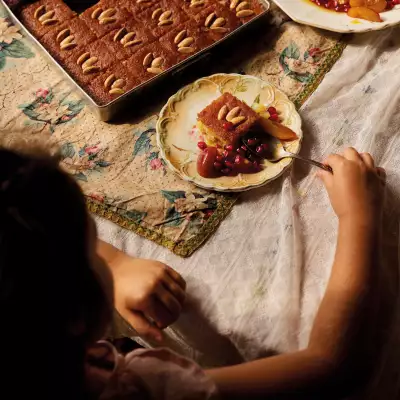
Nammoura

This soft, sticky semolina cake perfumed with orange blossom and rose water takes different forms across the Levant. This version features the addition of macerated plums, for a sour kick that cuts through the syrup

Nammoura

Serves 6-8

Preparation time 30 minutes

Cooking time 50 minutes

There are regional varieties of nammoura, basbousa in Egypt or harissa in Palestine, but all share a throughline: semolina cake drenched in rose syrup. Its regional character lends the dish versatility – swap the dried plums for sour cherries or poached quince in the winter.

“Nammoura was often on the table back home – a soft, sticky cake with almonds. I’ve made it my way this time, with macerated plums like the ones my mum used to soak in sugar on the balcony,” says Youssef. “Their syrup sinks into the cake, sharp and sweet – it’s still the same comforting treat, just with a bit more of me in it.”

Ingredients

For the syrup

  • 250g caster sugar
  • 180ml water
  • 1 tsp lemon juice
  • 2 tsp orange blossom water
  • 2 tsp rose water

For the macerated fruit

  • 4 ripe red plums, quartered
  • 80g pomegranate seeds
  • 1 tbsp caster sugar or clear honey
  • Zest and juice of 1 orange
  • 1 tsp orange blossom water
  • 1 tsp rose water

For the nammoura

  • 200g coarse semolina
  • 100g fine semolina
  • 100g grated coconut
  • 150g caster sugar
  • 1 tsp bicarbonate of soda
  • ½ tsp baking powder
  • Pinch of fine sea salt
  • 200g full-fat plain yoghurt
  • 100g unsalted butter, melted
  • 3 tbsp orange blossom water
  • 3 -4 tbsp water
  • Whole blanched almonds

Method

1. To prepare the syrup, combine the sugar and water in a small saucepan. Bring to a boil, then add the lemon juice. Lower the heat and simmer for 8-10 minutes until slightly thickened.

2. Add the orange blossom and rose waters, stir, and then remove from the heat. Cool to room temperature.

3. To prepare the macerated fruit, toss the quartered plums and pomegranate seeds in a bowl with the sugar or honey, orange zest, orange juice, and orange blossom and rose waters. Cover and set aside for at least 30-45 minutes.

4. To prepare the nammoura, in a large bowl, mix both types of semolina with the coconut, sugar, bicarbonate of soda, baking powder, salt, and yoghurt.

5. Pour in the melted butter, orange blossom water, and water. Stir well until everything is combined and the texture is smooth with no lumps.

6. Pour the batter into a greased 25cm square or round baking dish. Smooth the top. Let it rest for 15-20 minutes at room temperature.

7. Score the surface lightly into squares or diamonds. Place one whole almond in the centre of each piece.

8. Bake in a preheated oven at 200°C (180°C fan) for 30-35 minutes, or until golden and set. Move to the top rack and cook for another 10-15 minutes for a deeper colour (watch it carefully).

9. As soon as the nammoura comes out of the oven, pour the cooled syrup evenly over the hot cake.

10. Let it soak for 1-1.5 hours before serving. Slice into squares or diamonds, following the score lines that you made earlier in the process.

11. Spoon the macerated fruit generously over each portion just before serving