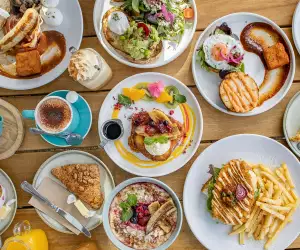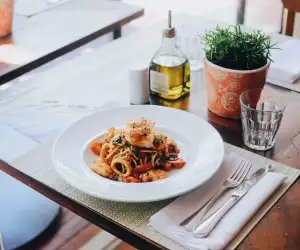
The UK Dining Trends report from OpenTable shows that dining in groups of six or more is up 5% year on year in 2026. Another finding from the same research suggests that Britons want more private and group dining options, with 36% now saying they are a priority.
With 79% of UK diners saying that eating out makes them feel more socially connected, the group table starts to suggest itself as social infrastructure rather than a sporadic indulgence.
Britons are now set to eat out an average of six times a month in 2026, with the fastest growth in special-occasion dining.
At Restaurant Online, the article '11 big restaurant trends for 2026' highlights the return of high-profile chefs, the comeback of counter seating and the growing appeal of pop-ups and partnerships. All of these trends require coordination.
What is driving the return of chef collaborations and pop-ups?
Featured 2026 collaborations include Heard, a pop-up from two-Michelin-starred chef Jordan Bailey, which takes over Aji Akokomi of Akoko in London's Borough and Soho through April. Meanwhile, the Cousins of Rambutan series continued, featuring flavour-led interpretations of Sri Lankan cooking by chef Lee Tiernan throughout March.
Jamie Oliver, who recently helped relaunch Jamie's Italian with Prezzo owner Brava Hospitality Group, is back in business with casual Italian cooking backed by chef credentials.
The appeal extends to collaborations, too. Rather than simply booking a fixed-menu restaurant, diners are increasingly opting for limited-run experiences. A permanent tasting menu may still be available next month, but a four-week chef residency cannot. That scarcity creates urgency, manifested in group booking behaviour. Pop-up slots are being reserved by tables of four and six faster than regular reservations.
A voucher for a restaurant that will still exist next year carries less cultural currency than one redeemable at a pop-up that closes in May. The latter suggests the giver is paying attention to what's happening in UK dining right now.
From solo voucher to full-table gift
For years, the default restaurant gift was a dinner voucher. One reservation, one transaction, one straightforward exchange of money for a meal. The 2026 data suggests something different.
The sociological reading is straightforward. A two-for-one voucher no longer just says, 'Treat yourself.' A voucher that helps fund a full table says, 'Come together', which is precisely what the OpenTable data indicates people want.
In the UK, vouchers cannot have expiry dates shorter than six months in accordance with the Consumer Rights Act 2015. For a group dining gift, this gives diners time to coordinate diaries. As for chef-driven pop-ups, flexible vouchers allow recipients to redeem varying amounts across multiple restaurants, helping to avoid situations where a venue fills up before they have a chance to book.
That flexibility matters because it protects the social function of the gift. A 90-day voucher can create unnecessary pressure. A minimum six-month window gives recipients the opportunity to plan around Easter school holidays, May half-term or even Father's Day without racing the expiry clock.
How should you gift a table in 2026?
Set the voucher value at a realistic amount for the intended group size. In a mid-range London restaurant, a £150 voucher represents a sizeable, though not complete, contribution towards dinner for four. The recipient can then top up the difference, avoiding the awkwardness of a gift card that falls well short or significantly exceeds the final bill.
Consider flexibility over specificity. In the UK, where experience-led gifting increasingly outpaces object gifting, restaurant gift vouchers for tasting menus, chef collaborations and pop-up residencies have become a recognised alternative to traditional presents. A multi-venue platform caters to a wider range of preferences than a single-restaurant card and remains useful if a venue is fully booked or closes.
It's also worth considering booking windows, as April, May and June are months packed with pop-ups and collaborations. Give the recipient a voucher for summer use rather than tying it to a specific date. For anniversaries and milestone birthdays, pair a voucher with a booking suggestion rather than making the reservation yourself, allowing the recipient to choose when and with whom they celebrate.
Purchases made by credit card between £100 and £30,000 may be protected under Section 75 of the Consumer Credit Act 1974. Debit card purchases may also be eligible for chargeback protection. This can be important if a restaurant enters administration before a voucher is redeemed, as voucher holders are generally treated as unsecured creditors.
Why the full-table gift works in 2026
Both the data and anecdotal evidence point in the same direction. UK diners increasingly value longer evenings, shared meals and chef collaborations that may not exist six months from now. The gift is no longer simply a voucher but an invitation to gather around a table.
It reflects how people increasingly want to eat: together rather than alone, and in pursuit of experiences that are fleeting rather than permanent.