Trust, it turns out, is a remarkably fragile commodity in the food system. Ask any serious home cook what keeps them awake at night, and somewhere between sourcing decent butter and finding good fish, you'll find anxiety about where their food really comes from. This creeping uncertainty – born partly from scandals, partly from the sheer inscrutability of modern supply chains – has made the words "organic" and "certified" carry an almost religious weight. But what do these labels actually mean? And how, precisely, does organic food make its way from a British farm to your kitchen?
The answer is more complicated, and more fascinating, than the pastoral imagery on the packaging suggests.
The Certification Puzzle
Begin with certification, because nothing matters more to the integrity of organic food than the systems that verify it. The UK's organic standards are set by the Department for Environment, Food and Rural Affairs (Defra), but the gatekeeping is handled by approved certification bodies – organisations like the Soil Association, OF&G (Organic Farmers & Growers), and others who conduct the rigorous inspections that make organic claims legally defensible.
This is where the system's teeth live. A certified organic farm isn't simply one where the farmer has decided to stop using synthetic pesticides. An inspection by a certification body involves detailed documentation of what's been grown in the soil for the past three years (there's a conversion period where land must prove its purity), tests of the soil itself, records of all inputs used, and unannounced visits to verify that what's written on paper matches reality in the field. For a country of roughly 450,000 hectares of certified organic land, this represents considerable oversight.
The standards are stringent by design. No synthetic fertilisers, pesticides, or herbicides. No routine antibiotics in livestock. No genetically modified organisms. But and this is crucial, organic farming isn't simply "doing nothing." It requires sophisticated knowledge of crop rotation, pest management through biological control, soil building through composts and cover crops. The best organic farmers are often the most scientifically rigorous on their land, because the margin for failure without chemical shortcuts is smaller.
Yet certification alone tells only part of the story.
The supply chain labyrinth
Unsplash
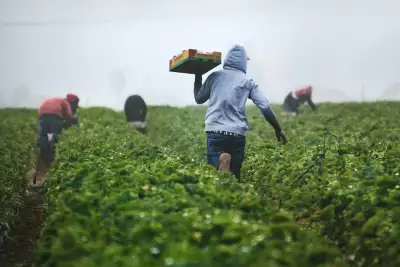
Once organic produce leaves the farm, it enters a supply chain whose complexity might surprise those who imagine a direct route from field to table. Few small producers sell exclusively direct to consumers. Most organic food moves through importers, distributors, food processors, and retailers, each step another point where certification must be verified and traceability maintained.
This is where the distinction between imported and home-grown organic becomes important. The UK grows roughly 70 per cent of the food it consumes, but far less than that in the organic category. British winters limit what's in season; British land costs are high; and market scale matters. A small producer of organic barley flour or spelt grain might find it more economically viable to source from EU suppliers than to compete with established domestic operations. This is neither shameful nor surprising, it reflects practical reality.
What matters is what happens in the chain. A retailer like Whole Food Earth, for instance, sources across several markets: some items from British farms, others from certified organic suppliers across Europe. Each purchase requires verification that the organic certification is current and legitimate. For items like nuts, seeds, and spices that simply cannot grow in the UK climate, sourcing specialists must navigate international supply routes while maintaining the same assurance of standards. This involves building long-term relationships with suppliers, periodic audits, and knowledge of which certification bodies carry weight in which regions – the Soil Association means something different than a Turkish equivalent, and a smart buyer knows the difference.
This complexity, paradoxically, is a sign of a mature system. The paperwork, the inspection trails, the relationships built on mutual understanding of standards, these are the unglamorous infrastructure of trust.
What consumers actually face
Unsplash
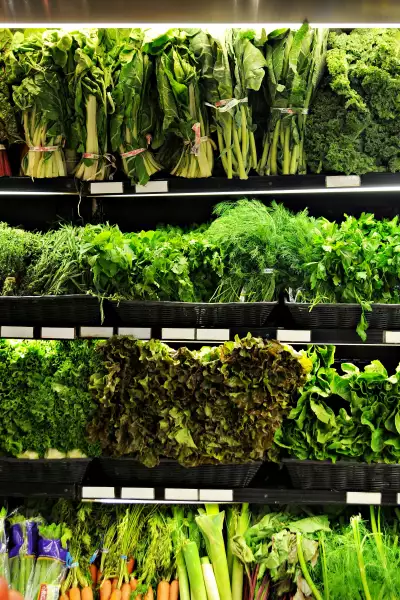
Stand in the supermarket aisle confronting two similar products, one bearing the Soil Association symbol, another with a lesser-known certification mark, and you're facing a real question: which carries more assurance? The answer, bluntly, is that the most rigorous British certifications, Soil Association, OF&G, the RSPB's partner schemes represent a higher bar than some alternatives. But this shouldn't suggest that other certifications are suspect; it simply reflects that oversight is more intensive in some jurisdictions than others.
The emerging challenge isn't whether organic is "real." It's whether consumers can reliably distinguish between different levels of organic integrity. A product certified to EU organic standards, which are harmonised across member states but less rigorous than the UK's strictest schemes, differs genuinely from one verified by an organisation conducting quarterly unannounced farm visits. Yet both can display the EU organic leaf.
This matters particularly for pantry staples, the dry goods, oils, and flours that form the backbone of cooking. These products often travel further and involve more processing steps, creating more opportunities for certification to be compromised through inadvertent commingling with non-organic supplies or through corners cut in storage. Retailers that take sourcing seriously treat these items with the same rigor as fresh produce.
The economic reality
Unsplash
Why, then, doesn't the UK simply grow all its own organic food? Cost, primarily. Organic production yields less per hectare than conventional farming. British land values are high. The labour costs of practices like hand-weeding or mechanical weed control exceed those of herbicide spraying. An organic farmer in East Anglia growing barley faces different economics than one in Poland or France, where land is cheaper and labour more affordable. The market is small enough that scale economies haven't fully kicked in for many categories.
This creates a genuine tension: sourcing organic food locally supports British farmers and reduces transportation emissions, but it may also mean paying a premium for lower-volume production. The alternative, sourcing from lower-cost producers in continental Europe or further afield spreads the environmental cost of transport but often reduces price and supports regions where organic farming is more economically competitive.
There's no simple answer. The most honest approach for consumers is simply to understand the choice being made: paying more for British organic prioritises local economics; choosing carefully sourced imported organic prioritises price and, often, the livelihoods of certified farmers in regions where organic is genuinely transformative rather than merely premium.
Emerging sophistication
The current evolution in British organic sourcing suggests the market is becoming more discerning. Rather than "organic" as a simple binary, certified or not we're seeing increased attention to specific practices, regional sourcing, and supply chain transparency. Heritage grain producers documenting their milling practices. Vegetable boxes specifying the farms they draw from. Retailers publishing their sourcing principles openly, including which items are imported and why.
This transparency is harder than simple certification, which is why only the most serious operators invest in it. But it's increasingly what engaged consumers want: not just assurance that food meets legal standards, but understanding of how it got to their table and who benefited in the process.
The practical path forward
For the home cook seeking genuinely traceable organic food, the path is clear enough: look beyond logo recognition to the actual certification body; ask suppliers questions when something seems incongruous; and understand that "organic" describes a production standard, not a transportation route. British organic farms, EU producers under strict oversight, and well-managed international supply chains can all deliver integrity, but for different reasons and at different prices.
The honest answer is that there's no single right choice, only informed choices. The farmer selling directly at a market is transparent by necessity. The supermarket chain has economies of scale. A specialist online retailer like Whole Food Earth can maintain detailed supplier relationships because focused scale allows it; they can verify that the spelt flour or hazelnuts meet specific standards while still offering the convenience and range that most modern cooks expect.
What's changed, over the past two decades, is that none of these choices require blind faith anymore. The certification exists. The standards are real. The oversight is documented. The supply chain, if not transparent, is at least traceable. That's not poetry, but it's something more valuable: reliability. And reliability, in the end, is what allows you to cook with confidence that the food in your pantry genuinely is what you believe it to be.