Every month, we round up a list of new restaurant openings in London, and even for those of us professionally obliged, keeping up with the sheer volume of spots popping up all over the city can be like trying to keep track of who last resigned from government. Attached to these openings are many lofty accolades – Michelin stars, TopJaw interview opps – but more than anything, these restaurants are all putting in hard work in the hope of carving out a meaningful corner in London’s culinary ecosystem.
Year after year, this persists despite widespread reports that running a restaurant has never been more difficult. Gordon Ramsay recently called it “a bloodbath” and the worst conditions he’s ever seen in the industry, and the general consensus is that this is not hyperbole – the industry, to put it mildly, is a nightmare right now, thanks to skyrocketing rents, merciless inflation, staffing shortages, and more. When December rolls around, the lists of closures that year do the rounds, as successful enterprises shutter their doors seemingly out of the blue. Just last year, we lost Sesta, Saltine, Silo, Hello JoJo, and Fantomas, to name a few, some of which hadn’t even reached four months in service.
So, why do restaurateurs and chefs continue to persist? Because if you can get a foothold and a decent landlord, you can chef yourself into London culinary legend. In the last 18 months, a host of restaurants have celebrated significant milestones by embracing nostalgia: old menus playing the hits, prices from a time when a menu didn’t read like extortion. As ever, you can point to St John as a trendsetter: in the latter half of 2024, it announced a return of its 1994 menu to celebrate 30 years at the forefront of London’s culinary scene, complete with frankly ludicrous pricing (its iconic bone marrow with grilled sourdough and parsley salad was going for £4.20). During that summer, it was easier to get a ticket to the Eras tour than an anniversary seat at St John, with rumours of people resorting to desperate measures like backstreet markets and bribery to secure a table.
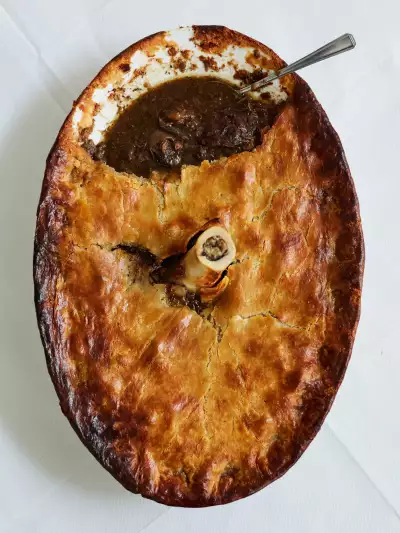
Pheasant and trotter pie at St. John
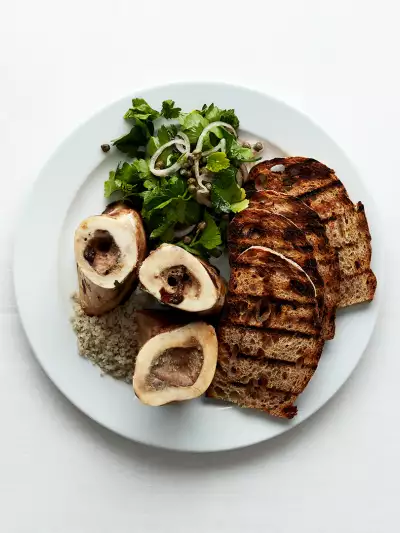
Bone marrow at St. John
In 2025 and 2026, more milestones were reached. Galvin La Chapelle hit 20; Brawn, your favourite chef’s favourite restaurant, reached 15; The Marksman, Gunpowder, Padella, The Palomar and Clipstone all hit ten. They reckoned, rightly, that such milestones were worth celebrating meaningfully. Gunpowder followed St John in reinstating its launch menu – and prices – while Clipstone announced a revolving nostalgia menu featuring some of its most beloved classics, priced at £20.16 (honouring the year it opened). These are the beacons of light each new restaurant today looks to – beyond the splashy openings, stability is the most valuable currency in the service industry.
Talking to the chefs and owners of these restaurants, many said they came about to fill a gap in the market – more specifically, they wanted restaurants they could eat at but couldn’t find, so they decided to just do it themselves. Harneet Baweja, founder of Gunpowder, says, “When I opened the restaurant, I felt only a certain kind of food from India was being represented”, while Tim Siadatan, co-founder of Padella, says, “The inspiration came from the amount of bad and average pasta across the UK at the time. Unless you were lucky enough to have a gem of a family-run trattoria in your neighbourhood, you generally had to go to an expensive restaurant to eat good pasta. Otherwise, you were eating mediocre pasta.”
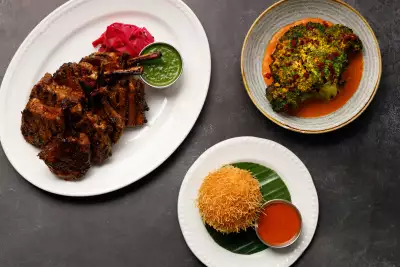
Classic dishes at Gunpowder
From the outside, it seems clear that these celebrations are as much about looking to the future as the past. It’s nostalgic to harken back to the good old days, and it also builds brand awareness. When you put out a menu showing what you were offering ten, twenty, or thirty years ago, you’re reminding everyone of your longevity. It is, ultimately, a flex, something to remind customers why they should choose you over the glut of new openings.
Siadatan says he relishes the competition as “London continues to boom in terms of the variety and quality of restaurants on offer. Standards are higher and competition is stronger.” But standards don’t just mean the quality of cooking – the entire ecosystem of opening a restaurant has come on leaps and bounds, changing dramatically with social media. You’ll see restaurants opening now with fully-formed brand identities and content teams.
A good PR machine is almost as crucial as a great head chef. “There’s a real focus on brand and storytelling, which has accelerated over time,” say Zoe and Layo Paskin, co-founders of The Palomar, reflecting on how the industry has changed since it opened. “Guests are responding to places with a strong point of view and a narrative that runs through everything from the food and the physical design to digital, and social media has amplified that.” What better way to get that across than to remind us all of your success? And while there is undoubtedly some self-mythologisation at play, the sentimentality is real: talk to chefs about how they lasted so long, and many point to the early years, when every week felt like it could be the last. Succeeding means first living on razor-thin margins for extended periods of time. Take a glance at these menus and, once you’ve finished mourning how many days a week you could eat out if the prices remained the same today, you’ll notice something else:
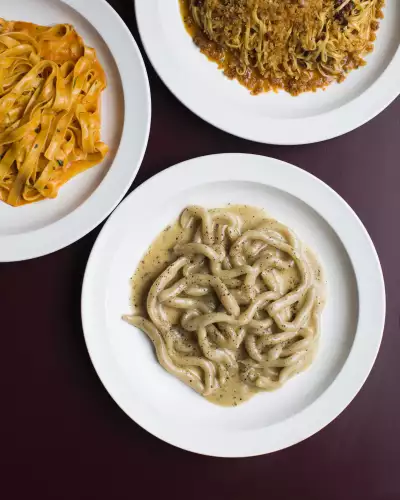
Cacio e pepe at Padella
There’s not one route to success. St John broke through with innovation, scouring the animal for off-cuts others wouldn’t serve, and much of the chatter during its 30th anniversary revolved around just how influential it was. But trying to be St John isn’t the only way to run a restaurant. William Lander, founder of Clipstone, the Fitzrovia neighbourhood bistro, warns of the potential dangers of experimentation for experimentation’s sake. “Perhaps in the early years we were sometimes a bit too keen to push the boundaries of the menu and wine list than was absolutely necessary. A beautifully made or slightly adjusted classic dish or technique is always safer ground than trying anything too funky.”
Take the recent exponential rise of popularity in French bistros or Italian trattorias – people aren’t as interested in off-the-wall concepts. In an age of uncertainty, comfort is king. “Ultimately, I think there is room in any ambitious restaurant for creativity, but this can take the form of a slightly different approach to a well-known dish or flavour combination”, Lander says. The reality is that the key to longevity isn’t necessarily the glamorous stuff – Siadatan emphasises that consistency is key – it may sound obvious, but “doing the right thing every day, at scale, is harder than it looks”. Adaptability can also be crucial, as Lander notes. Clipstone was originally conceived as a “no-reservations restaurant, which feels very antiquated now, and we soon realised people liked the security of reservations very, very much.”
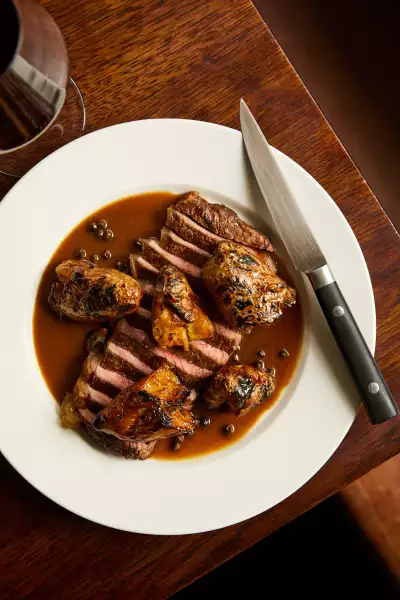
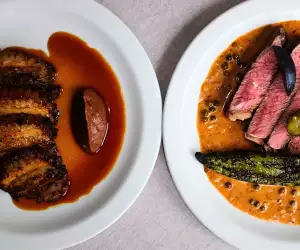
Steak at Clipstone
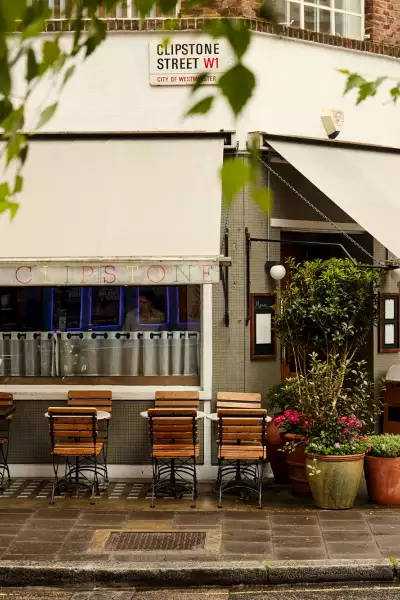
Clipstone exterior
You don’t have to be a maths genius to work out the hurdles any restaurant celebrating a decade has overcome. We’re far enough past Covid by now for the after-effects to have mostly subsided, but mention the period to any chef, and they’ll suddenly go ghostly-white. “The lockdowns were OK – we knew where we stood and actually turned into a shop – but the liminal periods in and out of lockdown, ‘rule of 6’, contact tracing, etc, were all pretty grim”, Lander says. If there’s a silver lining, he adds, it’s that “having gone through all that, you’ll never take running a restaurant for granted again”.
Another, more self-inflicted (on a national scale at least) obstacle stems from staffing, which Siadatan says has “become a much bigger challenge post-Covid and post-Brexit”. Both led to a mass flight of crucial staff away from Britain, which, combined with inflation and a cost-of-living crisis, created a spiral of customers with less disposable income and more expensive restaurants. When success for many means cultivating repeat visits and loyal patrons, turning weekly meals out into monthly ones is not a recipe for success.
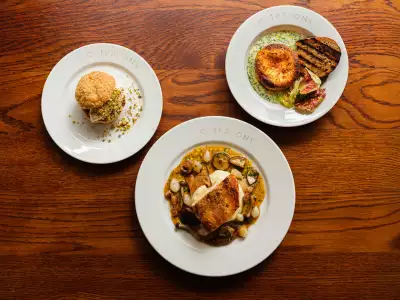
Clipstone
Ask about the future, what the next ten years might look like, and answers are studiously inconspicuous. Less themed around global expansion, Michelin-starred glamour and franchise-building – at least not outwardly. Instead, I get different versions of “steady, disciplined growth” and “creating a great work-life balance” to ward off burnout. Undoubtedly, this is underselling a steely ambition, but it reflects those who have earned success knowing not to overextend – even today, there is a logic that if you focus on your product, success will follow. Just be sure to find a forgiving landlord.