While a typical Sunday morning might see me reaching for the Alka-Seltzer and TV remote, this one finds me shovelling chicken poo by the spadeful out of a coop, before covering the floor with a thin layer of ash. I ask a man called Sam, who’s raking beside me, why we’re doing it.
He leans in. “Chickens have the same hole for laying eggs and defecating. The ash keeps things clean down there. Otherwise, they get egg-bound.”
“Egg-bound?”
“They get stuck with an egg,” he explains to me. “If it happens, they die. We lost a hen just last week.”
This is not a bucolic scene in the rolling pastures of somewhere provincial, nor Julius Roberts’ back garden. I’m in Peckham, cleaning out a chicken coop in Glengall Wharf Garden, a community-run patch of green in Burgess Park.
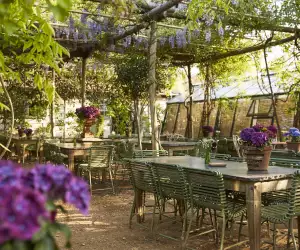
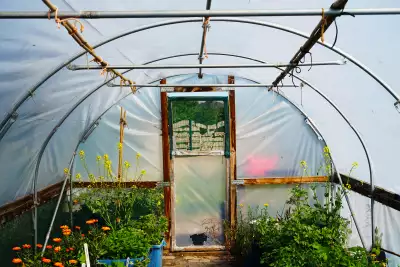
Built on a slab of concrete that has, like many Londoners, held firm for just over a decade, the garden is improbably abundant. Raised beds overflow with brassicas, leafy greens, and herbs. There are two greenhouses, fruit trees, three compost heaps, a cluster of beehives, a community-run sauna and, of course, the chickens – ex-battery hens retired for low egg yields now laying at their own pace in SE15.
You can visit on Wednesdays and Saturdays to learn how to grow food; Fridays for permaculture and forest gardening; or, as I do, drop in on Sundays to help maintain the patch. I’d like to say I’m here out of idle curiosity, but in truth, I’m here hoping to turn something around.
A recent mental health crisis involving someone very close to me snapped into focus how easily community and connection can fall away. Modern routines – urban, rural, whatever flavour of grind you subscribe to – make it frighteningly easy for life to thin down to a skeleton of work, eat, sleep, repeat. With that, you’ve lost the fleshy parts of life that give purpose and meaning, and it is possible, in a city of millions, for no one to notice when something is badly wrong.
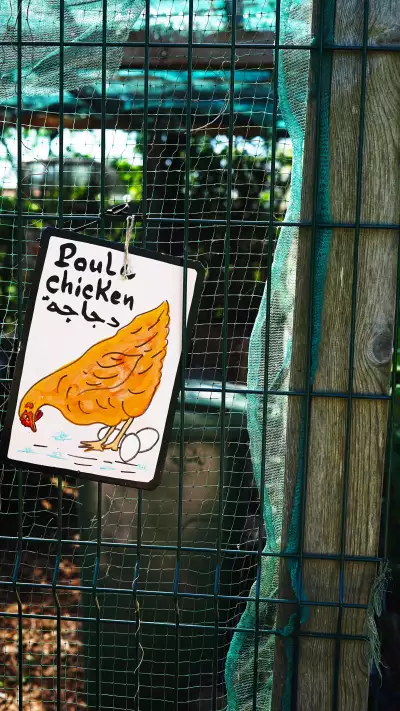
The chicken coop at Glengall Wharf Garden
Christy Spring
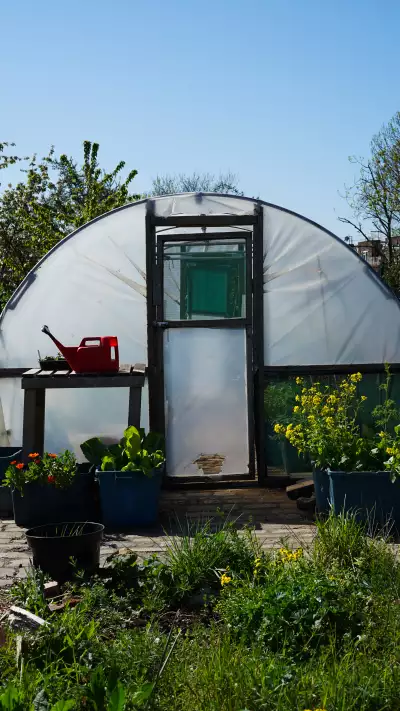
Greenhouse at Glengall Wharf Garden
Christy Spring
In the stunned aftermath, I felt helpless as to what could make things better. Advice poured in – the usual cheerful menu of extremes like cold-water swims, monastic regimes and triathlons. I was going in completely naive, but I had a hunch that what was lacking wasn’t discipline, but rather a sense of community and human connection beyond the superficial. So I turned, somewhat blindly, to a community garden, with Kathy Slack’s book Rough Patch rattling around my head and a question forming: could something as ordinary as growing food with strangers help rebuild a sense of meaning? Seeing the tangible fruits of your labour isn’t something many of us experience anymore – might watching something emerge from a seed offer something to chew on?
I spent several weekends at Glengall Wharf that summer. During my first session, I met a man called John by the compost heap, radiating encyclopaedic knowledge of gardening and composting toilets. He’s a personal trainer and gardener from New Cross, originally from the Caribbean. “It’s in the blood of my ancestors,” he says, driving his fork into a hot, steaming mound of vegetation pulsing with worms. He tells me about the okra and sweet potatoes he grows at home, advises me to eat dandelions to lower my blood sugar, and explains what plants I could grow on a windowsill, given I don’t have a garden of my own.
I also spend time with Sam, who helps me clean out the chicken coop. We exchange a few words while working, but eat lunch together – a vegetable stew cooked by volunteers, eaten at a picnic bench under a grey sky. He works in corporate law and finds little meaning in it. The chickens, however, give him routine. He visits them on his allotted mornings as part of the garden’s organised ‘chicken group’. It matters that they depend on him.
Over that summer, it became clear that nobody here was particularly motivated by yield or productivity. The vegetables, eggs and honey are real enough, but they’re a kind of proxy to the point. Growing food at Glengall Wharf was less about feeding people than feeding something much harder to quantify.
We’re here to clear chicken poo for reasons that are far more existential than functional
Urban agriculture is usually presented as a practical solution – a tidy response to shrinking green space, food insecurity and swelling populations. But standing ankle-deep in chicken bedding on a Sunday morning, it’s obvious that we’re not here to feed the borough or sustain our livelihoods. We’re here to clear chicken poo for reasons that are far more existential than functional. What if the impulse to grow food in cities has very little to do with the food at all?
Over the past six months, I’ve been digging around London to understand the stranger, more revealing ways people are growing food in the city and why they do it. My first stop couldn’t be further from a compost heap: the West End.
The office worker
A few minutes from the retina-scalding screens of the Outernet near Tottenham Court Road sits a restaurant called the Orangery. It is, on paper, ordinary enough: poached eggs, croissants, ginger shots. But its walls are covered in vertical hydroponic farming units, and a void in the centre of the floor offers a glimpse into a basement lined with more glowing towers of basil, dill, lettuce, lemon balm and various soft greens. On a Tuesday morning, I arrive during the weekly harvest and find myself queuing to snip chives alongside passers-by and office workers, including a lady behind me wearing a GSK lanyard.
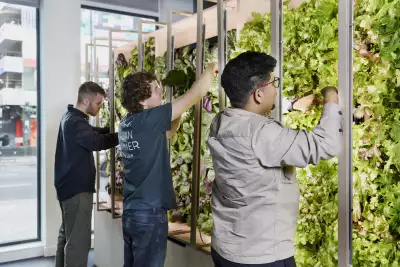
Three men harvest a wall of lettuce from Square Mile Farms
The farm is run by Square Mile Farms, a company that installs hydroponic systems in offices, housing blocks, disused basements – any dead space the city’s architecture has forgotten about. What they’re selling, Chief Growth Officer Hamish Grant tells me, isn’t really lettuce. It’s an experience of lettuce. Unlike the large-scale vertical farms trying (and often failing) to compete with industrial agriculture on price and volume, their business model is deliberately small – “farming as a service”.
Previous pioneers like Growing Underground, the hydroponic farm in a former air-raid shelter in Clapham, tried to plug straight into supermarket supply chains, only to be hammered when energy prices spiked and the economics stopped adding up. Square Mile Farms sidesteps that race to the bottom. Rather than selling produce alone, its farms are embedded in existing buildings, and clients – landlords, corporates, schools and local authorities – pay for a broader bundle of benefits, from ESG credentials and wellbeing to a steady stream of salad for the canteen.
“The produce we grow is central to what we do,” Grant says, “but the real value is in the experience.” In corporate offices, weekly harvest sessions have become a ritual beyond Teams calls and “circling back”. People from different floors gather around walls of greenery, hierarchy softening over the snipping of parsley. Grant describes the farms as “social glue”, recalling one harvest where a CEO found himself shoulder to shoulder with a junior member of the accounts team, swapping dinner plans as they clipped herbs.
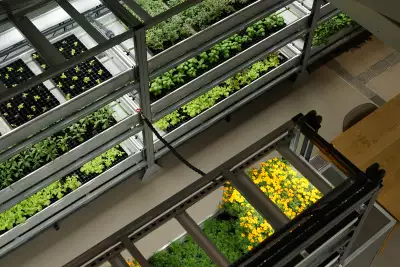
Herbs and lettuce grown by Square Mile Farms
If the Glengall Community Garden is about escaping the office, Square Mile Farms is trying to transfer some of that allotment energy into the office itself. I’m sceptical that snipping herbs under strip lighting can rival being outside, hands in soil, but Grant points out that for many without gardens, allotments or nearby green space, this may be the only chance they have to witness food growing. And, amid the LED glow and soilless systems, the technology ends up serving something very ancient: harvesting food together.
Square Mile Farms is trying to transfer some of that allotment energy into the office itself
Grant is realistic: they’re never going to feed London. Herbs and soft greens are hardly apocalypse-proof staples. But that isn’t the point. Square Mile Farms’ purpose extends far beyond calories – to foster habits around community and connection, to educate people about food waste and pesticides, and to raise awareness of our normalised, broken food systems. Is it normal that we’re shipping in coriander from Kenya when we can grow it a few metres from Tottenham Court Road station? Grant thinks not.
The DJ
“A useful thing I could do was take care of his allotment,” says Flo Dill to me over a call last summer. An NTS DJ with a show I avidly listen to most mornings, she also runs a podcast called Digging. Each episode sees Dill invite musicians, artists and DJs to her allotment in Walthamstow, hands them a hoe, and follows what happens when conversation is loosened by planting beans and brassicas. The podcast has seen a sparkling roster of musical guests ready to put their trowels to the test. Last year, she harvested potatoes with CMAT, planted baby leeks with Shy One and butternut squash with Olivia Dean.
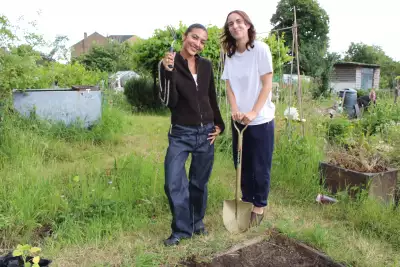
Flo Dill and Olivia Dean on an episode of NTS’ Digging at Dill’s allotment
Dill initially came to gardening in London out of necessity rather than philosophy. During the pandemic, her dad became seriously ill and was hospitalised, leaving behind an allotment he’d held for almost 40 years. She started going alone, receiving instructions by text – what to plant, what to harvest, what not to touch.
When he was out of the hospital, they returned to the allotment together to garden. It was there that harder conversations began to surface – not face-to-face at a table, but side-by-side, hands occupied. “My dad and I are very close, but he was born in 1948, so he’s quite tough. I found that when we were gardening together, he would open up more, and we would talk about how he was feeling and what had happened. We’d meditate on life and ponder things as we were hoeing or getting the soil ready.”
That dynamic – talking more freely when your hands are busy – is the real engine behind Digging. Dill is careful to swat away any neat metaphor about music and gardening being spiritually entwined. “I don’t really listen to music when I’m gardening. I appreciate the silence,” she says. The podcast isn’t about the intersection of music and gardening, but rather about disarming the interview format itself. “When you put a guest in a radio studio, there’s something quite intimidating about it. People go into media mode.” At the allotment, knee-deep in compost, you’re too busy to perform and the armour slips.
Some guests take to it more enthusiastically than others. DJ and producer Johnny Banger, she says, arrived with little gardening experience and left evangelical about the politics of growing food. He now grows vegetables on his balcony. Others, like Olivia Dean, simply remark on the relief of being outside, away from studios and schedules.
Allotment growing in London, for Dill, isn’t a cure-all. She’s refreshingly honest about that. Plants die, and allotments can be guilt-inducing. “Sometimes it’s stressful… you’re worried about what you’re going to find when you get there.” But it has sharpened her awareness of seasonality, of climate instability, of how broken it is that a bag of peas costs so little when they’re so effortful to grow yourself. “It makes me think much more about how food is grown, where food is grown, how it gets to my plate – and the fucked up stuff that happens in those industries.”
Aside from that, Dill values the closeness growing food in a Walthamstow allotment provides – both to the people around you and to the land itself. Community is often a word flung around with little substance, but for Dill, it’s very much thriving on this patch in North London. “I think the allotment stereotype of white middle-class people like little old Maureen growing her strawberries isn’t my experience of allotments at all. I’ve found, at least in London, that they are very diverse places.”
The allotment stereotype of little old Maureen isn’t my experience of them at all
For Dill, she appreciates how invested you are in this patch together – caring for both the land and the people’s wellbeing who tend to it. “You have all sorts of people coming together and sharing knowledge, as well as pools and gluts of produce.”
The pupil
Not far from Walthamstow, I end up in Hackney on a clear Wednesday morning in September, standing in front of two girls with watery eyes, fanning their faces. At first glance, they look as though they’re processing the state of the world, but I then learn they’re victims of onion chopping.
We’re outside the kitchen at Hackney School of Food, where a class of primary school pupils from Mandeville Primary School are making ribollita – the Tuscan soup of tomato, cavolo nero and white beans. I’m surprised when the teacher holds up a leaf of cavolo nero, asks if anyone can name it, and several hands shoot up. When I was at school, food technology amounted to assembling a fruit salad or constructing a pizza from a bread roll, grated cheddar and tomato paste with the texture of Polyfilla. The closest we got to vitamin C was a tin of peaches. But here I’m watching humans no taller than the kitchen counter cook with butter beans, chop nasturtiums and identify Italian kale.
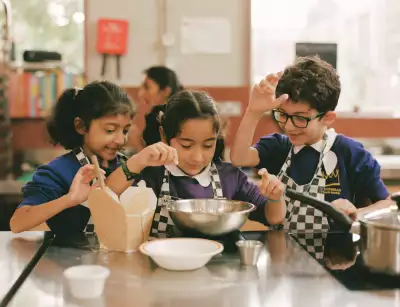
Mandeville Primary pupils cooking at Hackney School of Food
Matilda Hill-Jenkins
Hackney School of Food sits on the site of Mandeville Primary School, part of the LEAP Federation. It exists because, some years ago, the school’s headteacher and Henry Dimbleby decided that school meals and food education in schools were broken – learning how to make chocolate cornflake cakes from a cardboard box before returning to a canteen lunch of Turkey Twizzlers didn’t make sense. What began as an attempt to improve school meals widened into something more ambitious: a working model of what it looks like when children are taught, as Managing Director Zoe McIntyre puts it, “seed to spoon.”
The old caretaker’s building was gutted and turned into a teaching kitchen. Outside was, according to McIntyre, a “concrete jungle” before being transformed into a flourishing garden of raised beds of vegetables and herbs, fruit trees, and a chicken coop. They grow what they can realistically use in cooking classes – leafy greens, tomatoes, herbs and fruit when in season. Not to feed the borough, or even fully supply the cooking classes, but to show how food arrives on your plate.
In March 2023, the School of Food formally separated from the school and became a community interest company. And with that, the organisation began thinking more expansively about what food education is for children – and what it can realistically do. McIntyre is clear that this is not an exercise in urban self-sufficiency. Growing food in cities will not feed the capital, and pretending otherwise obscures more serious questions about the food system. The value lies elsewhere: in showing people how food grows, what seasonality means, and how soil, climate, health and cooking are connected.
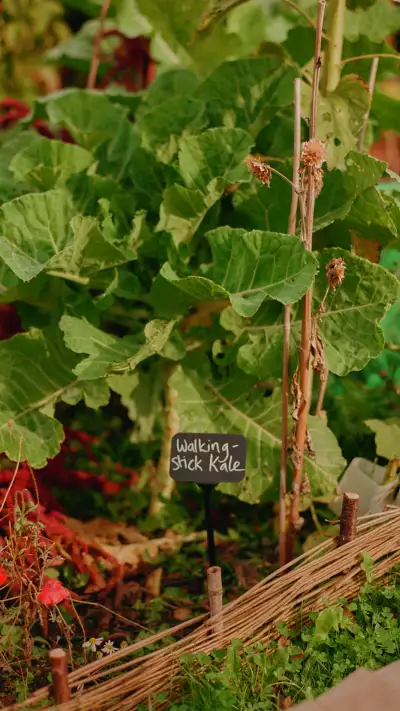
A raised bed of kale at Hackney School of Food
Matilda Hill-Jenkins
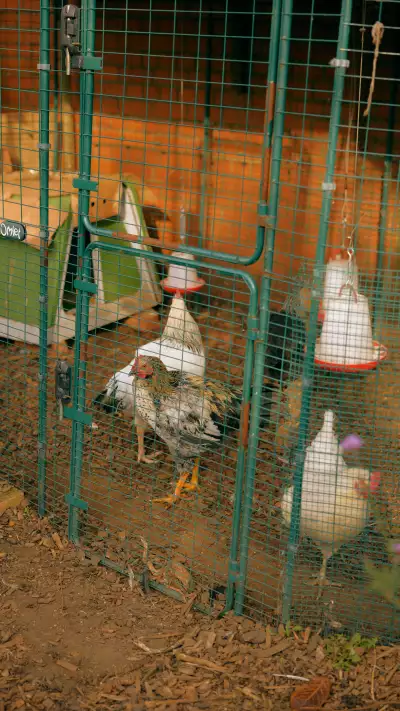
Chickens roam among the woodchip in their coop at Hackney School of Food
Matilda Hill-Jenkins
Those ambitions are shaped by the realities and disparities of urban food access. In this part of Hackney, you might walk down Chatsworth Road and find fresh produce in delis stocking heirloom tomatoes and jars of plump Spanish beans, but walk in the opposite direction, and you’re met with a dense thicket of chicken shops, where affordable fresh produce and vegetables are harder to come by than a bargain bucket. Food insecurity is rising, and obesity levels are already high by the time children reach reception, explains McIntyre. Habits formed young tend to stick, so teaching children how to cook – alongside the visible reality of a garden and a working stove – is a practical intervention.
The intervention here is not prohibition. No one is lecturing children about chocolate or takeaways, but the work is about exposure, confidence and habit-building: chopping vegetables with a knife, following a recipe, as well as understanding the wider system around food – soil, worms, bees, seasons, waiting. “When we say food education, people think of old home economics classes,” says McIntyre, “But it’s the whole cycle.”
Children move from compost to soil health, from pollination to planting, from harvesting to cooking. They learn that tomatoes grow on vines and chickens lay eggs. “You ask some kids where a potato comes from, and they’ll tell you it’s from the supermarket, says McIntyre. “For children who arrive wary of mud and mess, learning that soil isn’t something to be avoided but something that sustains life can be powerful – particularly in places where access to green space can be limited, and nature feels abstract.
Ask some kids where a potato comes from, and they’ll tell you the supermarket
The garden also works as a classroom without walls. “There are a lot of additional needs schools are dealing with now,” McIntyre says. “Some children don’t thrive in systems built around testing and reports.” Here, learning is sensory. Science, maths, history and literacy surface naturally: fermentation becomes chemistry; photosynthesising plants become biology; recipes teach arithmetic, and lessons of geography and history can be found in the ingredients growing in the soil.
The onion tears subside, and the girls head back to the kitchen to sweat them down, cooking side by side. It’s clear, as McIntyre puts it, that food remains one of the most effective ways to bring people together. Although the city’s community gardens, green-fingered DJs digging with music elites, and corporate office herb snippers seem widely different, these spaces tend to produce the same by-products: togetherness, a shared purpose, slower rhythms, and something sturdier than small talk.
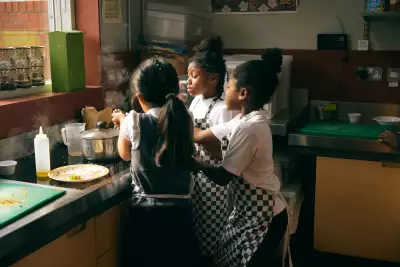
Hackney School of Food teaches school children food education from seed to spoon
Growing food in cities won’t solve the structural failures of the food system, but it can change how people relate to it – and to each other. This isn’t me suggesting you replace your beta-blockers with sowing seeds, but the awe and wonder that come from seeing something evolve from a seed to a fully fledged thing aren’t something we lean into enough. I’m pretty sure of that, mainly because I’m looking at the limp tomato plant on my windowsill, into which I poured my heart all summer, and which rewarded me with precisely three tomatoes. The road to self-sufficiency? Absolutely not. Inner peace? We’re in early talks.