Brought to you by

Twenty years ago, Hotel Chocolat co-founders Angus Thirlwell and Peter Harris bought a working cacao farm on the island of Saint Lucia. Acquiring the Rabot Estate in the Caribbean was central to their mission to understand cacao from the ground up. Two decades on, that decision has shaped one of the most distinctive dining experiences in the region, thanks to a unique approach to farming.
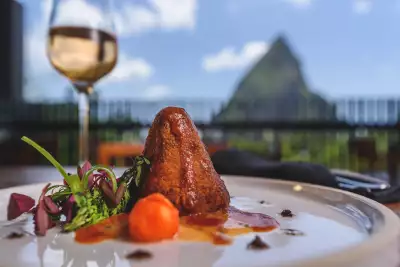
The cripsy pork piton starter
Matt Wild
The Rabot Restaurant was opened with the hotel in 2011, with the majority of the produce sourced locally, either directly grown on the farm at the Rabot Estate or bought and delivered from local Saint Lucian farmers, keeping the connection between land and kitchen short. Using agroforestry methods, cacao trees grow alongside coconut, banana, and mango in a layered, biodiverse environment. The farm is certified organic, relying on natural fertilisers and careful pruning rather than heavy intervention.
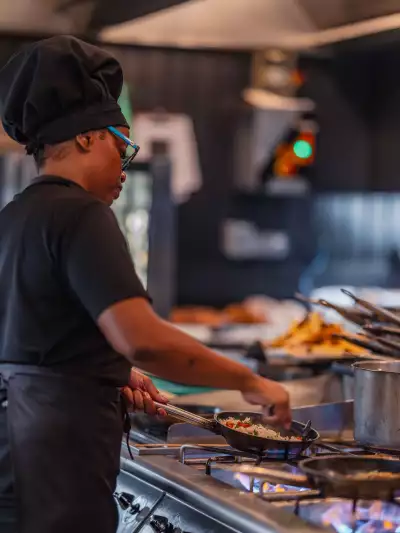
Chef at Rabot Restaurant
Anthony Arnold
What makes the food stand out is how cacao is used. At Rabot Restaurant, it is less used for flavouring – not everything tastes like ‘chocolate’ - but for more experimental purposes, a working ingredient embedded into the cooking process itself. The ricotta in their signature cheese ravioli, for example, is made in-house using cacao vinegar as the coagulant. It is a technically precise dish that demonstrates how far cacao cuisine has developed since the restaurant first opened.
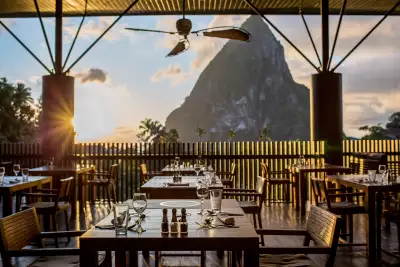
Across the menu are examples that prove cacao, if handled properly, can be far more than just a dessert ingredient. Take the restaurant's sourdough: it is a natural ferment, with the starter culture drawn from the run-off of fermenting cacao beans. Or the cacao-infused cocktails, best enjoyed while watching the sunset over Saint Lucia's piton mountains.
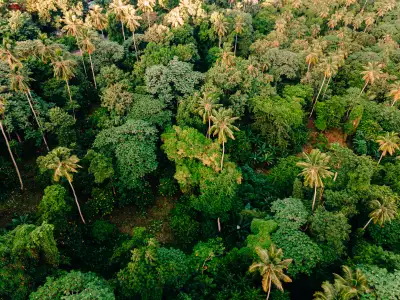
The cacao farm at Rabot Estate
In 2026, the result is a testament to 20 years of learning and innovation, and one of the world’s most singular dining experiments.
To learn more, visit saintlucia.hotelchoolat.com, and book now to experience it yourself.