It’s a fascinating time to be in the wine world. Consumption is down in many markets. Costs – from glass to shipping to labour – are up. Climate instability is affecting yields and consistency.
At the same time, there is simply too much wine. Tanks are full. Even more artisanal and small-scale growers are affected, in some cases being forced to sell wine in bulk at prices that barely cover the cost of farming it.
This “wine glut” is often discussed in the context of mass-market wines and in terms of economics, but on the ground, it’s deeply human. It affects families whose core belief is land stewardship.
It affects growers who have invested many years into converting their vineyards to organic practices or beyond. When the market slows, it’s not just the big players who feel the pinch; in fact it’s often these careful, farming-led producers who feel it the most.
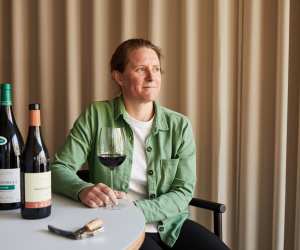
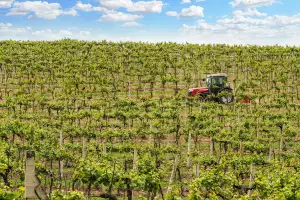
As the founder of Modal Wines, this moment reinforces something I’ve believed since the beginning: wine is farming first. Before branding, before trends – it starts in the soil.
If that soil is alive, tended with care and the future in mind, the wine will reflect it. Over the past decade there has been a huge growth in interest in natural wine.
Today’s drinkers are curious and informed. Many are drinking less volume, but better. They care about provenance and integrity, but they also care about value.

Nic Rizzi
In a saturated market, what cuts through isn’t hype. What cuts through is authenticity. Wines that are grown responsibly, made honestly, and priced fairly have relevance that goes beyond trends.
This year, we launched our own range of wines called Nuvo Nivo as a response to the current climate. Not as a vanity project, but as a practical solution to very real pressures across the supply chain.
Every bottle has a different story but always reflects our core values – humanity, community, and sustainability. In France, we worked with a grower to bottle wine that would otherwise have been sold anonymously in bulk, despite being farmed biodynamically.
In South Africa, we paid higher prices to incentivise growers to continue eschewing chemicals in their farming while producing wines that remain pure yet affordable. In one instance, we distilled 800 faulty bottles into a stunning eau de vie rather than destroying them, with the profits returned to the grower who had credited us. Waste became opportunity.
Many more wines will follow in this range, and yet none of this is revolutionary. It’s simply about taking responsibility. If there is too much wine in the world, perhaps the answer isn’t a race to the bottom, but to consider how existing wine is valued, positioned and shared.
Nuvo Nivo also addresses another uncomfortable truth: wines farmed with integrity have become financially out of reach for many people. If we believe that better farming benefits everyone, then access matters.
Ethical drinking cannot be reserved for a niche audience. I have personally struggled with this concept from day one, and I would never pretend to hold the key. It is still very much a work in progress for us, but Nuvo Nivo is a step in the right direction.
The wine glut will not disappear overnight, but it does offer a moment to reconsider what we want from the products we consume. For us, it comes back to relationships – with growers, with our customers, and with the people who drink these wines. Less noise. More substance. Farming first. If this period forces the industry to rebalance around those principles, then out of the chaos can come a real opportunity for change.