Brought to you by

Aruba may be best known for beaches, but spend a little time at the table and another version of the island comes into focus. This is a place where Dutch, Caribbean, Latin American, and African influences have been folded together over generations, turning a relatively small island into a melting pot of flavours.
One meal might involve a paper bag of pastechi and strong coffee; the next, today’s catch, lightly seasoned and paired with pan bati; dinner could be a tasting menu from one of a growing number of chefs putting an Aruban stamp on contemporary cooking.
That range is part of the appeal. Aruba does polished resorts, long lunches and white-tablecloth dining very well, but its food culture is just as easy to find at bakeries, food trucks and family-run restaurants.
More than 90 nationalities are represented, according to the Aruba Tourism Authority, and its dining scene reflects that mix. In other words, come for the turquoise water if you like, but save time to sample the island’s many dishes.
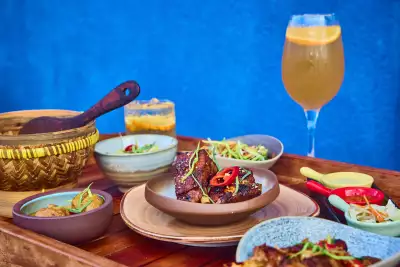
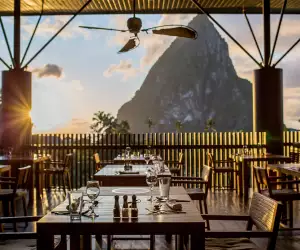
Nusa Aruba restaurant
Start with the classics
Traditional Aruban food tells the story of the island particularly clearly. Pastechi, a crescent-shaped fried pastry filled with cheese, chicken, beef, tuna or vegetables, is the sort of snack that can easily become breakfast.
Pan bati, a lightly sweet cornmeal flatbread, and funchi, a cornmeal side similar to polenta, turn up beside stews and fish. Stoba is slow-cooked comfort food, often made with beef, chicken or goat, while pisca hasa keeps things simpler with fried fish and local accompaniments.
Then there is keshi yena, perhaps Aruba’s best-known dish: a rich preparation of cheese wrapped around a spiced savoury filling, often chicken or beef. Its use of Gouda nods to the island’s Dutch history, while the seasonings and fillings reflect a much wider set of influences.
Aruba’s food culture has absorbed ideas from across the Caribbean, South America, and Europe, and that mix remains visible in everything from Dutch-influenced comfort dishes and Latin-spiced stews to fresh seafood.
For a traditional introduction, The Old Cunucu House serves local dishes in a historic cunucu house, including stewed goat, keshi yena, pan bati and funchi.
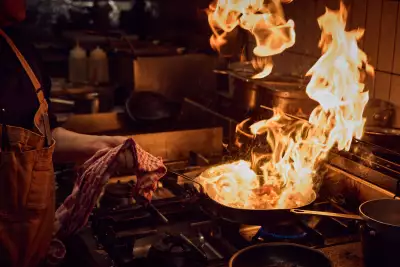
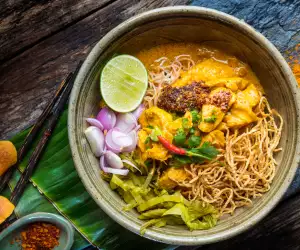
Lima Bistro Aruba
Papiamento Restaurant is a more polished proposition, set around a historic Aruban manor house and garden. Both offer a useful grounding before you start exploring the island’s newer cooking.
A few smaller details are worth seeking out too. Pica di papaya, a hot papaya sauce, makes immediate sense alongside fried fish, while quesillo, a smooth caramel custard, provides an appropriately rich finish.
Cold local beer and rum-led cocktails sit comfortably alongside the island’s increasingly ambitious restaurant scene. The most satisfying meals tend to move between those registers: something traditional, something fresh from the water that shows how contemporary chefs are interpreting Aruba now.
From fish pier to chef’s counter
One of Aruba’s strengths is the distance between its different kinds of dining experience, both geographically and stylistically. At Zeerover, the formula is deliberately uncomplicated: fresh fish and shrimp are weighed, cooked and served at a fisherman’s wharf overlooking the sea. Add a few local sides and a cold beer, and there is very little reason to overcomplicate matters.
At the other end of the spectrum, chef Urvin Croes’s Infini by Urvin Croes turns dinner into an intimate chef’s-counter experience, with an eight-course menu built around modern technique, storytelling and local sourcing.
Terra by Jeremy Ford adds another contemporary voice, bringing the Michelin-starred chef’s seasonal, produce-led approach to Bucuti & Tara Beach Resort.
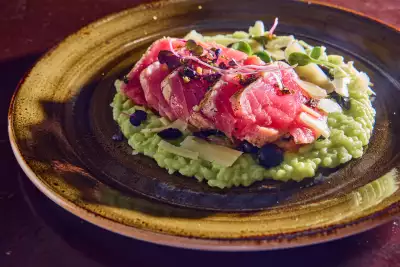
Ruinas del Mar
The point is not that one represents the ‘real’ Aruba more than another. Taken together, they show how broad the island’s dining culture has become. Indonesian, Peruvian, Japanese, Dutch, Caribbean and Latin American cooking all sit comfortably within the picture. You can eat extremely well without turning every meal into an occasion, then book somewhere ambitious when you want the full works.
Autentico Culinary Festival brings that breadth into sharper focus. Running from 3 to 11 October 2026, the culinary festival begins with Restaurant Week and a programme of limited-seating dining experiences before finishing with The Pavilion on 10 and 11 October, a two-night open-air celebration on Wilhelminstraat in Oranjestad. Restaurants, local chefs and international culinary talent come together across the programme, making it one of the clearest ways to understand where Aruba’s food scene is heading.
Beyond the table
Eating may provide a loose structure for a trip, but Aruba rewards leaving plenty of space between reservations. Eagle Beach and Palm Beach deliver the white sand and clear Caribbean water associated with the island, while Baby Beach, near San Nicolas, sits inside a shallow, crescent-shaped lagoon. With beaches strung around much of the island and the sea rarely far from view, it is easy to move between a swim, lunch and sightseeing without treating the coast as a separate excursion.
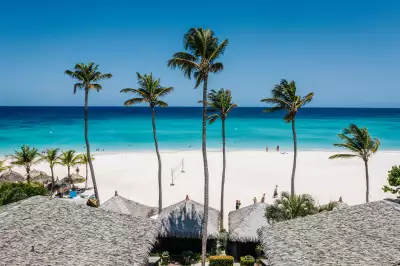
Manchebo Beach
Inland, the landscape changes quickly. Arikok National Park covers nearly 20% of Aruba and protects cacti-studded hills, limestone formations, caves, secluded bays and important cultural sites, including Indigenous rock drawings.
In June 2026, UNESCO designated the entire territory of Aruba as a biosphere reserve, giving international recognition to the relationship between the island’s biodiversity, communities and approach to conservation. It is a useful reminder that Aruba’s identity extends well beyond its hotel-lined coast.
San Nicolas provides another change of pace. The former refinery town has evolved into one of the island’s strongest cultural centres, with large-scale murals and museums giving its streets a distinctly different feel from Oranjestad.
Pair a morning here with lunch in the south of the island and an afternoon at nearby Baby Beach, and you get culture, food and coastline without trying to cram too much into the day.
Aruba at your own pace
That last point matters. Aruba is compact enough to explore easily, but it is better approached as somewhere to settle into rather than race around. Spend a morning over coffee and pastechi.
Take the long route to lunch. Stop at a beach because the water looks inviting, not because a schedule says you have 45 minutes to spare. Book a tasting menu one evening and eat fried fish with your fingers the next.
There is luxury when you want it, from beachfront resorts and spas to highly polished restaurants, but the island is accessible in the more important sense too: it is easy to move between high-end dining and everyday local food, between Oranjestad’s colourful streets and protected natural landscapes, and between a beach day and something more culturally enriching.
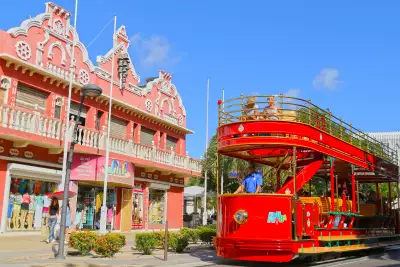
Tram in Oranjestad Mainstreet
The practicalities help. Aruba has a warm, relatively dry climate, receiving around 15 inches of rain annually, with cooling trade winds for much of the year. It also lies on the southern fringe of the Atlantic hurricane belt.
That reliability suits an island where the ideal day might involve a swim, a long lunch outside and an equally long dinner rather than an elaborate contingency plan.
For food-focused travellers, that balance is Aruba’s strongest argument. Its culinary identity is not built around a single dish or style, but around exchange: between cultures, generations, chefs, fishermen, producers and the people sitting down to eat. Autentico gives that story an annual stage, but it plays out all year in restaurants, bakeries, food trucks and kitchens across One Happy Island.
To find out more about Aruba and start planning your trip, visit aruba.com/uk or follow @arubatourismuk on Instagram