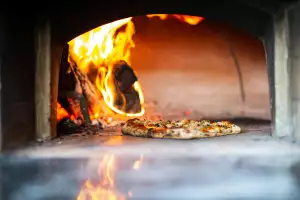
Capable of reaching temperatures between 400–500°C and cooking a pizza in under 90 seconds, wood-fired pizza ovens deliver the blistered crust, airy cornicione and delicate charring that define authentic Neapolitan pizza.
However, achieving those results in the UK climate depends on more than simply choosing the right oven. Insulation, build quality and, crucially, the type of wood you burn all play a defining role in performance and flavour.
What is a wood-fired pizza oven?
A wood-fired pizza oven is an outdoor cooking appliance designed to burn hardwood logs at extremely high temperatures. Unlike domestic electric ovens, which typically max out around 250°C, a proper wood-fired oven reaches 400–500°C, allowing pizza to cook in 60–90 seconds.
The intense heat comes from three sources:
• radiant heat from the dome
• conductive heat from the stone base
• live flame rolling across the ceiling
This combination produces rapid caramelisation and the signature leopard-spotted crust associated with traditional Italian pizza.
Wood-fired ovens differ significantly from gas or electric pizza ovens. While gas offers convenience, wood delivers both performance and character. For most UK homeowners, these ovens are installed outdoors in gardens, patios or dedicated outdoor kitchen spaces.
How to choose the best wood-fired pizza oven in the UK
Choosing the right oven involves balancing size, insulation, materials and fuel efficiency, particularly given Britain’s cooler and often damp conditions.
Size and cooking capacity
Most domestic wood fired ovens in the UK are built around either 12in or 16in cooking areas.
A 12in oven is ideal for small households and compact patios. A 16in model provides more flexibility and allows for larger pizzas or quicker rotation when cooking for guests.
If you entertain regularly, consider ovens that maintain heat efficiently between bakes rather than focusing solely on maximum pizza size.
Heat retention and insulation
Insulation is particularly important in the UK. Cool air and damp conditions can quickly reduce oven temperature if insulation is inadequate.
Look for:
• double-wall steel construction
• ceramic fibre insulation
• a well-engineered dome interior
Proper insulation improves fuel efficiency, shortens recovery time between pizzas and ensures consistent cooking even on colder evenings.
Portability versus permanent installation
Portable ovens are increasingly popular in the UK due to space constraints and flexibility. They typically feature foldable legs and compact designs, making them easier to store during winter.
Permanent brick or dome ovens offer superior thermal mass and long heat retention. They are better suited to homeowners investing in a full outdoor kitchen and willing to allocate dedicated space.
Build materials
Durability matters in British weather. Stainless steel is highly resistant to corrosion and suitable for year-round outdoor use. Powder-coated steel can perform well but benefits from protective covers.
Refractory stone and brick domes provide excellent thermal mass, which enhances cooking consistency and reduces wood consumption over time.
Fuel efficiency and wood use
The type and quality of wood you burn directly affect heat output, flavour and oven performance.
For best results, use kiln-dried hardwood logs. Kiln drying reduces moisture content to below 20 per cent, allowing the wood to burn hotter, cleaner and more efficiently. In the UK’s damp climate, this is particularly important. Wet or poorly seasoned logs struggle to ignite, produce excess smoke and lower cooking temperatures.
Proper storage is also essential. Even kiln-dried logs should be kept in a dry, ventilated space to maintain low moisture content.
Which hardwood is best for cooking pizza?
Not all hardwoods perform equally in a pizza oven. The ideal wood should burn hot, produce steady flames and generate minimal smoke.
Oak
Oak is one of the most widely available hardwoods in the UK and an excellent choice for pizza ovens. It burns slowly, produces strong heat and provides a subtle, balanced flavour. Its density makes it efficient for maintaining consistent high temperatures.
Beech
Beech burns cleanly and evenly, producing bright flames and reliable heat. It imparts a very mild flavour, making it ideal if you want the dough and toppings to remain the focus.
Ash
Ash lights easily and burns steadily. It is particularly useful for bringing an oven up to temperature quickly before switching to denser hardwoods for sustained cooking.
Birch
Birch burns hot but more quickly than oak. It can be effective for short cooking sessions but may require more frequent refuelling.
For pizza, many UK cooks favour a combination approach: ash or birch to heat the oven initially, followed by oak or beech to maintain high temperatures during cooking.
Softwoods such as pine should be avoided. They burn too quickly, produce excess soot and can negatively affect both flavour and oven cleanliness.
Does wood add flavour to pizza?
Yes, although the effect is nuanced and depends heavily on how the wood burns rather than simply on the species used.
In a wood-fired pizza oven operating at 400–500°C, flavour development comes from extreme heat, rapid caramelisation, combustion gases and subtle aromatic compounds released from hardwood. The wood does not heavily smoke the pizza in the way barbecue cooking does. Instead, it enhances aroma, crust complexity and overall character.
The quality of the fuel, particularly whether you use properly prepared kiln-dried hardwood logs, plays a decisive role.
Do different hardwoods produce different flavours?
Yes, although the differences are subtle due to the short cooking time. The wood mainly affects aroma and crust character rather than deeply infusing the toppings.
Oak burns hot and steadily, producing long-lasting embers and stable dome temperatures. It delivers a balanced, mild smokiness with slightly earthy undertones.
Beech burns cleanly and evenly when properly kiln-dried. It produces a softer, slightly sweet smoke profile that enhances crust aroma without overpowering delicate toppings such as mozzarella, fresh basil or olive oil.
Ash ignites quickly and burns with a steady, consistent heat output. Its flavour impact is very mild and neutral, making it ideal when high cooking temperatures are the priority.
Birch burns hot but more quickly than denser hardwoods. When properly dried, it produces a faintly sweet, lighter smoke character. It works best when blended with oak or beech to boost heat while maintaining balanced flavour.
Do it yourself
Choosing the best wood-fired pizza oven in the UK involves more than selecting a brand. Insulation quality, garden space and fuel choice are equally important. Pairing a well-built oven with properly stored kiln-dried hardwood logs, ideally oak, beech or ash, ensures consistent high heat, efficient fuel use and authentic results every time.