Standing at the viewpoint of Metekhi Church on the banks of the Kura River, looking across the water to Tbilisi’s old town, it’s hard to get a feel for what, exactly, the architecture reminds me of. There are some houses that wouldn’t look out of place in New Orleans with their gallery balconies and ornate steelwork. Then there’s the turquoise-topped spire of St George Cathedral that looks plucked from the Ottoman, and the ornate, kashi-tiled bathhouses. There are grand, European-style buildings lining the main boulevard and, above it all, a concrete-and-glass house that brings to mind a 1990s imagining of a Bond villain’s lair. The latter isn’t so far off – it’s the home of Bidzina Ivanishvili, Georgia’s richest man and, as I learn over the next few days, a shadowy pro-Russian figure whom the Guardian called the country’s ‘puppet master’.
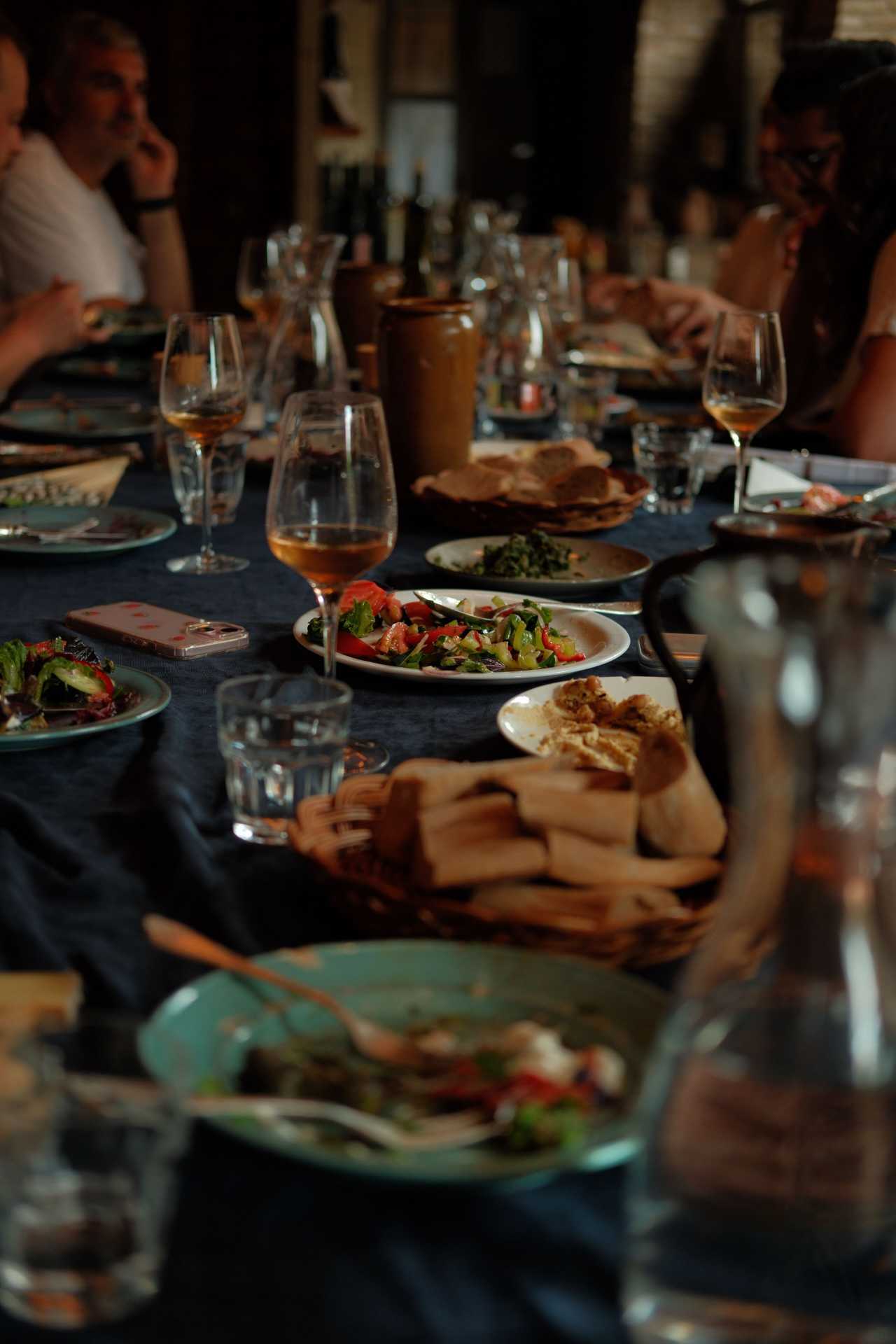
A traditional Georgian feast
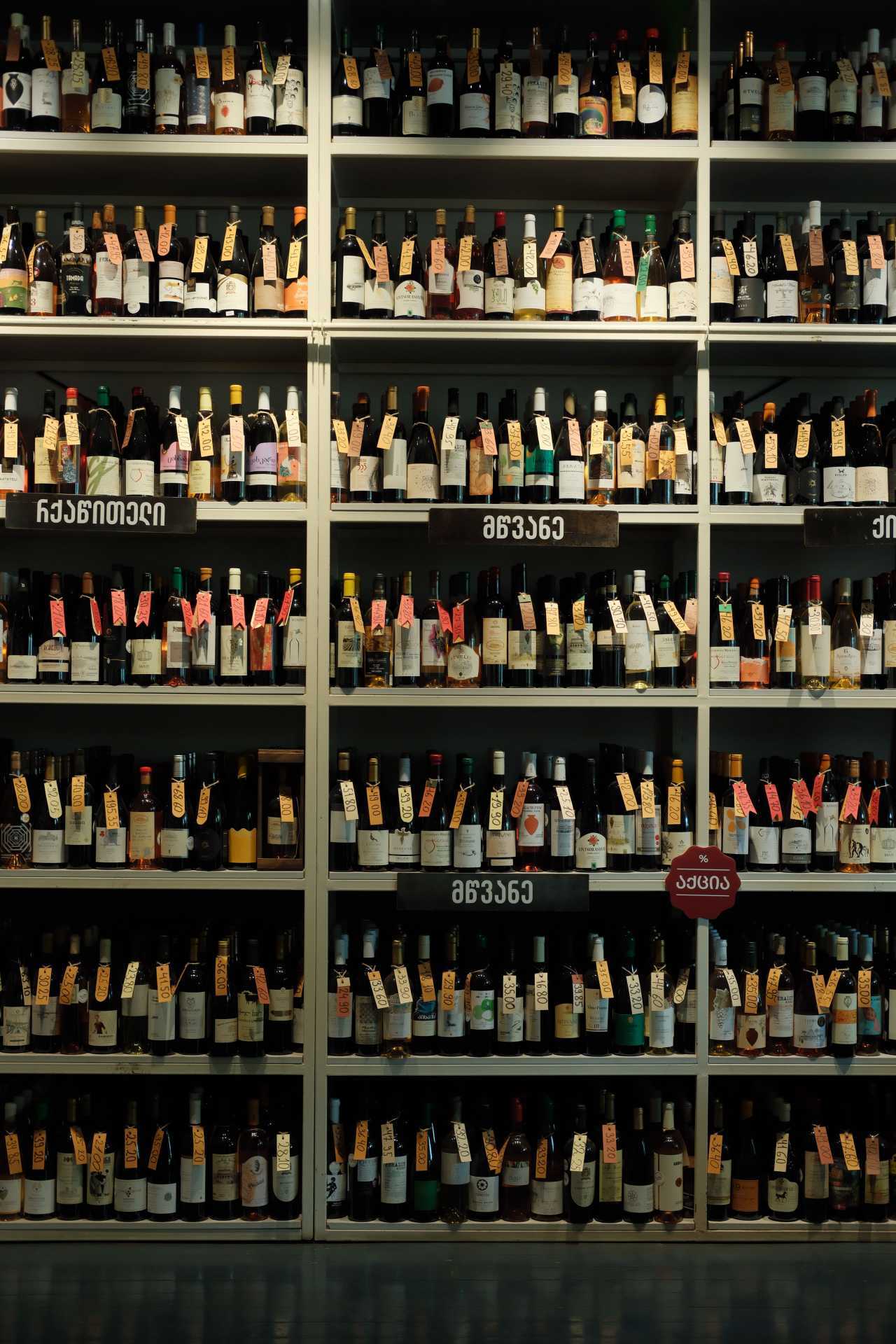
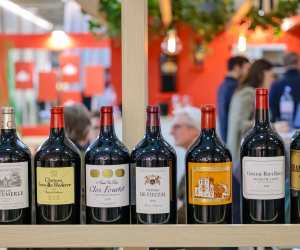
Wine bottles line the shelves in a specialist Georgian wine shop
That multifaceted old town skyline – controversial rich men and all – is a fairly good metaphor for Georgia as a whole. The country seems to sit on the fault line between East and West, sometimes feeling entirely European, at other times Middle Eastern, and often a combination of the two. As a key stop-off point on the Silk Road, Georgia sat at the crossroads of East and West, making it valuable territory. Over the years, it was invaded more than 40 times by the Ottoman Empire, Persia, Russia, and even Mongolia. With each new controlling power came new influences – architectural, social, political and, unsurprisingly, culinary. They are all woven into the fabric of the country – its customs, its religion, its language and its food and drink. It’s the latter I’m in Georgia to find out more about, and I’m here with one of the best duos to teach me all about it.
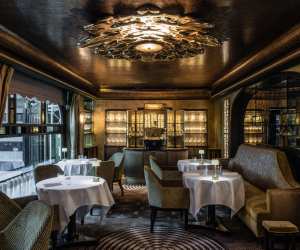
In January 2025, Giorgi Mindiashvili and Mitz Vora opened DakaDaka, a design-led Georgian restaurant that aims to bring the best of this multifaceted cuisine to London. If you’ve eaten, drunk or stayed somewhere cool in Tbilisi it’s likely it has Mindiashvili’s fingerprints on it. Now the CEO of Communal Group, which runs restaurants and hotels across the city and further afield in Georgia, he also worked with Adjara Group on their iconic Tbilisi properties, including Rooms and Stamba, and has even served as UK & Europe director for Ennismore. It was at the latter that he connected with Vora, who worked with the hotel group developing culinary concepts and has manned the pans at, among others, The Palomar and Foley’s. DakaDaka is the pair’s first foray into opening their own concept in London, and I have joined them in Georgia on a trip that is part familiarisation for the UK industry, and part research and development.
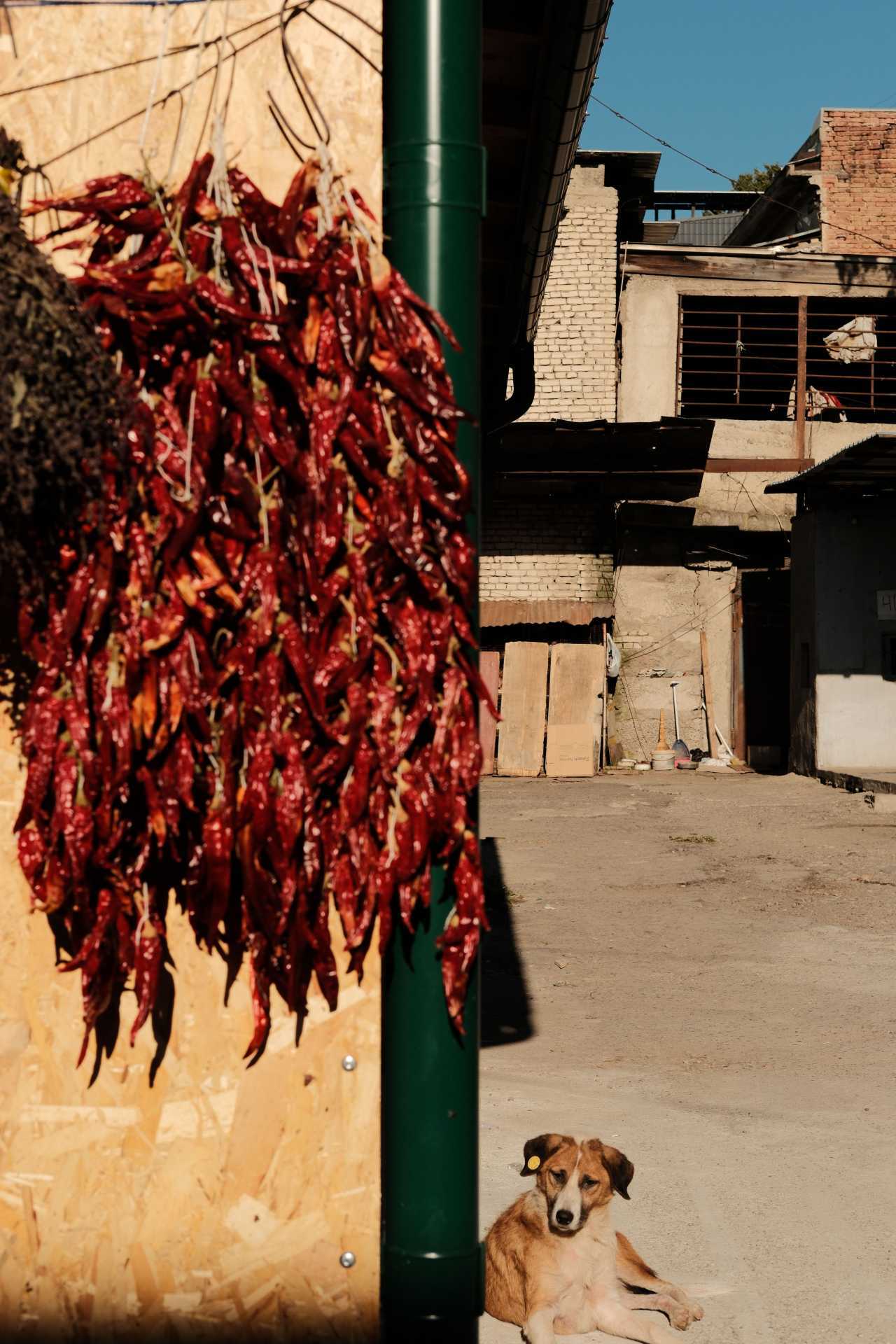
A dog rests underneath a string of sun-dried chillis
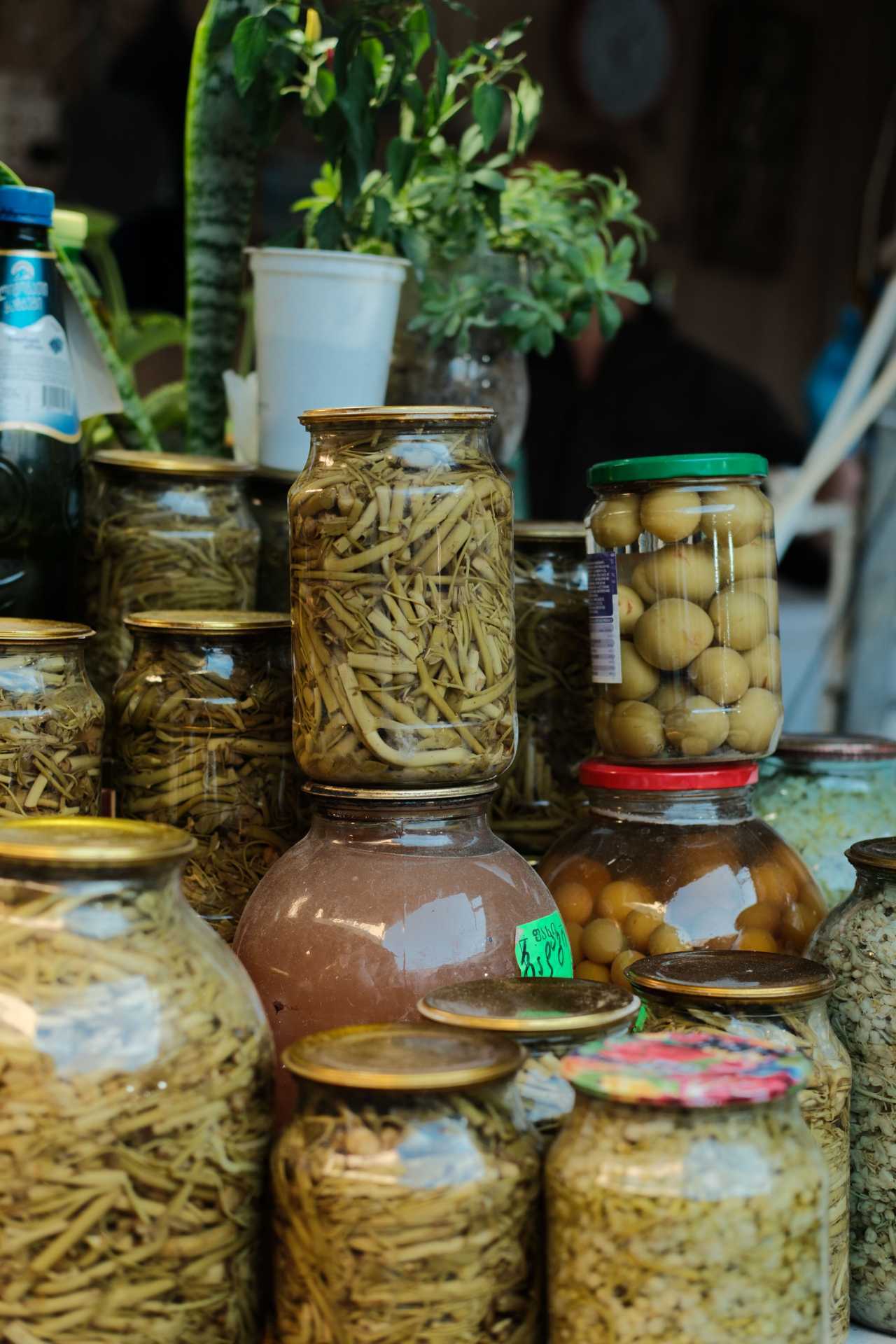
A selection of preserved goods in jars
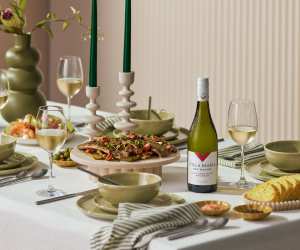
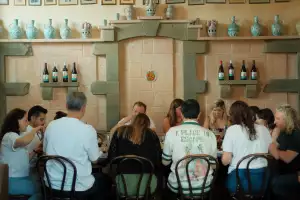
“It’s Georgian custom that from the starters, everything has to be on the table before the guests arrive,” Mindiashvili explains as we’re introduced over a heaving table of food at Craft Wine Restaurant, part of his Communal Group. After a delayed flight and a later-than-expected arrival, we’re sitting down for dinner at 11pm – not that you’d know it in the bustling restaurant. Plates of roast beef, fresh cheese, pkhali and khachapuri weigh the table down, and glasses of amber wine are quickly handed out. Craft Wine Restaurant is a good example of traditional Georgian food cooked through a modern, cosmopolitan lens. “I love bringing guests here,” Mindiashvili explains. “It’s how I like to eat Georgian food – it’s not extremely traditional, it has a twist.”
As I scoop up a mound of sunflower seed and bean hummus with a slice of charcoal-blistered bread, Vora tells me it’s called tone, and that it’s cooked flat against the clay wall of a long, cylindrical oven. I mention it sounds like a tandoor, and he agrees, explaining that Persian influence spread across both India and Georgia, so many elements of the former’s cuisine have been incorporated into the latter; take the three key spices used in Georgian food – blue fenugreek, marigold and coriander. Save for the fact that Indian cuisine often uses green fenugreek and saffron in place of marigold (though they impart very similar flavour profiles and the same golden hue), it’s almost identical. There are a number of walnut-based stews and braises we eat over our week in Georgia that echo Indian curries – particularly nut-based ones like korma and pasanda.
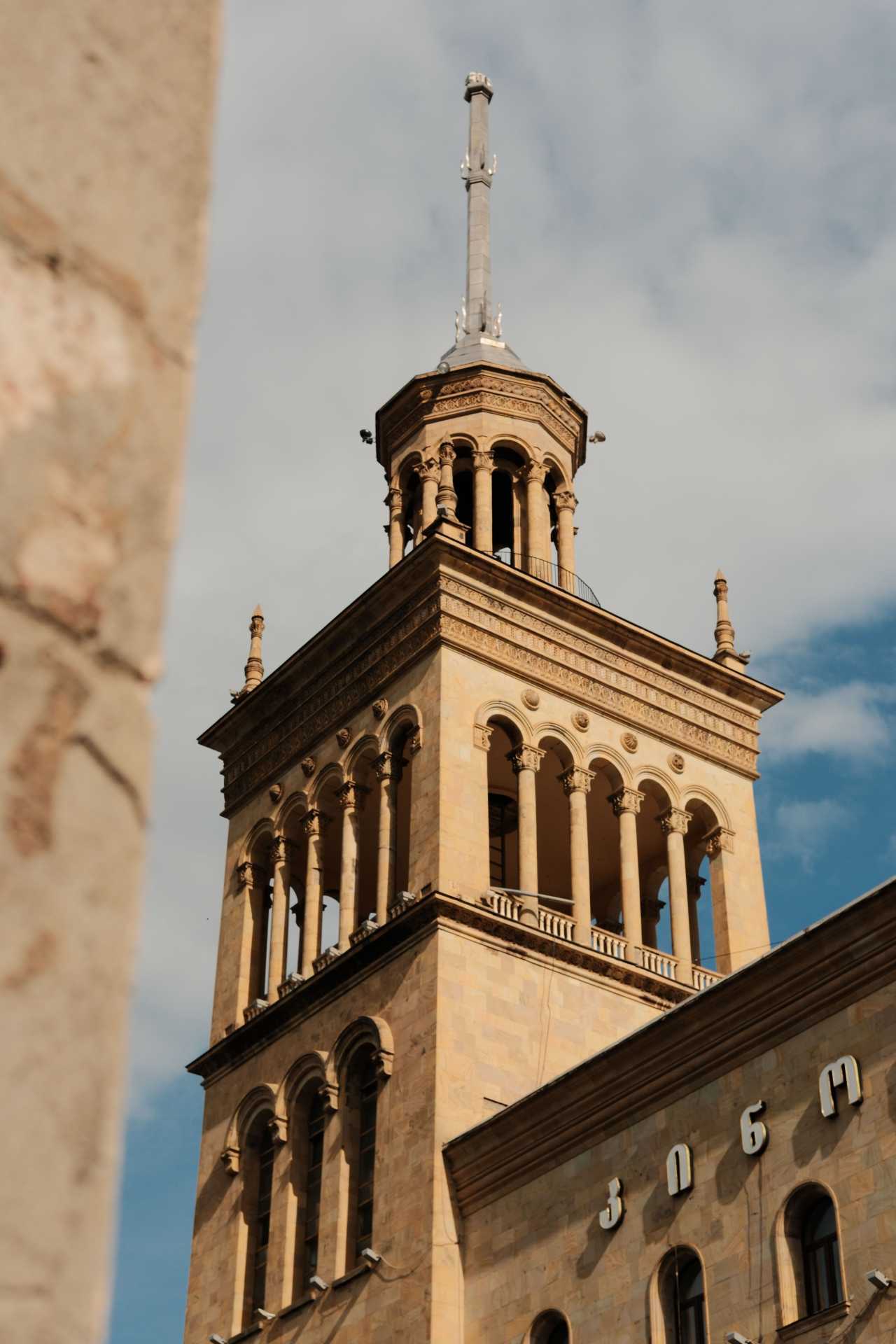
A bell tower in Tbilisi's old town
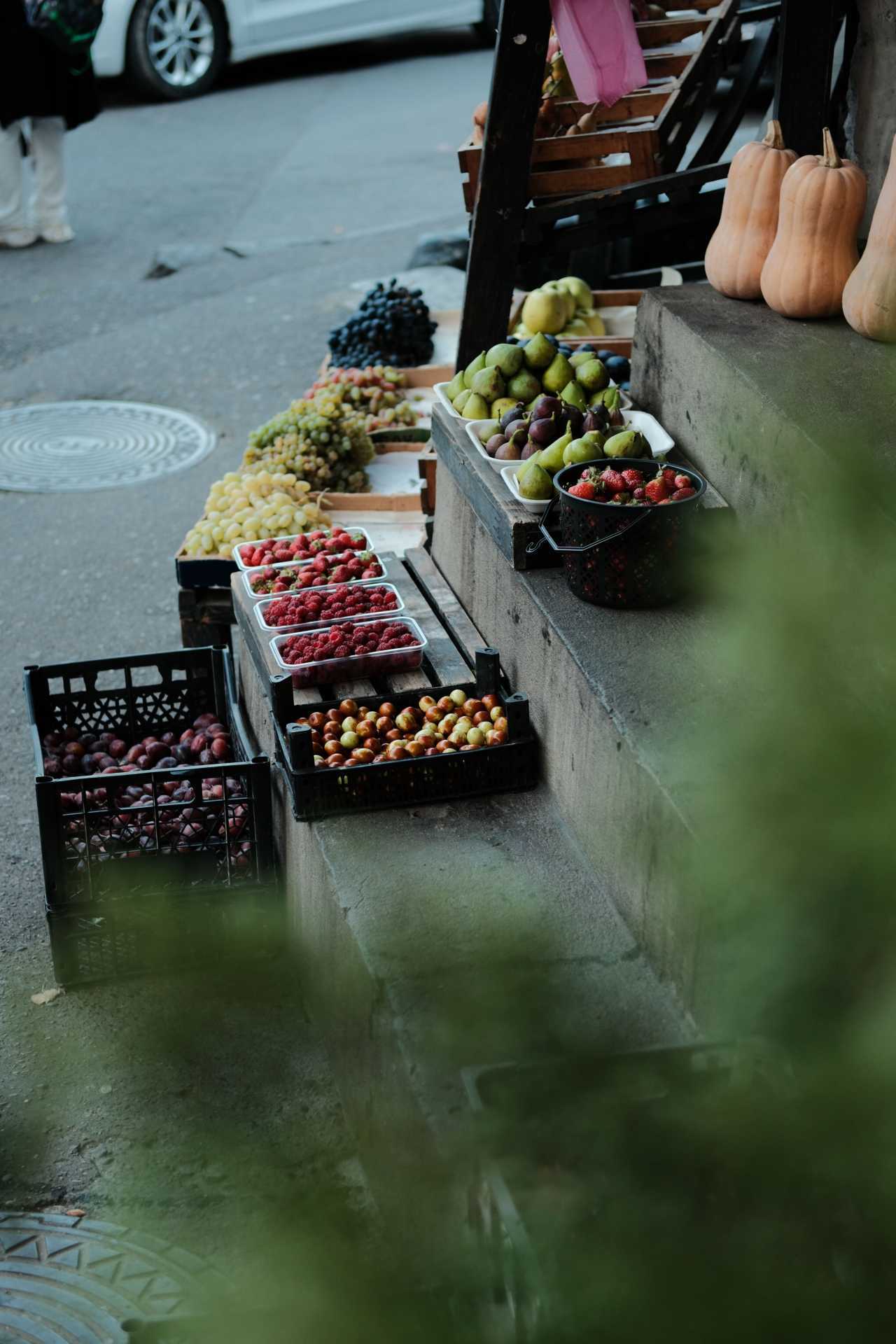
Market crates filled with summer fruits
It’s just one of many examples of how the movement of people and cultures can be tracked so closely in Georgian food. On our third night, we head to Ghebi, a 24-hour restaurant in the heart of Tbilisi, for fortifying khinkali and shots of chacha after a traditional ballet performance at an open-air theatre in the hills above the city. Many countries in this part of the world have their own play on the dumpling, and in the case of khinkali, it’s believed that this Georgian take on a xiao long bao came to the country’s snowy hills with members of Genghis Khan’s army. People in the Tusheti and Pshavi regions then learned the trick to cooking these dumplings, and their flavour and construction evolved over the centuries to become wholly Georgian.
Unlike the delicate, petite Chinese soup dumplings we might be used to, khinkali are hench, bulbous sacks of meat surrounded by thick, gratifying dough and topped with hard nibs, which, rather than being eaten, are best used as a handle from which to get your jaws around the rest of the dumpling. As the dulcet tones of Queen sing out from Ghebi’s jukebox, glasses of chacha – the Georgian answer to grappa – are enthusiastically poured out from a plastic gallon, and the discarded twists of khinkali dough quickly litter the table. It is as close to perfect as a midnight feast gets.
View on Instagram
Khinkali might be one of Georgian cuisine’s most internationally recognisable staples, but there is so much more to this food than its doughy mascot. At Shavi Lomi, which was opened in 2011 by Meriko Gubeladze and quickly became an iconic force in Tbilisi’s food scene, a gobi platter is perhaps one of the most enlightening things we eat all week. At first glance, this bowl of pkhali, sulguni cheese, and bread resembles an Indian thali. Looking a little closer, though, it’s a testament to the core facets of Georgian cuisine. Pkhali is a versatile, sweeping label for walnut-based dips that can include everything from spinach to beetroot, caperberries, and broad beans. Each element of the gobi is emulsified with sunflower oil rather than olive oil or butter. Sauces like adjika – a salty, spicy and zingy chilli, garlic and spice condiment similar to shatta or zhug – and tkemali, made from sour plums, chilli and herbs, cut through the otherwise rich and weighty flavours.
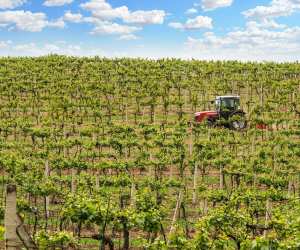
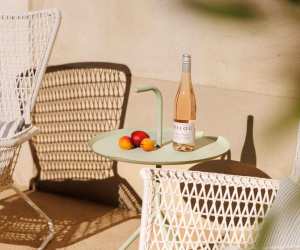
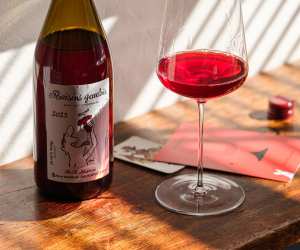
Georgian cuisine might be defined by the countries and people who travelled through it but, somewhat ironically, it’s the movement of people from Georgia to other parts of the world that is responsible for the second most-popular alcoholic drink in the world: wine. Archaeological findings from 2015 have dated winemaking in the country back to 6000 BC – a good 5,000 years before France, often thought of by many as patient zero for pinot. While it might be fairly new to wine lists across the UK, winemaking in Georgia has continued since its beginnings, with the use of qvevri, a unique clay amphora, and classic techniques passed down through generations. The explosion in popularity of orange and natural wines has brought Georgian wine back to the forefront, and if there’s one winery leading that charge, it’s Pheasant’s Tears.
Sighnaghi is a two-hour drive east of Tbilisi, in the heart of Georgia’s wine country. On a cobblestone street in the picturesque town sits the Pheasant’s Tears restaurant and cellar door where the winery’s bottles are poured alongside classic Georgian feasts. All of their wines – both red and white – are aged in beeswax-lined qvevri, with the stems, skins, and seeds mixed into the juice and left to ferment for anywhere from three weeks to six months. Short maceration times yield lighter-bodied, more approachable drops, while months in the clay can produce chewy, punchy wines that, in the case of white grapes, are a deep amber. It’s the latter that has become synonymous with Georgian winemaking, and makes the perfect partner to the country’s bolshy, high-octane food.
Pheasant’s Tears and many other Georgian wineries are on the menu at DakaDaka – as are many of the dishes we ate across our week there. At several meals, we came across variations of classic recipes or new flavours, and Vora furiously took notes, considering menu additions or alterations to items he had already settled on. The khinkali, for example, will deviate ever so slightly from the classic, filling each dumpling with an umami-rich broth to straddle the line between the Georgian version and a xiao long bao. One particular dish, shkmeruli, which sees chicken cooked in a milk-and-garlic sauce, had Vora rapturous, discussing how it would work on the menu.
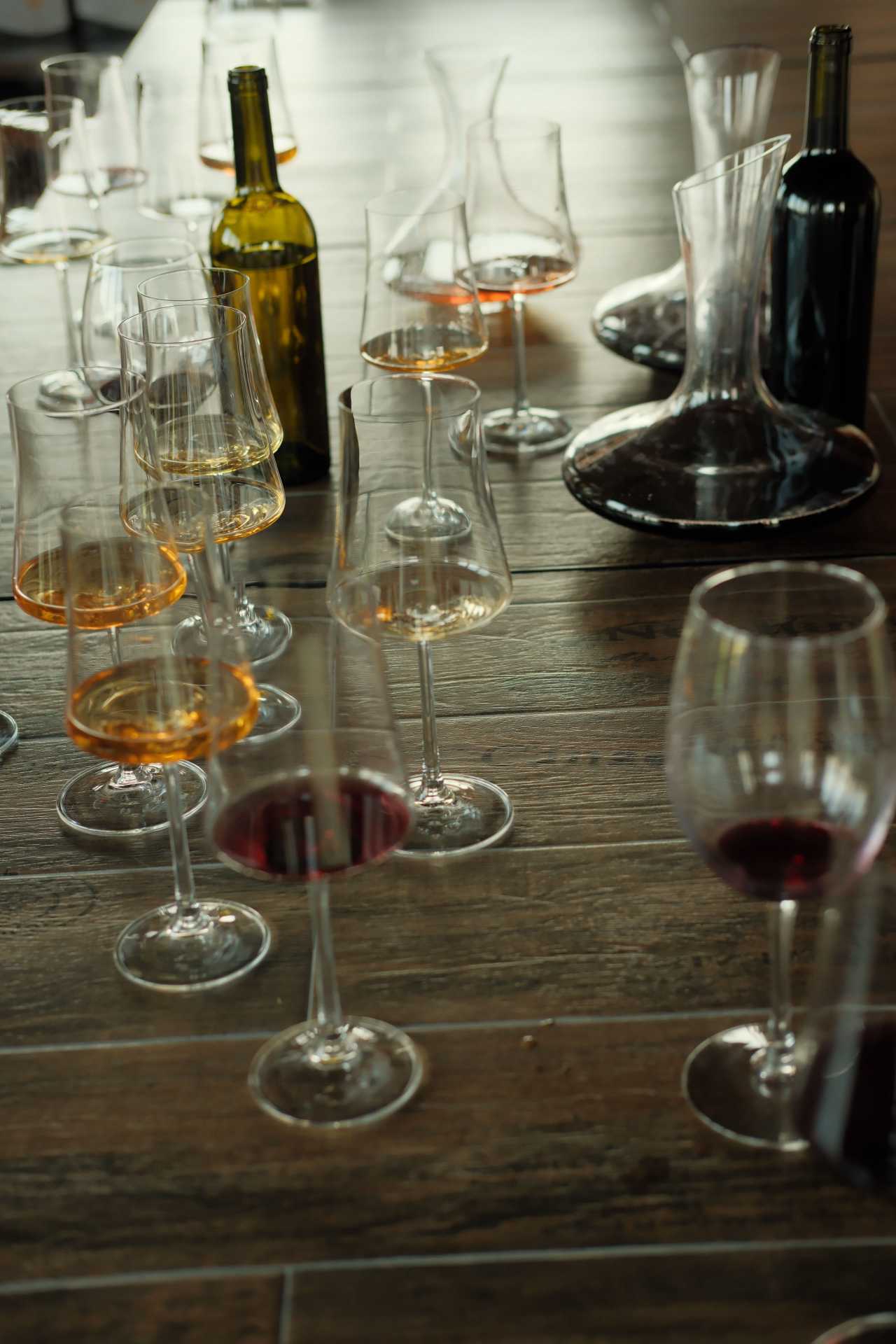
Red and orange Georgian wine
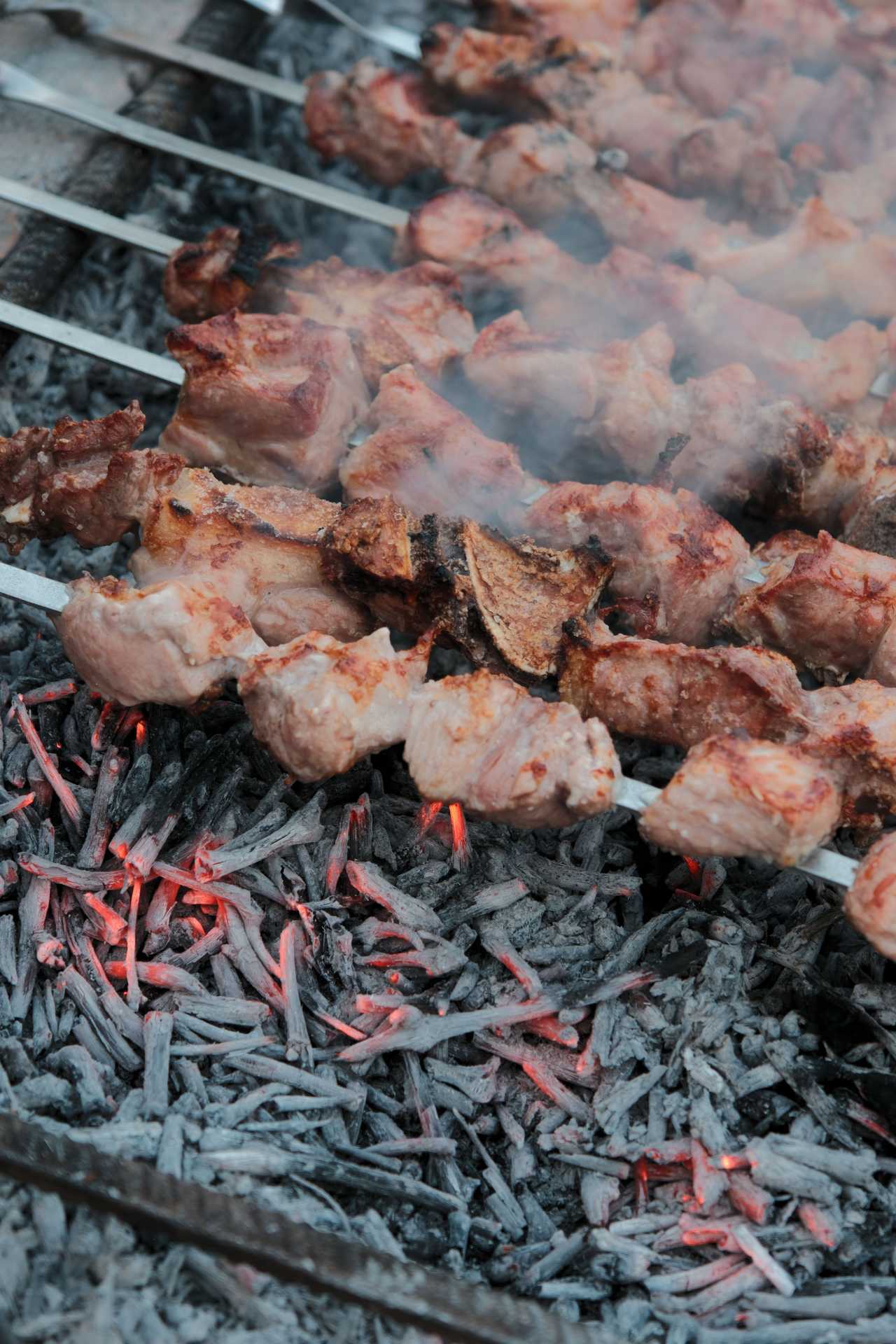
Skewers of meat cooking over charcoal
Rarely have I eaten so well or so abundantly, and yet fresh off the plane with a series of Georgian spices tucked safely into my suitcase, I found myself wanting to recreate so much of what we ate – from fiery adjika to brighten grilled meats, to the moreish walnut dressing on kakhetian salad – the Georgian answer to Greek salad. Apparently, Russian poet Alexander Pushkin wrote in the nineteenth century that ‘every Georgian dish is a poem’. If he’s referring to the lyrical flourish of flavour profiles and the elegant cadence of the meal, he’d be right. But after five days eating around the country’s capital and its surroundings, I’d be more likely to claim that every Georgian dish is a slice of history. It’s hard to tire of a cuisine that contains so many multitudes and reminds you, in one compact mouthful, of so many disparate corners of the globe.