I’ve just landed in Goa and no, I’m not here for a yoga retreat, not joining the ranks of harem-pants-wearing hippies headed east in search of spirituality on a picturesque beach. I seek a different spirit – whisky – and, as it turns out, I’m in the right place. I’m in excellent company too. Indian drinkers consume, by some metrics, more whisky than anyone else in the world. A large amount comes from beyond its borders – India is the world’s biggest whisky market by volume, with annual consumption often put at around 1.5 billion litres, though some estimates stretch that to roughly 10 billion bottles when all whisky sold in the country is counted. But the country also produces a vast quantity of its own, although often made in part from molasses, like rum. Not what many would consider to be whisky.
What would pass muster, and likely exceed expectations abroad, is the growing number of premium single malt whiskies from across the country. Paul John Whisky, one of the early Indian single malt pioneers, is based here in Goa. And while the whisky they make might take its inspiration from Scotland, this is a place where a variety of cultural influences converge.
Goa’s long period as a Portuguese colony is still very much in evidence, at least in its architecture and cuisine. And there’s a constant influx of visitors from the rest of the country – in addition to its reputation abroad as a tourist destination, this is where the rest of India goes on holiday too. There are the picture-perfect beaches and wellness retreats it’s known for, but the part where I find myself, in the state capital named Panaji, is known as Mini Vegas, with a cluster of casinos floating offshore, to comply with local gambling regulations. My hotel room overlooks a stretch of water where the Mandovi River enters the Arabian Sea, but there’s not much swimming there. Instead, recreational boats come and go, packed with partygoers, the music fun and loud.
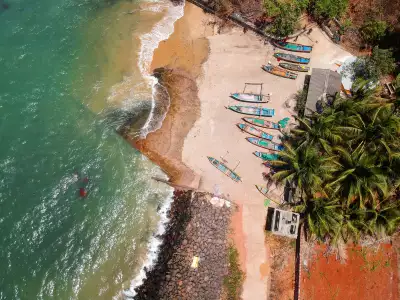
The sea and climate in Goa inspire Paul John’s distinctly Indian malts
Rahul Utekar / Pexels
The bar and restaurant scene here has changed significantly in recent years. During the Covid pandemic, when #WorkFromGoa became a thing, the hospitality scene rose to the occasion. The bars here are world-class, serving locally made spirits, including traditional feni made from cashew fruit, Indian craft gin, and more. Bartenders use the latest tools and techniques, while chefs blend the culinary influences typical of the region. As I’m told more than a few times, Goa’s not a place, it’s a vibe. It’s known for its laid-back attitude, its parties and its sunshine. It’s one of the reasons that Paul P John – known as Mr Paul – chose it as the home for his eponymous whisky.
Having already set up John Distilleries in Bangalore, which produces blended whisky, Mr Paul was inspired by the spirits of Scotland to create his own single malt distillery. His love for Scotch came from a number of years spent in the US in the mid-2000s, where he had the opportunity to explore whiskies from all over the world. He later travelled to Scotland with Michael D’Souza, who started in the business as an intern and is now the single malt distillery’s master blender. The two considered every aspect of whisky making in detail, from ingredients to production methods. Then, in 2008, their single malt distillery in Goa was established, only the second of its kind to be set up in the country after industry pioneer Amrut.
The route to the distillery, south from Panaji to Cuncolim, is a meandering drive through rural scenes, lush with vegetation. We pass stores in makeshift shacks, and cows on the streets. In typical Goan fashion, it’s all distinctly laid back.
Goa’s climate is directly reflected in the flavour of the whiskies. Here, ageing is fast, and the angels take a significant share
When we arrive at the distillery, it’s decidedly Goan too. Spacious, for a start, with the walls painted a vibrant, turmeric yellow. And then there’s the heat, not only a constant reminder that we’re not in Scotland, but also a key factor in how Paul John whiskies taste. With temperature and fluctuation in temperature playing such key roles in the ageing of spirits and affecting how they interact with oak, as well as the amount of evaporation – the angels’ share – Goa’s climate is directly reflected in the flavour of the whiskies. Here, ageing is fast, and the angels take a significant share.
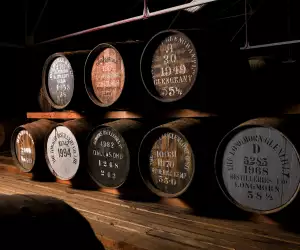
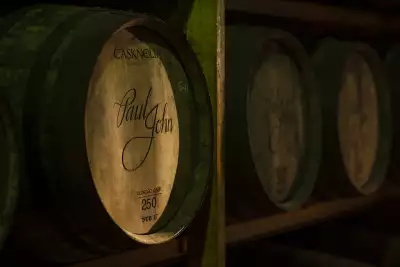
This is tropical maturation, as Paul John’s global brand ambassador, Heemanshu Ashar, describes it. We visit the underground cellar below the visitors’ centre, which is relatively cooler and creates more refined whiskies, and we tour ageing warehouses above ground, where bolder, more robust spirits are forged. As we stand in one of these, sweating, surrounded by barrels of whisky, there’s some muttering about whether we might be rapidly ageing too. India contributes not only its climate but also every other ingredient, including six-row barley sourced from the foothills of the Himalayas, the high-quality water Goa is known for, and local yeast. There’s only one slight exception. While Mr Paul’s preference leans towards unpeated expressions, he wants his whisky range to have something for everyone, which means including peated expressions, despite the absence of any suitable peat in India. Instead, this is imported from Scotland
and used to malt the barley locally.
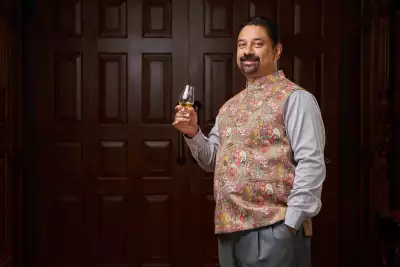
Founder Paul P John with his whisky
Paul John
D’Souza, a man of few words, becomes expansive in describing the specifics of how these factors – ingredients, climate, everything – have influenced the way that these whiskies are distilled and aged. “We had to create something that is conducive to the Indian environment,” he says.
In 2012, the first Paul John single malt was finally ready. The distillery’s first release, Single Cask 161, was initially launched in London, not in India. As Mr Paul explains, “it’s instilled in our minds that anything that comes from abroad is good quality”, as a result of centuries of colonial rule. Returning from abroad with acclaim and more than a few awards, drinkers in India were more open to trying a single malt made on their doorstep.
The range has expanded significantly since then. Our tasting starts with entry-level Nirvana, bottled in its fourth year. “What you see here is a thousand days of golden sunshine in the glass – and it’s the colour of a ten- or twelve-year-old whisky from a colder climate,” says Mr Paul. Joining Nirvana is a pair of unpeated, non-chill-filtered whiskies, Brilliance and Classic, bottled at a higher alcoholic strength. Then there’s a duo made using the peated malt, Bold and Peated, as well as a number of cask finishes – Pedro Ximénez, Oloroso, Port and Madeira. An annual Christmas release showcases specific cask finishes, with the latest, for 2025, combining Oloroso and Pedro Ximénez (PX) sherry-cask finishes to great effect.
As intended, something for everyone, but with a united character running through each spirit. The job of creating every expression, from start to finish, is D’Souza’s, although Mr Paul is involved throughout. He certainly knows his whisky, speaking knowledgeably with a self-satisfied smile, but he also knows business. In addition to Paul John Distillery here, and John Distilleries in Bangalore, he owns a premium Indian wine brand, Big Banyan, and Paul John Resorts & Hotels, consisting of luxury properties in Kerala and Bangalore, and his daughter oversees a coffee company, the Paul John Caffeine Business.
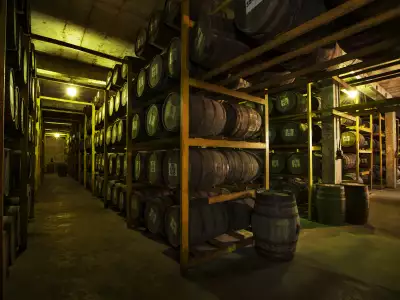
The warehouse at Paul John
Paul John
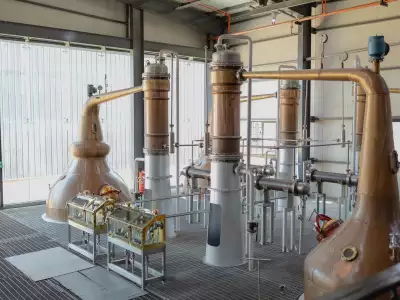
Copper stills at the Goa distillery
Paul John
Back in Goa, things are going well. The distillery has undergone three rounds of expansion, increasing the amount of spirit it can produce. Whisky might be going through a tough time globally, but here in India there are no signs of it. Sazerac acquired a stake in the business in 2017, providing a number of benefits, including access to Buffalo Trace whisky casks and to the company’s global distribution network. In India, Paul John produces Sazerac’s Fireball brand for the local market, and distributes some of its whiskies.
But there are more Indian single malts from Paul John to taste, and for these we board a boat for an evening cruise, to mark the upcoming occasion of Diwali, the festival of lights. Amid garlands of flowers, while we’re served fusion-style takes on Indian dishes like butter chicken risotto and rogan josh tacos, we’re introduced to Paul John’s Zodiac range. This celebrates Hindu astrology, with whisky expressions corresponding to specific zodiac signs. These are created only in limited quantities when an unusual whisky is found to have characteristics thought to align with a particular sign. Only two have been released so far, starting with Kanya, the equivalent of Virgo, with deceptive strength and a clean profile of salty grapefruit and apple skin. The second, Mithuna, is parallel to Gemini, suitably complex, and ultimately very approachable, with notes of deep gingerbread and dark roast coffee joined by rich citrus and a generous quantity of spice.
Looking out at the lights of the city, sipping this product of Goa, those multifaceted flavours that come together so harmoniously seem to be much like the variety of influences that have created it, and that make up this place in general – culture, religion, climate, flavour and more – and even bring traditions of astrology from both the East and the West together. It seems, in the end, that I’ve found a little spirituality here after all.