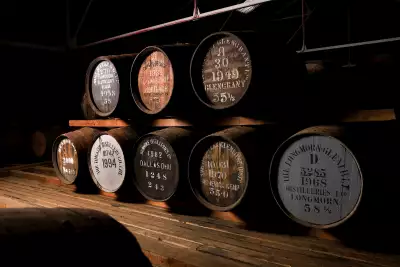
The next time you're in the whisky section of a supermarket, take a look at the names looking back at you. They'll likely be one of two things: a single malt released by a brand from its own distillery, or a blend. Think Macallan or Johnnie Walker, Glenfiddich or Whyte & Mackay.
But there's a whole part of the whisky ecosystem that goes unnoticed by the casual observer – whose day-to-day operations are still shrouded in mystery. Most of these brands and companies can't compete with the name recognition of the above, or their presence on the shelf. But they are waiting to be discovered if you know where to look.
Cadenhead's. Gordon & MacPhail. Hunter Laing. Adelphi. Signatory Vintage. The Heart Cut. These are names you won't see on billboards or TV spots, in a supermarket or at duty-free. But many of them have been around for centuries. In fact, they've helped lay the path for the rise to ubiquity of single malt Scotch brands.
In practical terms, an independent bottler is just what it sounds like: a person or company that buys casks of whisky and bottles them under their own label. But within this model lie complexities. Is the bottler buying direct from distilleries or via a broker? Are they buying new- make spirit to age themselves, or buying casks of mature whisky ready to bottle? In either case, is it matured in one cask, or finished in different ones? Do they have warehousing and storage? Their own bottling lines? Do they also own distilleries?
I can relate to this potential confusion. Before I worked in the industry, I was a generalist. It took joining a whisky retailer to see how deep the rabbit hole goes – how much the modern whisky landscape as we know it today has been shaped by the independent bottlers that lie a few rungs down the ladder of visibility.
A quick bit of history
Before there were single malt brands, there were distilleries and there were blenders. In the 19th century, distilleries across the Highlands, Lowlands, Speyside, Campbeltown and Islay were producing spirit with their own distinctive flavour profiles. But these whiskies weren't destined to be bottled as single malts – malt whisky from one distillery – under a brand name. In the early days, they were generally sold to grocers, who blended them with many others according to their own taste to sell to punters.
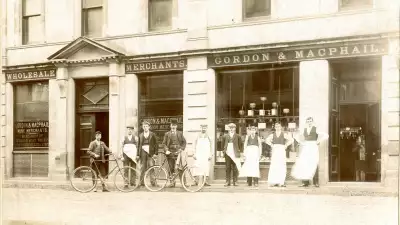
The original Gordon & MacPhail grocer's shop in Elgin in the early 1900s
Gordon & MacPhail
Decades later, by the 1950s and 1960s, brands like Johnnie Walker and Chivas Regal – producing blends of single malt whiskies combined with cheaper grain whiskies – became the mass-market whisky of choice for a generation. Global marketing and advertising caught on, and they were household names. But the distilleries themselves were uncredited; the silent workhorses of the whisky world.
Amid those blenders, though, a new pocket of the market had sprung up. First Cadenhead's, and then Gordon & MacPhail, had similarly started life as grocers in 1842 and 1895 respectively, and branched out into buying casks of whisky. But instead of blending them, they prized the distinctive flavours of single malt and thought they could stand up on their own.
Set up originally by James Gordon and John Alexander MacPhail in the town of Elgin, the Gordon & MacPhail business was taken further by apprentice John Urquhart after the deaths of the original founders in the early 1900s, and later by his son George. Its remarkable influence was laid out in an industry discussion and tasting by its marketing agency CASK in March. Speaking there was the fourth-generation Richard Urquhart, whose family have operated the business for the last 130 years. "Gordon & MacPhail is located in Elgin, in Speyside, so we're very close to and have strong relationships with a lot of the prominent distilleries there," he said. "We were a licensed bottler for many of them. We were known for being a little bit experimental, but also as pioneers who had the foresight to lay down whisky."
Bottlers helped distilleries realise they could take their product to market. Without indie bottlers, there would be no single malt as we know it today
It's not clear whether George Urquhart knew the influence he'd have on the Scotch whisky industry at the time, but when the company started bottling casks from only one distillery – from Glen Grant to Glenlivet, Macallan and more – and crediting each one on the label, he was setting in motion an entire movement. It was one of the distilleries, and the whisky they made, standing on their own terms.
The company's Distillery Labels series were the first bottlings to do so, before Cadenhead's joined the party in the 1960s. G&M's celebrated Connoisseurs Choice collection – still in rude health today – pushed the whole thing forward while also serving as a bottling line for distilleries that lacked the resources to put out their own spirit. Now, educated drinkers were learning the idiosyncrasies of whiskies made by specific distilleries, and finding their favourites. And the distilleries were realising they could take their product to market, rather than supplying it for blending. Without indie bottlers, there would be no single malt as we know it today.
Out of the shadows
Fast-forward to the 1980s, and single malt whisky was no longer new, but it was still under the radar. While the landscape now is still dominated by blends in terms of overall volume, the single malt brands have eclipsed many of them in name recognition and cultural footprint. That was simply not true three or four decades ago.
"In the late 1980s there was no whisky scene. There was one shop in London, and probably a dozen single malts on the shelf." I'm talking to Sukhinder Singh at the offices of Elixir Distillers, his independent bottling company. But to call Singh an independent bottler would be like calling David Beckham a winger – technically correct, but probably undersells his wider influence, given he would end up as one of the world's most prolific collectors and the founder of one of the world's premier spirits retailers.
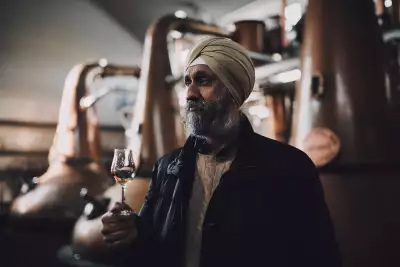
Sukhinder Singh, original founder of The Whisky Exchange and owner of Elixir Distillers, at Tormore distillery
Elixir Distillers
"I knew about independent bottlings, but I'd never tried them," Singh continues. "I thought they did a job that was missing in the whisky industry, because not all distillers were bottling single malts. I thought that was the job of Cadenhead's and Gordon & MacPhail." He recounts spending days on end in the Cadenhead's shop in Edinburgh in the 1990s. He was enamoured with the lens that indie bottling provided into the unseen corners of the whisky world, from lesser-seen malts to distilleries long since closed.
Singh, alongside his brother Rajbir, turned that passion for collecting whisky into opening The Whisky Exchange in 1999 as the first online whisky and spirits retailer. "We started at the right time," he says. "It was just when whisky was starting to happen, but it was still tiny. When we started in 1999, two independent bottlers started, and both of them had access to some of the best stock that was ever being released to date." Singh talks about the halcyon early days of The Whisky Exchange in the 2000s as benefiting hugely from the great indie bottlings of Bowmore, Glenfiddich, Ardbeg, Bruichladdich and Glen Grant, to name a few. With the marketing machine for single malts still not having clicked into gear, they were serving the world's enlightened few – those whisky geeks who were looking for great single malt whiskies, curated by bottlers who had great stock, and who knew what they were doing in terms of maturing and releasing it.
To call Sukhinder Singh an independent bottler would be like calling David Beckham a winger – technically correct, but probably undersells his influence
Singh himself was creating his own bottlings in the early 2000s, selecting casks for a range called the Single Malts of Scotland. It would eventually lead him to create Elixir Distillers, the company behind the SMOS, Elements of Islay and Port Askaig labels, as well as The Whisky Exchange's own-label releases. When he and his brother sold The Whisky Exchange in 2023, they remained the owners and operators of Elixir Distillers, now with more than enough stock to keep him busy, as well as continuing to supply the whisky for The Whisky Exchange's own-label programme.
By the late 2000s, Georgie Bell and Chris Bolton were up-and-comers in the whisky industry, both behind shop counters in Edinburgh and York respectively. Bell, who later founded The Heart Cut in 2023, had a degree in brewing and distilling from Edinburgh's Heriot-Watt University and was working for the Scotch Malt Whisky Society, an independent bottler of some repute.
"When I first started drinking whisky I didn't know it was a thing," Bell says. "My first loves were Glenmorangie and Ardbeg – independent bottling still wasn't something I was aware of. But very early on I discovered it as a really important part of the whisky industry and the back bar."
"There was a very common scenario where a customer would come in looking for a big-name brand, and you'd recommend an independent bottling, which for a very long time was significantly better value for money," says Chris Bolton, who had worked at The Whisky Shop in York before moving to London and working for Singh at The Whisky Exchange. "A lot of customers were swayed by that, but equally a lot of people wanted the name, and were slightly suspicious of what sounded like a third party." As a confessed collector of indie bottlings specifically, Bolton knew the landscape, but understood his customer base still needed some education.
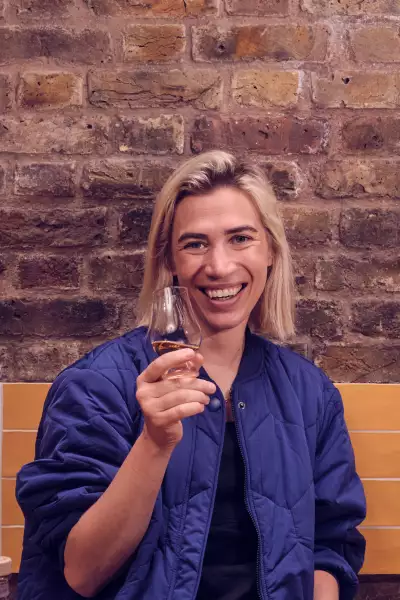
The Heart Cut co-founder Georgie Bell, who also worked at the Scotch Malt Whisky Society
Addie Chinn
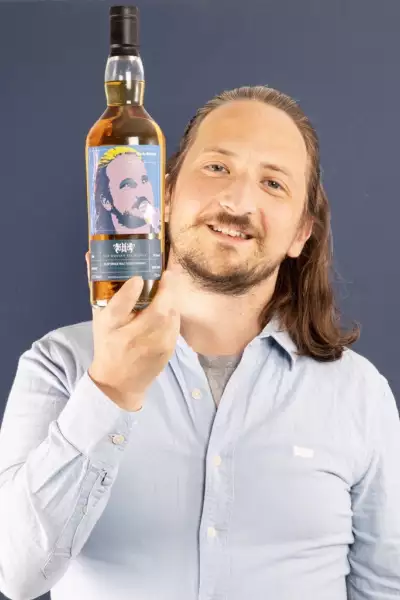
Chris Bolton heads up The Whisky Exchange's own-label programme
The Whisky Exchange
Having spent two years as a bartender at SMWS, before spending a year as its global brand ambassador, Bell says the landscape of independent bottling could feel esoteric even to an enthusiast, relying on more contextual knowledge than those outside the hardcore whisky fans could draw from. "Even back then, I would frame conversations with people in terms of flavour," Bell says. "When people came into the bar, they'd look up at the back bar of 300-odd bottlings and they'd be like, 'What do I go for?' We'd say, 'What whisky style do you normally like? What wine do you drink? What mood are you in? If you're having it with a beer, what time of day is it?' And we'd pick a whisky based on that. That's something that's stayed with me ever since."
Both Bell and Bolton worked in various sections of the industry, but both found their way back to indie bottling in some form or another. Bell founded The Heart Cut in 2023 after 15 years working for Diageo and Bacardi, alongside her husband Fabrizio Leoni. A decidedly modern indie bottler, The Heart Cut buys mature casks from whisky distilleries around the world, from Ardnamurchan in Scotland to St George's in California.
The key step change for us has been in trying to bring a bit of fun and joy back into whisky. There's a real process in finding casks and communicating them
After a decade and a half in The Whisky Exchange's shops, meanwhile, Bolton became the head of its own-label programme, and a key player in the releases of the recent Seasons and Zodiac collections, which similarly aim to bring a less experienced drinker into the world of indie bottlings and single casks. "The key step change for us has been in trying to bring a bit of fun and joy back into whisky," Bolton says. "The Zodiac is an abstract concept, don't get me wrong, but there was a real process that went into both finding those casks and communicating them."
While not all indie bottlings come from a single cask, one of the key drivers of curiosity is the unique appeal of whisky from a single vessel. Usually bottled at cask strength, without dilution, a single cask bottling offers drinkers a snapshot of a time and place at a particular distillery – and, for the die-hards who know their history, an entry point into golden ages at a particular distillery rarely found in official releases. If you want to try legendary vintages like Ardbeg 1972 or Ben Nevis 1996, indie bottlers are usually the way in.
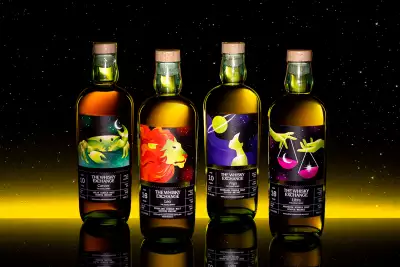
The Whisky Exchange's Zodiac collection pushes the marketing of indie bottlings into conceptual territory
The Whisky Exchange
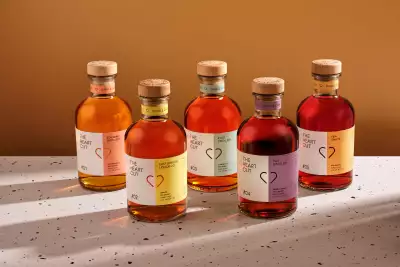
The Heart Cut's collection of indie bottlings includes world whiskies like these, as well as Scotch
Addie Chinn
For a new distillery, meanwhile, releasing a few casks presents a double win: cash flow for the business, and the chance to get into a new market without the need for logistics and marketing. "There are plenty of bottlers out there that are very enthusiastic about getting their hands on casks from new distilleries," says Bolton. "For a new distillery, it's a good way of eaching out to different customers that you don't speak to normally."
"This is a great example of a bottle that's been bottled as a collaboration," Bell tells me at Scotch Malt Whisky Society's London HQ, as we try The Heart Cut's bottling from Boann in Ireland. "As a fairly new brand, this will probably be the first experience of them for a lot of people. We have a responsibility as an independent bottler to make sure it's the best experience possible."
What's in a cask?
The question remains, if you're a whisky distillery, why would you sell your casks or your spirit, whether that's to a bottler directly or to a broker? "The thing to remember with the whisky industry is that it is littered with peaks and troughs, boom times and crashes," says Bolton. "So when it comes down to the bulk supply, it's almost always linked to how distilleries are performing." That means when there's too much supply and not enough demand, it's not unusual for a bigger-name distillery to want to cash in on some casks, or even to swap casks with other distilleries. It's been a clandestine part of the industry for generations. Occasionally casks are sold on the condition that the distillery isn't named – drinkers of 'Speyside M' or 'Whitlaw', for example, may guess its origin from a few clues or some received wisdom.
There are often two things that draw drinkers to indie bottlings in Scotch whisky: to experience a different side of a distillery they already know, or to taste whisky from one of the industry's aforementioned 'workhorse' distilleries, whose single malt would generally only be seen in blends. Dailuaine, Miltonduff, Ardmore – these are malts many people rarely hear of, but that offer so much to the curious drinker. They are often part of the biggest spirits companies, including Diageo and Pernod-Ricard, and while they may occasionally appear in small official collections – like Diageo's Flora & Fauna series – the best and most interesting examples are generally found in indie bottlings.
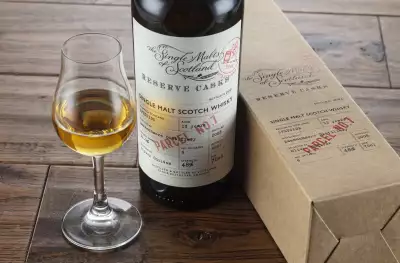
A bottling from Elixir Distillers' Single Malts of Scotland range
Elixir Distillers
The presence of certain distilleries and the absence of other ones is simply down to the companies' appetite. While Diageo is known to be tightening up the amount of stock from its distilleries going to brokers or bottlers, its Islay icon Caol Ila is an example of a distillery with its own official collection, but whose single malt is found across dozens of independent bottlers (usually credited, but sometimes not). Lesser-known Diageo distilleries like Dailuaine and Linkwood are a fixture of the indie bottling landscape; Lagavulin is rarer to see.
G&M, Cadenhead's, and more recently bottlers like Elixir Distillers and Signatory Vintage, pride themselves on having stock maturing in warehouses for decades, with a huge inventory of casks for them to use in single casks or batch releases, some of which have been maturing from new make right the way through in their own casks. Newer bottlers, though, don't have that luxury, and often buy casks from brokers. "Some people get lucky and they find good stuff depending on how good their palate is or how persistent they are," says Singh. "But there's a difference between having five or ten casks, and bottling three to four hundred casks a year and having a good level of consistency."
Another way to procure casks, though, is to buy them directly from distilleries. This person-to-person, bottler-to-distillery dynamic is The Heart Cut's stock in trade, with each release coming from hands-on tasting sessions at the distilleries and relationships built over years. "My big frustration with the independent bottling landscape was that a lot of whiskies were being bought from brokers, so there was very little transparency of where the cask came from originally," Bell says. "What was important for us was making sure that that distillery name was at the forefront. Drinkers now are not necessarily brand-loyal; they're very brand-promiscuous. You don't always have to buy from The Heart Cut, but wouldn't it be awesome if you liked our Heart Cut bottling of [Kentucky distillery] New Riff, and then you bought something from New Riff. I think that's the important link; the connection needs to be made. That's the responsibility of the independent bottler today."
Bolton agrees. "If you're open to buying stuff from all distilleries, or going direct to distilleries and getting hold of the liquid like The Heart Cut do, and like a lot of people do now, then as long as you make the commercial side of it work, you've got a much bigger range of styles and makes and distilleries to work with."
Whisky 1901 is one of a small handful of cask investment platforms bottling its own spirit for consumers, selecting casks from brokers and its own stockholdings as limited-edition releases. To help build a solid reputation – especially in the midst of consumer confusion around the legitimacy of many cask investment companies, as well as the issues of quality and transparency that Singh and Bell both raise – owner Aaron Damiano Sparkes brought in writer, consultant and whisky-industry luminary Matt Chambers to help build the brand's first two collections of single cask bottlings.
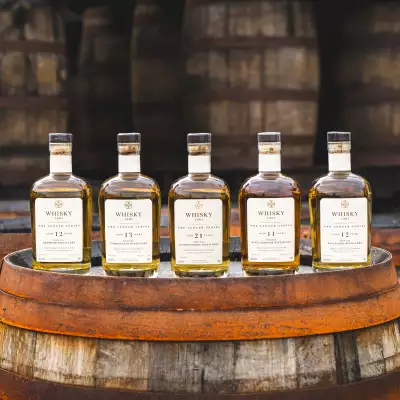
Whisky 1901's Ledger Collection of independently bottled Scotch whisky
Whisky 1901
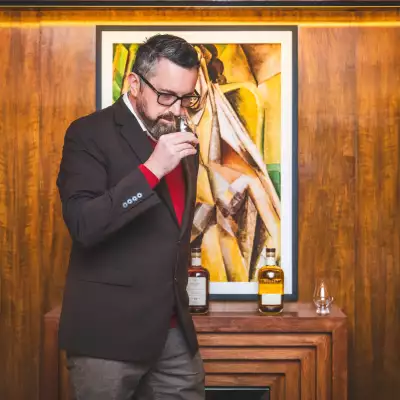
Matt Chambers, a whisky-industry luminary and the person responsibly for curating Whisky 1901's bottlings
Whisky 1901
While a section of its audience are buying casks solely for investment, a substantial number are in it for the love of the spirit. Adding a consumer-facing collection into the mix was inspired by these customers' visits to its warehouses, to taste from casks they at some point hoped to bottle for themselves, which Chambers generally oversaw. "Offering that as an experience is invaluable," he says. "It brings credibility and quality to what we're doing."
The brand's debut, The Collection, featured a 35-year-old Glenburgie and a 26-year-old Jura. It was followed by The Ledger Series, a smart and slick collection of six single casks from indie darlings including Miltonduff and Ardmore, all of which won awards at The Scotch Whisky Masters and IWSC competitions in 2026, and were selected from a bank of more than 40 casks. "I had to have some criteria," says Chambers. "'Does it give me the character, in terms of the distillery, but also the region? Does it show the cask's maturation in a great light, at whatever age it is? And does it feel like a real sweet spot?'"
The bottlings are sold just north of £100, and their quality is a reminder that cask investment and brokers are legitimate parts of the industry if you know where to look. Ultimately, the good will out, and drinkers are discerning enough that the quality of the whisky will probably have the final say, wherever the spirit is sourced.
Whisky's full circle
So what of the future? The trend of the recent few decades, it seems, has been bottlers buying or launching distilleries themselves. The list is eye-opening: in 1993, G&M bought Benromach, and later opened The Cairn distillery in 2022. In 2002, Signatory Vintage bought Edradour. In 2014, Glasgow-based bottler Adelphi opened Ardnamurchan in the remote Scottish Highlands. When the Douglas Laing company split, its offshoot Hunter Laing opened Ardnahoe on Islay, and when Sukhinder and Rajbir Singh sold The Whisky Exchange to Pernod Ricard in 2023, they negotiated the acquisition of Tormore by Elixir Distillers – after work had already begun to build the company's new distillery, Portintruan, on Islay.
What's the reason for this trend? Some of these bottlers, of course, have been managing cask programmes and maturation themselves for decades or centuries. If half of a distillery's work is in distilling the spirit, and the other is in maturing and blending it, a company already doing the latter is well placed.
We're purposely going to work with a handful of independent bottlers we like and trust, because they do it for the right reasons
But it's also the ebb and flow that Bolton talked about – the fluctuations in supply nd demand, particularly in an uncertain climate. "The big distillers were closing the doors," says Singh, "Everybody felt that there would be a point in time when the bottling side of the business would just drop, because it got harder and harder." Ironically, it's distilleries that are finding times tough now – but that may well mean more of their casks on the open market, and more space in which the indies can play.
Through Elixir Distillers, Singh operates one distillery, Tormore, and is busy giving the so-called Pearl of Speyside a brand to match what he and many others believe is a beautiful, vibrant and fruity spirit that deserves more than being buried in blends. Added to building Portintruan, and running an independent bottling company with multiple ranges, he technically has no need in his ecosystem for other bottlers. But rather than shut them out, he's doing the opposite, giving a select few access to Tormore's casks. "We want to support other independent bottlers," says Singh. "Good ones. We're purposely going to work with a handful of people we like and trust, because I think they do it for the right reasons." When it comes to the importance of indies to the ecosystem, the move speaks volumes.
As for the drinker looking to go deeper in the world of whisky than what the supermarket shelves offer, I'd advise grabbing an indie bottling and taking a few steps down the rabbit hole. The dram waiting for you might be the one that sends you tumbling.