Hear the words ‘foraging trip to Kent’, and you probably think that it sounds like a nice day out. A civilised tromp pulling at plants, leaves and flowers, before retiring to a garden to sip wine on a sunny spring afternoon. Which is exactly how it played out, with the added bonus of a small, nagging discomfort.
Foraging is one of the few activities that can be described as both ‘quaint’ and ‘primal’; a twee afternoon snipping things into a wicker basket, or a dive into how estranged most of us have become from what ends up on our plates.
In March, it’s also an activity where certain factors need to go your way. Much has been made of the especially awful meteorological start to 2026, when the sun became less a cosmic certainty than a paranormal phenomenon.
This had pushed sprouting back to the point that, in early springtime, wild and edible plants were convinced that it was still January. A week prior, there was, quote, “nothing” to forage. But, as it turns out, nature doesn’t take long to lock in; a couple days of sun and they know it’s time to get to work.
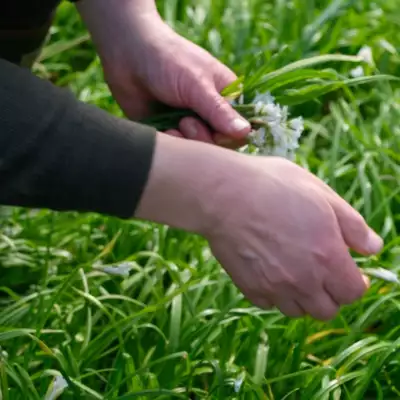
Foraging for wild garlic
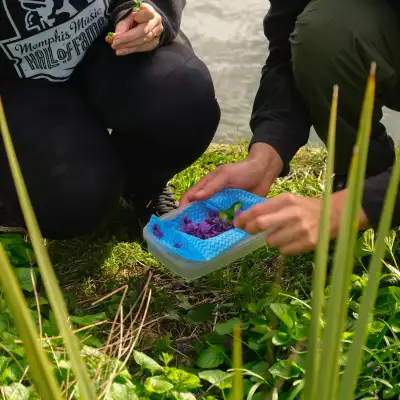
Collecting violet petals
Which is why I’m standing on a riverbank just outside Canterbury, eating alexanders rather than the last dregs of a winter root, which tastes like a softer, sweeter celery. Leading is Mike Forrester, who undertakes these sorts of group forages. For years, he ran a company that supplied wild foraged food to top London restaurants.
It’s become something of a micro-trend in London, which you might imagine would be a boost for the movement. But he retains a healthy dose of cynicism toward cooks who throw in a cursory handful of sorrel atop a risotto so that they can label their menu ‘wild’. Now, he operates these as community events and occasionally for urbanites like me who are shamefully divorced from my grocery shop.
For wild food that is truly edible, you might think you would have to venture further afield than a canal five minutes from Canterbury Cathedral. But the distance between foraging and city life is more a matter of mindset than geography. Plants we gather range from edible but earthy, like hawthorn leaves, to genuinely delicious, like alexanders or violet petals.
Among the foraging crew is Santiago Lastra, head chef at Michelin-starred Kol in London, who is plotting ways to use the bounty. “This will go in the quesadillas,” he smiles, holding a piece of greenery I couldn’t tell apart from a clover.
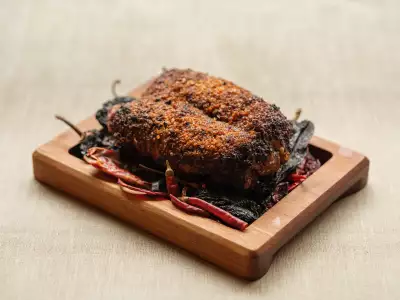
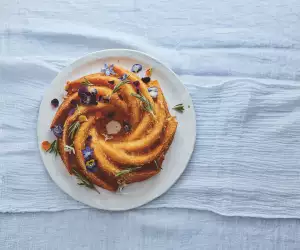
Duck mole at Kol
Anton Rodriguez
Kol stands out among Mexican restaurants in London for using almost exclusively British ingredients, save for a few, such as dried ingredients like varieties of Mexican chilli, which British duplications can only provide paltry substitutes for.
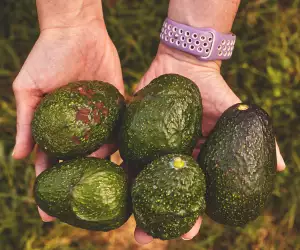
That means no lime or avocado, crucial to the cuisine, but whose supply chains are fraught with environmental and ethical concerns, from deforestation to the Narcos’ grip on the avocado epicentre of Michoacán.
These flavours have to be made up in the aggregate using ingredients like sea buckthorn, rhubarb or even ants for sourness. People like Forrester, who can offer guidance on which wild plants will taste good in a mole and which might kill you, are valuable.
The project, off to a rocky start during Covid, has become a success. Kol earned its Michelin star in 2022 and has retained it ever since, as well as placing on the World’s 50 Best Restaurants ranking.
For most of us, the mass industrialisation of our eating habits is one of the most normalised examples of cognitive dissonance
For most of us, the mass industrialisation of our eating habits is one of the most normalised examples of cognitive dissonance. Walking through the supermarket, the scale of dissociation to the produce in the aisle is staggering. Far-flung fruits like avocados and mangos, now ubiquitous, have enormous carbon footprints.
How many people who dine in Kol think its lack of limes is just a stylistic cheffy quirk, rather than a stance? It’s not new information – most people are vaguely aware of the inherent issues, but is foregoing its convenience a realistic proposal for busy lives, especially at a time when many feel especially disillusioned with the notion that individual action can bring about systemic change?
Forrester is aware of this, but it doesn’t mean there can’t be a middle point. Why, for instance, do we import things like asparagus or green beans, items that are native to the UK, but only seasonally? Can we not winter without asparagus?
He tells us that as part of a study, he subsisted solely on foraged goods for three months, which was about as difficult as you might imagine. That’s why these foraging walks focus on possibility rather than heavy-handed lecturing. They’re about opening people up to the idea that, if you want a bowl of salad or a cup of tea, there are about a dozen plants that could very well be perfect on your walk home.
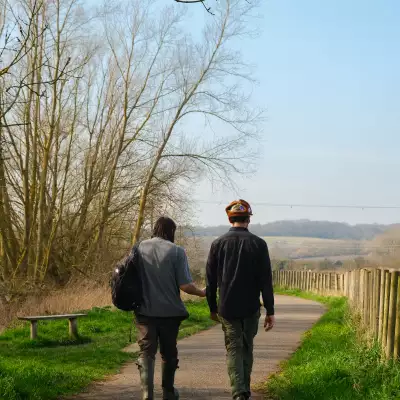
Santiago Lastra and Mike Forrester walking in Canterbury
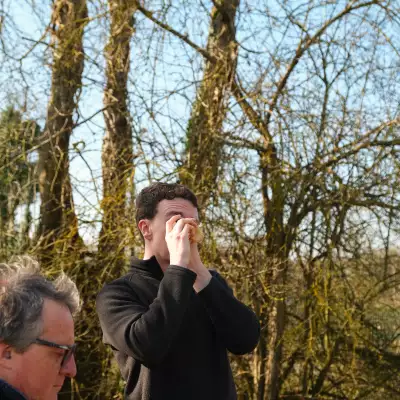
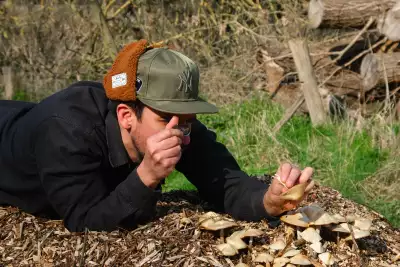
The writer inspecting mushrooms through a looking glass
But you do have to know where to look without eating something risky. At one point, we pass a cluster of wild mushrooms that have sprouted from some wood chippings.
“I spotted these yesterday,” Forrester says, “and they’re probably fine to eat, but...” before giving a laugh that acknowledges bad luck wouldn’t do much to ward off manslaughter charges should he have been wrong. They will have to go back to the lab before being confirmed safe.
Then there’s hemlock, one of the most toxic plants in Britain, and it looks about as inconspicuous as a fern, rather than being helpfully emblazoned with threatening red marks like a poisonous Amazonian frog.
Forrester tells us about his self-coined term “deep yum” – taking that satisfaction you get from eating something delicious, and multiplying it by the satisfaction of knowing where it’s come from, and how it got to your plate. It sounds obvious, and yet so few of us practise it or seek it out. It’s also about the acceptance that, when it comes to nature, flawlessness is not a right.
Had the sun continued hibernating for an extra two days, we could have been eating scallops on their own, without any herbs or vegetables, although I’m sure Lastra could have rescued something out of it. Instead, they’re perfumed with rhubarb, alexander and a rainbow of edible flowers, many just sprouting for the first time that year, gratitude for their presence enhanced by the risk of their absence.
Admittedly, I may not quite be ready yet to swap Tesco for the bushes of Brockwell Park when I want to tick off my shopping list. But asparagus in January? No longer added to the shopping trolley.