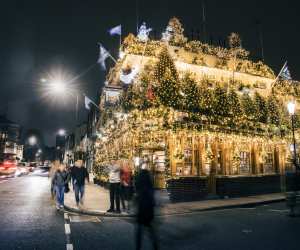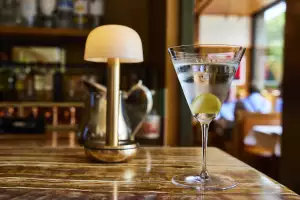
Head to The Park, one of Jeremy King’s most recent restaurant openings in the capital, for lunch on a particular weekday and it’s possible someone will quietly offer you a Martini alongside your food, for the extra cost of just one pound. “It’s not something we’ve made a big thing out of,” says Sean Kelly, beverage director for the restaurant group. “We liked the idea of it being very word of mouth, but we’ve been doing it for a few months now and it’s been super successful. We want to be democratic about our drinks offering.”
They’re not the first or the only restaurant or bar to offer drinks at a low cost, but they are certainly part of a growing trend to put quality drinks on menus at an accessible, affordable price. According to The Face magazine, after Charli XCX married George Daniel and rolled into Ellie’s in Dalston (where Martinis are a flat £8, night and day) earlier this summer, “everyone in East London” wanted to go.
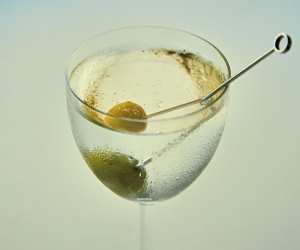
But as The Park, with its full West London postcode, demonstrates, geography doesn’t need to be an indicator of where to find good value. Even if you’re not lucky enough to catch the Martini-for-a-quid offer, you can get a Martini (albeit slightly smaller in size) there for the extremely reasonable price of seven quid, part of the restaurant bar’s ‘sharpener’ menu. East, west. Gentrified or not. London and beyond – the era of the reasonably priced yet quality cocktail is firmly upon us.
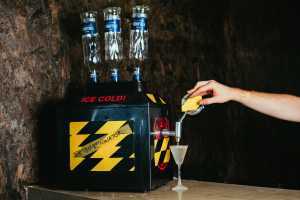
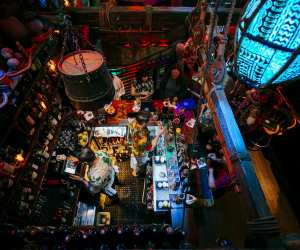
The Martininator at All My Gods
“We noticed that people, just in general, are drinking less, but that they still want to have a cocktail to start the meal and sharpeners appeal to that audience,” says Kelly. “But there are also those who want to have the drink but don’t necessarily want to pay £20 for a cocktail. The sharpener allows them a smaller price point to still have the experience of a crafted drink.”
The drinks menu at Town in Covent Garden has a similar concept – named “chargers” – of smaller format, fully carbonated, aperitif cocktails. They serve as a quick pre-dinner drink to charge the appetite, ready for dinner. But at nine pounds a pop, they also offer a quaffable drink at an enticing price point.
In 2008, he claimed his company’s sales of lipstick rose after the 9/11 terrorist attacks, positing the idea that in times of crisis, people continue to spend money on luxuries, but small ones, like lipstick
“Value is critical in any business, but especially so when it comes to dining and cocktails,” explains Kevin Armstrong, the restaurant’s bar lead. “In my experience, people are happy to spend but what they get in return must represent quality. There will, however, always be a place for affordable luxuries.”
This was the theory of Leonard Lauder, son of Estée Lauder, billionaire philanthropist and inheritor of the global cosmetics company, who died earlier this year. In 2008, he claimed his company’s sales of lipstick rose after the 9/11 terrorist attacks, positing the idea that in times of crisis, people continue to spend money on luxuries, but small ones, like lipstick. The theory itself is disputed as solid economics, but it’s relatively clear that the lipstick effect in a cost-of-living crisis does seem to exist in the world of cocktails.

Sharpeners at The Park
Arguably, the trend for quality, affordable cocktails began, not in the UK, but in New York, at Dante’s in Greenwich Village. To fill seats in the late afternoon dead spot between lunch and dinner, Linden Pride, the bar’s principal, created a $10 Martini hour offering different takes on the classic cocktail. Bartenders there now serve on average 120 Martinis during that window. Serving discounted Martinis (outside of Martini hour most Martinis sell for between $18 and $22) became a profitable endeavour for Dante’s, and the truth is, most bars would rather have customers drinking slightly less expensive drinks than not drinking at all.
But it can also be a point of principle. At this summer’s Amethyst Bar pop-up, part of the Edinburgh Art Festival, run by X Muse vodka in the city’s French Institute, the pricing of the cocktails at around £10 a pop, was also connected to a deeper set of values. “One of our ideas is for X Muse to be a bridge between the ordinary and high culture. It’s part of what we call ‘art thinking’. At just £10, people can have access to cocktails made by creative bartenders in places where the prices for their drinks in five-star hotel bars would usually be closer to £30,” says X Muse’s brand ambassador Isobel Salamon.
At just £10, people can have access to cocktails made by creative bartenders in places where the prices for their drinks in five-star hotel bars would usually be closer to £30
“Accessibility is a big factor for us,” says Hyacinthe Lescoët, co-founder of The Cambridge Public House in Paris. “We want all people to find something they like and to have a good time with us, without necessarily being taken aback by prices. Our tiny cocktails are priced at €7, but you can also have a small beer for €2.50, a highball for €11 or a full-size cocktail for €14. We just want you to have a good time.”
Ryan Chetiyawardana, founder of multiple bars all over the world, including Seed Library in London and SuperLyan in Amsterdam, agrees: “We’ve definitely found that people are checking their value on things, but we’ve seen that this means they’re cutting out things that don’t offer enough for the price. Cocktails are a luxury, but they also promote togetherness and community, as well as a richer experience in a time when it’s desperately needed, so they’ve become a worthwhile everyday luxury for people.” Even Chetiyawardana admits that the Lyan bars are far from being cheap spots, “but we offer value at every level. We always want to make sure we have a range of options for people.”
Nevertheless, there’s a limit to how low high-end bars can go on their price point, and rightly so. As Chris Tanner, co-founder of Dram and more recently All My Gods, points out: “It’s horses for courses. I don’t think the American Bar at The Savoy is going to suddenly empty out and close down tomorrow. People still want to go to The Savoy, but there are also people who want to have a cold, crisp Martini, and for it to be served in their local spot.”
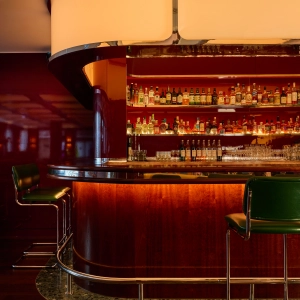
Town interior
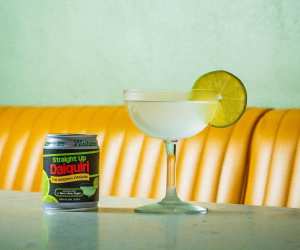
For Tanner, the lower price point should be a signifier of a relaxed, neighbourhood vibe rather than a reduction in quality. “Dram is very resource-intensive,” he explains. “The drinks there take a lot of time, a lot of consideration, a lot of hours and a lot of prep. With the menu for All My Gods we still strive for the same quality, but asked ourselves ‘How can we simplify it? How can we streamline it? And how can we make it more cost-effective, not just for us, but also for the guests?’” The result is a place where all the classic cocktails and cocktails on tap are a tenner, Martinis are £8 and cans of ready-to-drink cocktails are £7.
Coral Anderson, Managing Director of Swift Bars, also believes that hosting a place that’s good for lots of different people is part of their role as a bar. For example, on the aperitivo menu they run weekdays before 6pm, the drinks are £7. She explains: “We came to the price point based on what we would be happy to spend on a quick drink after work on the way home and we make it work by looking at the menu as a whole. As a bar selling a wide range of premium drinks, not every serve is going to have a high markup, as it would make it prohibitively expensive for customers. Instead, we prioritise value across a range of different price points.”
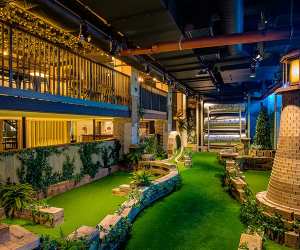
For All My Gods co-founder Simo Simpson, there can only be more of this to come: “We noticed four or five years ago that our favourite bars were disappearing; those bars that we love to hang out in, which served a good drink, but were more about the atmosphere than the drinks. Cocktail culture is an amazing thing for the city – it has raised the bar and made people way more open. But there are gaps. In 2025, most Londoners have become a Martini drinker. But we don’t always want to spend time drinking at the Ritz. Sometimes you want a fun place to hang out and play some pool, but where you’re still going to get a really crisp,
frosty Martini.”
For those with champagne taste and lemonade pockets, there are plenty of places to indulge in the small but potent luxury that is a well-made cocktail, and potentially more to come. Whether it’s Bar Termini’s famous evergreen £9 house Negroni, a micro-Martini from Tayer + Elementary, a Martini for a quid alongside lunch at The Park or an Ellie’s of Dalston £8 Martini, in challenging economic times, there’s somewhere with a welcome and a drink on the menu for you. After all, a fiver won’t buy you much in London these days, but it might still buy you a Martini. That’s reason enough to raise a glass.